

The Most Frequently Asked Questions About Screen Polishing
All the answers you're looking for, from the experience of our professionals
Why did we create this FAQ?
After years in the industry and thousands of repairs, I realized that the same questions keep coming up. Whether it's John who wants to know if polishing is worth it for his iPhone 14 Pro, or Maria who's worried about the warranty on her Samsung Galaxy — everyone has similar concerns.
Our goal: To answer honestly, without technical jargon, the questions you ask us every day at our store.
How much does iPhone screen polishing cost?
The most common question I hear! The cost mainly depends on your iPhone model:
💰 Polishing Prices
- • iPhone 17 Pro Max: 94.50€ (117.18€ incl. VAT)
- • iPhone 16 Pro/Plus: 81€ (100.44€ incl. VAT)
- • iPhone 15 Pro: 74.25€ (92.07€ incl. VAT)
- • iPhone 14/13 Pro: 67.50€ (83.70€ incl. VAT)
- • iPhone 12/11: 60.75€ (75.33€ incl. VAT)
- • iPhone X/XR/XS: 50€ (62€ incl. VAT)
* First price excl. VAT, second incl. 24% VAT
⚠️ Replacement Prices
- • iPhone 17 Pro Max: 350-400€
- • iPhone 16 Pro: 320-380€
- • iPhone 15 Pro: 280-320€
- • iPhone 14/13 Pro: 220-280€
- • iPhone 12/11: 180-240€
- • iPhone X/XR: 120-180€
💡 Practical tip: A few weeks ago, a customer with an iPhone 14 Pro (worth €700 on the second-hand market) saved over €200 by choosing polishing (€67.50 / €83.70 incl. VAT) instead of replacement (€280). The result? A like-new screen at 1/4 of the cost!
See detailed polishing prices for each model:
How many hours does polishing take?
What everyone asks me and I can't give a simple answer — because it depends on many factors:
⏱️ Process Duration
Light scratches
iPhone SE/XR
Moderate damage
iPhone 12-14
Heavy scratches
iPhone 15 Pro Max
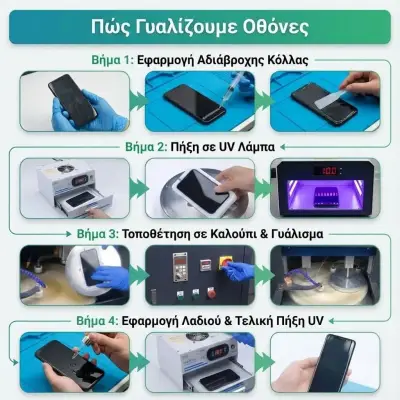
In reality though, I rarely deliver the work on the same day. Why? Because I prefer to let the device “rest” overnight after polishing. This ensures that the waterproof UV adhesive (which we use to protect the ports during polishing) has fully polymerized and the oleophobic coating has completely dried.
📅 Realistic delivery time: 24-48 hours. I know you want your phone back today, but quality takes time. I'd rather tell you the truth than ruin your repair because I rushed.
Is polishing worth it instead of replacement?
I'll be straightforward with you here. Polishing isn't magic — it has its limits, but when applied correctly, the results are impressive.
When polishing IS worth it
- • The screen turns on and works normally
- • The scratches are superficial
- • There are no cracks or breaks
- • Touch works everywhere
- • You want to save 50-70%
When it's NOT worth it
- • There are cracks in the glass
- • Touch doesn't work in certain areas
- • There are dead pixels or lines
- • The screen flickers or doesn't work
- • The cost is close to a replacement
🎯 My experience: Out of 10 phones I see daily, 7 are suitable for polishing. For the other 3, I'm the first to tell you that you need a replacement. I gain nothing from doing a job that won't satisfy you.
What warranty do you offer for polishing?
This is a tough question because polishing isn't like replacing a component. Here we work with the existing material of your screen.
🛡️ What our warranty covers
✅ We cover:
- • Removal of the oleophobic coating
- • Appearance of new imperfections from the process
- • Errors in the polishing procedure
- • Any problem caused by our mistake
❌ We do NOT cover:
- • New scratches from use
- • Drops after polishing
- • Normal wear of the material
- • Damage unrelated to polishing
Warranty duration: 6 months for problems related to our work. If something goes wrong because of us, we fix it for free.
💭 To be honest: In 5 years of screen polishing work, I've seen only 2 cases where I needed to repeat the process for free (some very light scratches had been left that I hadn't initially noticed). Not because I'm perfect, but because I don't take on jobs that I know won't turn out well. The warranty is for your peace of mind, not for my marketing.
Does it work on all iPhone/Samsung models?
Not on all of them — and that's something you need to know from the start. Each screen has different characteristics and limits.
Excellent Results
• iPhone 12-15 all versions
• Samsung Galaxy S20-S24
• Galaxy Note 20 Ultra
• Apple Watch Series 6-9
Good Results
• iPhone X/XR/11
• Samsung Galaxy A52-A54
• Xiaomi Mi 11-12
• Apple Watch SE
Difficult/Impossible
• iPhone 6/7/8 (old glass)
• Phones with plastic screens
• Curved screens with intense curves
• Apple Watch Series 1-3
🔧 What determines success: The type of glass, the manufacturing technology, and the age of the device. Newer models have better glass that “responds” better to polishing.
Will I lose the waterproofing (IP rating)?
This is a justified concern that everyone has. The answer is: NO! The waterproofing remains 100% intact!
✅ Why the waterproofing is NOT affected
The screen is NEVER removed
During polishing, we work on the surface of the glass. We don't open the device, we don't touch the gaskets, we don't detach anything. The screen remains bonded to the chassis exactly as the factory left it.
Mechanical processing only
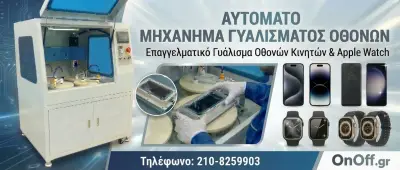
We use a specialized polishing machine with cerium oxide and pads of various sizes. We remove a few microns from the surface - no more than what a screen protector would take off.
Port protection with UV adhesive
We preventively seal all openings (USB, speakers, microphones) with waterproof UV adhesive before polishing, to prevent liquids or dust from entering during the process.
🔬 Visual inspection after polishing
After each polishing:
- ✓ We visually inspect all screen joints
- ✓ We verify there are no gaps or detachments
- ✓ We test all functions (touch, brightness, sound)
- ✓ We thoroughly clean the surface of any residue
🎯 The truth: Polishing is the ONLY process that does NOT affect waterproofing at all. On the contrary, if you needed a screen replacement, THAT would require re-bonding the screen, and the waterproofing would depend on the quality of the work. With polishing, the original factory waterproofing remains 100% intact!
How do I know if I need polishing?
This is the classic “fingernail test” that I do with every customer who comes to the shop:
🔍 Simple home test
Fingernail test
Run your fingernail over the scratch. If your nail “catches,” the scratch is too deep for polishing.
Visual inspection
Turn on your phone's flashlight and shine it on the screen at a 45° angle. Can you see the scratches?
Touch test
Open “Settings > Accessibility > Touch > AssistiveTouch” and test every point on the screen.
✅ Suitable for polishing
- • Surface-level scratches
- • Fingernail doesn't “catch”
- • Touch works everywhere
- • Brightness is uniform
❌ Needs replacement
- • Fingernail “catches” on the scratch
- • Cracks or tears
- • Dead touch spots
- • Flickering or black-out sections
📱 Remote help: Can't tell? Send me a photo of your screen on WhatsApp (6973 123456) with the flash on. In 5 minutes I'll tell you if it's worth coming in for polishing.
What happens if I'm not satisfied?
I won't tell you “money back guarantee” because I don't like cheap marketing. But I'll explain what I actually do when a customer isn't happy.
First, I listen
What exactly don't you like? Is it a cosmetic issue or a functional one? Were you expecting something different?
I assess the situation
If the problem is due to my mistake, I fix it for free. There's no discussion about that.
Alternative solutions
If I can't fix the polishing, I offer a discount on screen replacement or a refund.
📊 Satisfaction statistics (last semester)
Very satisfied
Moderate satisfaction
Dissatisfied
🤝 My philosophy: I'm not interested in keeping €80-100 if I lose your trust. In this business everyone talks — I want them saying good things about my work, not complaining to their friends. That's why, if something doesn't satisfy you, we sort it out.
Can I do it myself at home?
I'll be honest: no. And I'm not saying that to sell my services, but because I've seen way too many destroyed phones from “home remedies”.
Why it DOESN'T work at home
- • Equipment: You need a specialized polishing machine (€3,000+)
- • Materials: Cerium oxide, various pads, UV adhesives
- • Experience: You need technique to avoid destroying the screen
- • Time: You'll waste 2-3 days for a questionable result
What YOU CAN do
- • Temporary fix: Use toothpaste for light scratches
- • Cover-up: Screen protector for cosmetic improvement
- • Protection: Case to prevent further damage
- • Assessment: Test whether professional polishing is worth it
⚠️ DIY risks
In the last 2 weeks I've seen:
- • iPhone 13 with a burned motherboard from incorrect opening
- • Samsung Galaxy with non-working touch after “polishing” with a dremel
- • Apple Watch with a detached screen from burned adhesive
💡 The reality: The cost of the tools you need is 30 times the cost of polishing. And even if you buy them, you need months of practice to get a decent result. Unless polishing is going to become your hobby, it's not worth it.
How often does polishing need to be done?
This question makes me think because the answer depends a lot on how you use your phone.
Careful user
- • Always case + screen protector
- • Careful about where you put it
- • Don't put it with keys/coins
- • Rarely drops
Average user
- • Usually case, not always protector
- • Sometimes in pocket with objects
- • 2-3 drops per year
- • Generally careful
Heavy user
- • Often without protection
- • Works in outdoor environments
- • Frequent drops
- • Pocket with keys/tools
🔄 When to come in for a new polishing
Visual: When scratches become visible under natural light
Functional: When you feel “roughness” while scrolling or difficulty typing
Preventive: Before applying a new screen protector
💰 Money-saving tips: If you use your phone intensively for work, it's more cost-effective to polish every 6-8 months than to replace every 2 years. You'll save approximately €300-400 over the lifetime of the device.
Can I apply a screen protector after polishing?
Not only can you — I highly recommend it! In fact, polishing is the IDEAL time to apply a new screen protector.
✅ Why a polished screen is ideal for a screen protector
- 1 Perfectly flat surface: Without scratches, the protector adheres without bubbles
- 2 Better appearance: Old scratches don't show through the protector
- 3 Preserves the result: Protects the freshly polished screen from new scratches
- 4 Maximum durability: Polished surface + protector = double protection
📱 What screen protector should I get?
- • Tempered Glass 9H: The best (€10-15)
- • Privacy glass: For privacy (€20-25)
- • Hydrogel: Cheaper but less protection (€5-8)
- • Matte: Anti-glare for outdoor use (€12-18)
⚠️ When should I apply it?
- • IMMEDIATELY after polishing: Ideally the same day
- • Clean screen: Free of dust or grease
- • Proper application: Ask for help if you're inexperienced
- • 24-hour care: Don't press hard in the first hours
💡 Personal advice: After every polishing job I do, I suggest my customers apply a screen protector right away. I think it's like washing your car and then parking it under trees full of birds — it doesn't make sense! The polished screen is the best “base” for a protector to adhere without bubbles.
Does the screen lose brightness after polishing?
That's a very smart question that shows you've done your research! The answer is: NO — in fact, the screen often looks brighter!
😞 Before polishing
Scratches scatter the screen's light
They create a white “haze” that reduces contrast
The surface is uneven and matte
More brightness is needed for clarity
😊 After polishing
Flat, glossy surface that reflects light properly
Better contrast and more vivid colors
The screen looks “cleaner” even at low brightness
Less battery consumption (due to reduced brightness)
🔬 Scientific explanation
Scratches create the phenomenon of "light scattering". When we remove the imperfections through polishing:
- • Light passes more evenly through the glass
- • The “haze” created by scratches is reduced
- • The OLED/LCD appears more vivid at the same brightness nits
- • The oleophobic coating we apply further improves optical quality
📊 Real results: Based on luxmeter measurements, a screen with moderate scratches loses up to 15-20% of its brightness due to light scattering. After polishing, that brightness returns — so we DON'T lose light, we RECOVER it! Many of my customers say that after polishing they lower the brightness 1-2 levels because the screen looks “brighter”.
Have another question?
We didn't answer something that concerns you? Send us a message or visit our store — we'll be happy to help!
Phone
210 825 9903
Store
Ioulianou 50, Athens