

Sport Band or Solo Loop? It is the most common question new Apple Watch owners ask — and understandably so, since both cost < €49 and look similar at first glance. In reality they represent two very different design philosophies. In this detailed guide we compare materials, comfort, durability, fitness suitability and daily wear so you can pick the one that fits your life.
📖 Read more: Always On Display: Tips and Settings
Sport Band: Everything You Need to Know
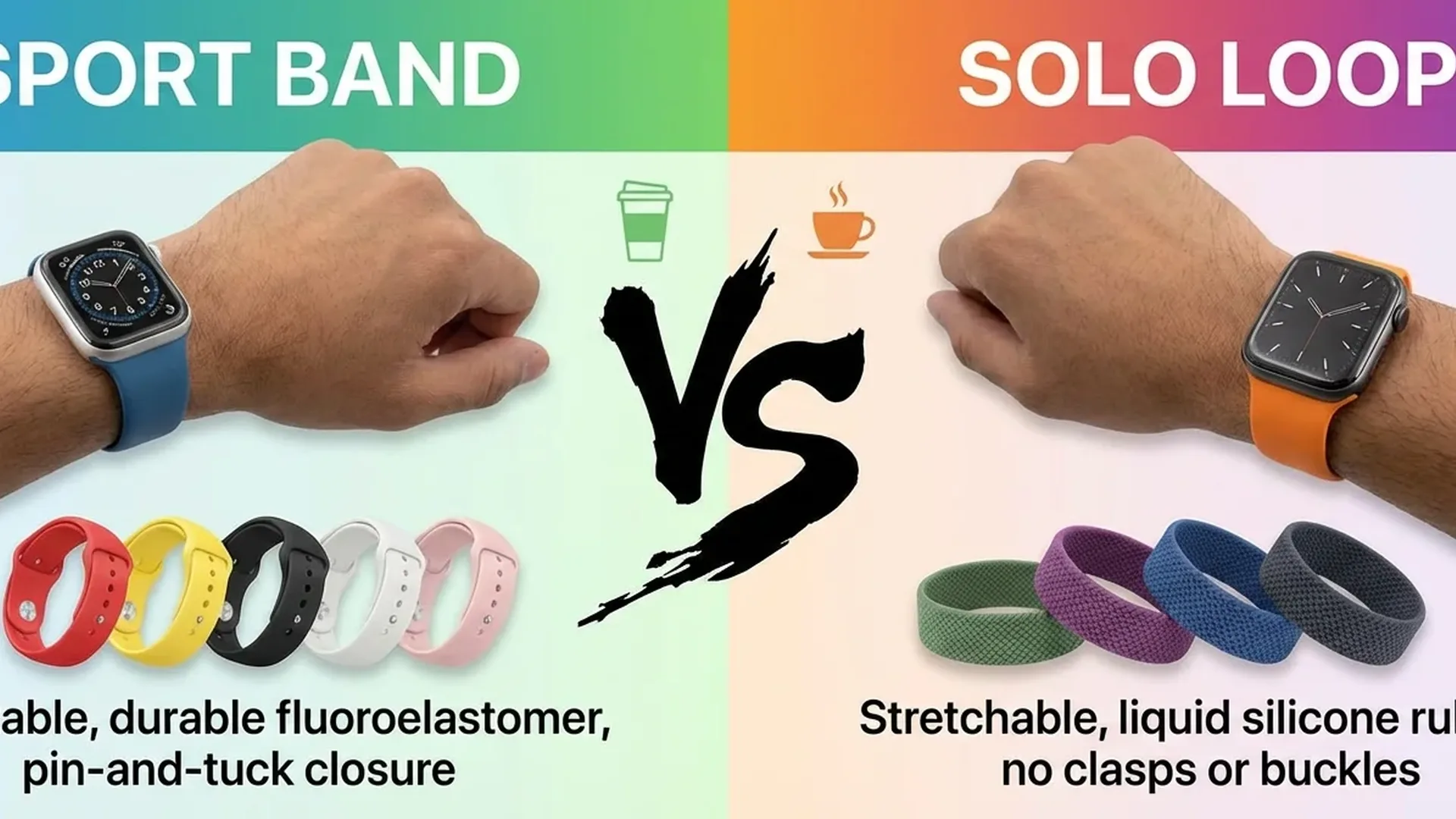
The Sport Band is the classic strap that has shipped with most Apple Watch models since the very first generation. It is made from fluoroelastomer — a specialised fluorine elastomer material that is soft to the touch, fully waterproof and exceptionally resistant to sweat and UV light.
The closure mechanism is a pin-and-tuck design: a small metal pin slots into one of several holes and the excess band tucks beneath the strap. This means the fit is fully adjustable — you can tighten it for a workout and loosen it at your desk. Each Sport Band comes in two sizes, S/M or M/L, with alternative band halves included in the box.
Putting it on and taking it off is extremely quick. The pin clicks into the hole instantly and releases with a light pull. This is particularly practical if you wear and remove your watch multiple times a day — for example before and after showers.
Solo Loop: The Minimalist Alternative
The Solo Loop was introduced in 2020 alongside Apple Watch Series 6 and represented a bold design choice: a single continuous piece of silicone with no buckle, clasp or metal hardware whatsoever. You simply stretch it over your hand and it sits on your wrist.
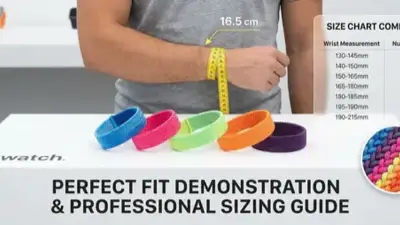
This simplicity comes with a trade-off: you must choose exactly the right size. Apple offers < 12 sizes (from 1 to 12) and recommends using their printable sizing guide or the AR tool in the Apple Store app to measure your wrist. If you pick the wrong size the band will be either too tight or too loose — and neither scenario is comfortable.
One important detail to keep in mind: the Solo Loop silicone tends to stretch slightly over time. After several months of daily wear you might notice it feels a little looser than when new. This does not happen with the Sport Band, thanks to its adjustable closure.
Sizing Tip for Solo Loop
Measure your wrist in the morning — your hand tends to swell slightly during the day due to temperature and activity. If you fall between two sizes, choose the smaller one. It will feel a bit tight for the first few days but the silicone will loosen. If you start loose, it will only get looser.
Comfort Comparison
On the comfort front, the two options deliver different experiences. The Sport Band is more adjustable — you can tighten it during exercise and loosen it at the office. This flexibility is invaluable if your wrist changes size during the day, which is more common than people realise.
The Solo Loop, on the other hand, offers a “bare wrist” sensation that many people find incredibly comfortable. Without a buckle there is no pressure point or metal bump underneath your wrist. It feels like wearing a soft elastic bracelet. For sleep tracking in particular the Solo Loop is clearly more comfortable — no metal clasp to dig in when you turn during the night.
Durability and Lifespan
Both bands are built to withstand daily wear, sweat and water. But there are differences. The Sport Band does not deteriorate over time — the fluoroelastomer retains its firmness and colour for years. After < 2 years of daily use a Sport Band still looks practically new.
The Solo Loop, by contrast, can stretch enough after < 6 months of intensive use that you start feeling you need a smaller size. This does not mean it will break — the silicone is highly durable — but the fit changes noticeably. Some users replace their Solo Loop annually as a result.
Fitness and Athletic Use
For fitness both bands are excellent. They handle sweat without issue, clean easily with soap and water and do not irritate the skin. However, for high-intensity activities like CrossFit or rowing, the Sport Band is considered more secure because you can tighten it properly. A slightly stretched Solo Loop can cause the watch to slide around your wrist during dynamic movements.
For running, cycling or gym work (weights, machines), both perform perfectly well. Heart rate accuracy depends on a snug wrist fit, so whichever band you choose, make sure it is not loose during workouts.
Braided Solo Loop: The Premium Option
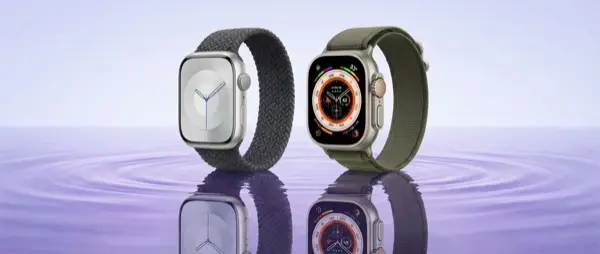
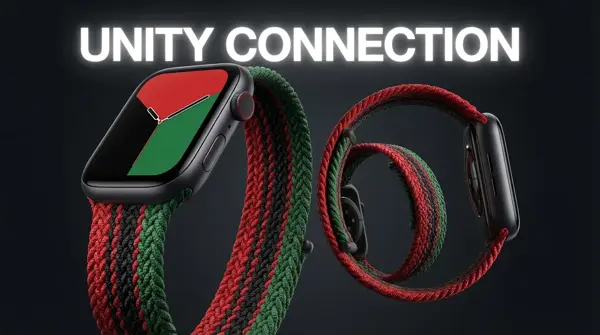
It is worth mentioning the Braided Solo Loop — a more premium variant at < €99. It is made from woven threads of recycled polyester yarn braided around silicone. It is softer to the touch, slightly more breathable and has a richer texture. It stretches less than the standard Solo Loop over time. If you love the Solo Loop concept but want something more refined, the Braided version is worth trying.
Colours and Seasonal Options
Apple refreshes the colour lineup for both bands every season. As of February 2026 there are over < 10 options in each style — from classic black and white to seasonal shades like Lake Green, Light Blush and Ink. Sport Bands allow mix-and-match if you buy two colours, since the top and bottom halves swap independently.
Daily Wear Experience
In day-to-day use the main difference is practical. With the Sport Band you can put on and remove the watch in < 3 seconds — click and done. With the Solo Loop you need to stretch the silicone over your thumb, which is not hard but requires one extra motion.
If you swap bands frequently (e.g. Sport Band during the day, leather at night), there is no difference — the quick-release mechanism is the same. The distinction is only in how the band secures on your wrist, not how it attaches to the watch.
How to Choose
Choose Sport Band if: you want maximum adjustability, you do intense workouts, your wrist size fluctuates during the day, or you want a band that lasts years without replacement. Choose Solo Loop if: you prefer minimalist design with no clasp, you wear Apple Watch for sleep, you value a seamless feel and you do not mind replacing it annually.
Frequently Asked Questions (FAQ)
Can I wash the bands?
Yes, both can be cleaned with water and mild soap. Avoid chemical cleaners or disinfectants. Wipe with a soft cloth and let them air dry.
Do Sport Bands fit all Apple Watch models?
Yes, as long as you choose the correct case size. 41mm bands fit 38mm/40mm/41mm watches. 45mm bands fit 42mm/44mm/45mm/49mm (Ultra) watches.
How much does the Solo Loop stretch?
On average, after < 6 months of intensive daily use it may stretch enough that some users need a smaller size. The silicone does not tear, but it gradually loses its original snugness.
Is the Solo Loop good for sleep?
Excellent. With no buckle or metal pin there is no pressure point even if you move a lot during sleep. Many users buy a Solo Loop specifically for sleep tracking.
Which band is recommended for sensitive skin?
Both are hypoallergenic. If you have sensitive skin, simply ensure you clean the band regularly after exercise. The fluoroelastomer in the Sport Band and the silicone in the Solo Loop are both medical-grade materials.
Is the Braided Solo Loop worth double the price?
If you wear Apple Watch all day and want a premium feel, yes. The woven construction is noticeably softer and breathes better. It stretches less than the standard Solo Loop. But if you just need something functional, the regular Solo Loop or Sport Band will serve you well.