

A screen protector is your iPhone's first line of defense. In 2026, new technologies like nano-texture glass, ceramic shield protectors, and matte anti-glare options are changing the game. Which one should you choose? Let's compare them in detail.
📖 Read more: iPhone Flip: Apple's Clamshell Foldable Phone
What Is Nano-Texture Glass?
Apple introduced nano-texture glass on the Pro Display XDR and newer iPad Pro models. This technology uses chemical etching at the nanometer level to create microscopic surface irregularities that scatter light and minimize reflections. Now third-party manufacturers are bringing this technology to screen protectors.
Nano-texture isn’t just a simple coating — it’s processing of the glass surface itself. This means it doesn’t wear off over time like regular anti-glare coatings. The result is a screen that feels almost paper-like to the touch but with full color clarity.
Screen Protector Types: 2026 Comparison
1. Tempered Glass
The most popular choice, and for good reason. Offers 9H hardness (the maximum on the Mohs scale for glass), perfect clarity (99%), and a smooth touch feel. Downside: shows fingerprints and has glare in sunlight. Important: choose at least 0.33mm thickness — ultra-thin ones (0.15mm) break more easily.
Price: $8 - $25
2. Matte/Anti-Glare
Eliminates reflections and fingerprint smudges. Ideal for outdoor use and gamers who want smoother swipes. Downside: slightly reduced clarity and a subtle 'hazy' feel.
📖 Read more: Portrait Mode iPhone 2026: Tips for Perfect Portraits
Price: $10 - $30
3. Nano-Texture Glass
The best of both worlds: minimal reflections without losing clarity. Available from premium brands like Belkin, Spigen, and ESR. This is the future of screen protectors.
Price: $25 - $50
4. Privacy Screen Protector
Limits viewing angle to 25-30 degrees. Only you can see the screen — perfect for public transport, banking, and keeping prying eyes away. Downside: reduces brightness by 25-40%.
Price: $15 - $35
5. Ceramic Shield Protector
Inspired by Apple’s Ceramic Shield tech. Ceramic crystals embedded in the glass offer exceptional drop and scratch resistance. Less likely to crack on impact compared to standard tempered glass, but also more expensive.
Price: $20 - $45
📖 Read more: Top 50 Best iPhone Apps 2026: The Ultimate Guide
Common Screen Protector Myths
Myth 1: “You don’t need a protector because the iPhone has Ceramic Shield.” Ceramic Shield protects against cracking from drops, but it doesn’t protect against scratches. Sand, keys, and other objects in your pocket consistently scratch the screen over time.
Myth 2: “Cheap protectors are the same as expensive ones.” Ultra-cheap ones ($1-3) often have poor oleophobic coating, reduced clarity, and unreliable alignment with Face ID. The difference shows after 1-2 months of use.
Myth 3: “The protector affects Face ID.” If properly installed and from a reputable brand, there are zero issues with Face ID or Dynamic Island.
Top Brands in 2026
Spigen GlasTR EZ Fit
The world's most popular screen protector. The EZ Fit frame makes installation a breeze. 9H hardness, oleophobic coating, 2 pieces per package. Price: around $15.
Belkin UltraGlass 2
Premium choice with double ion-exchange technology. Twice the scratch resistance. Sold in Apple Stores. Price: around $30 - $40.
📖 Read more: Android to iPhone 2026: Complete Switching Guide
ESR Armorite with Auto-Alignment
The easiest to install. The auto-alignment kit ensures perfect placement every time. 110 lbs of straight pressure resistance. Price: around $12 - $18.
TORRAS Diamond-Like (DLC) Shield
New technology with a diamond-like carbon coating. Exceptional scratch and shatter resistance. Price: around $20 - $35.
How to Choose the Right One
- For everyday use: Tempered glass (Spigen or ESR)
- For outdoor/sunlight use: Matte or Nano-Texture
- For privacy: Privacy screen protector
- For maximum protection: Ceramic shield or DLC
- For premium experience: Belkin UltraGlass 2
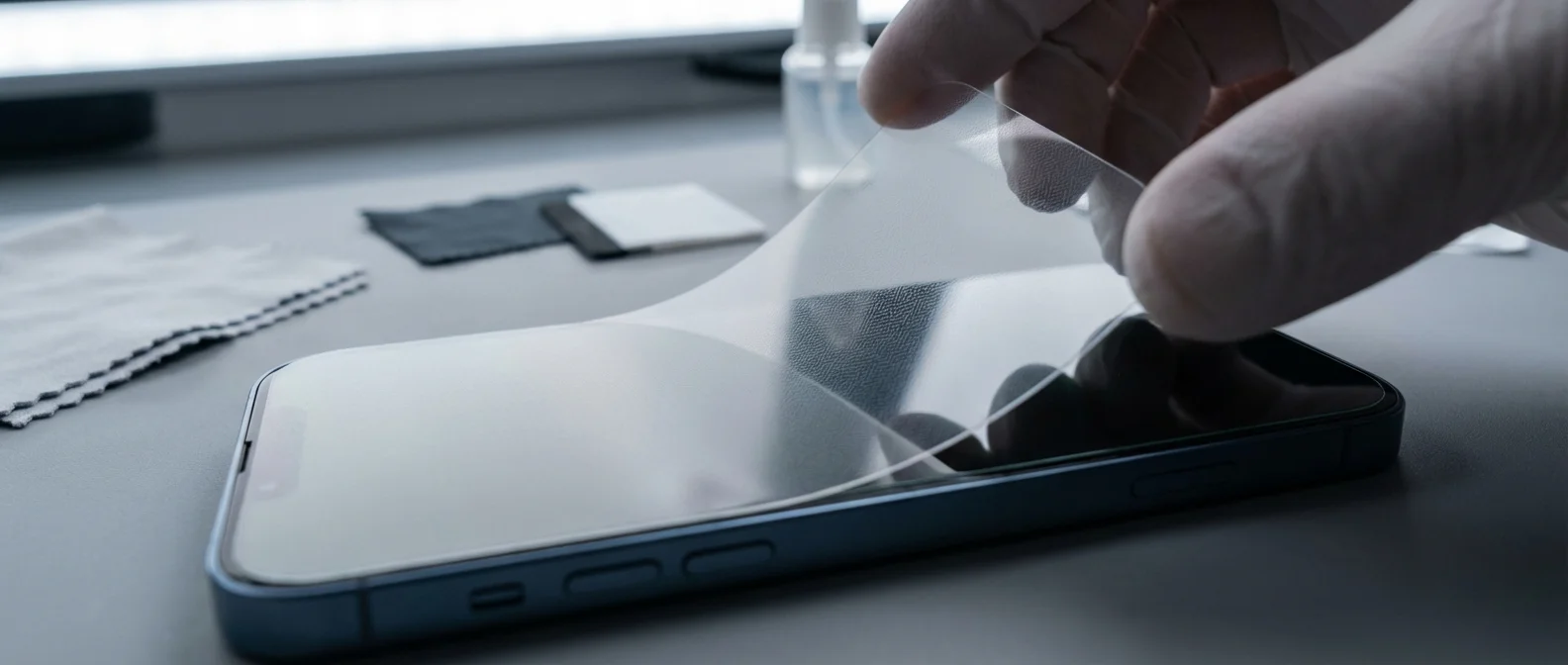
Installation Tips: 5 Steps to Perfection
- Clean the screen with a microfiber cloth and alcohol wipe
- Remove dust with the included dust sticker
- Align before removing the backing (use alignment frame if included)
- Let the protector fall into place on its own — don't press down
- Push bubbles from center toward the edges
When to Replace Your Screen Protector
- Major scratches: If you see scratches on the protector, it did its job — time to replace
- Cracks: Even small ones reduce protection on the next drop
- Every 6-12 months: The oleophobic coating wears off over time. If the screen feels “greasy” more easily, it’s time
- After a repair: If you got a screen replacement at OnOff, apply a new protector immediately