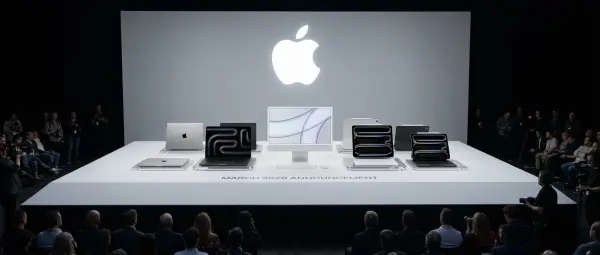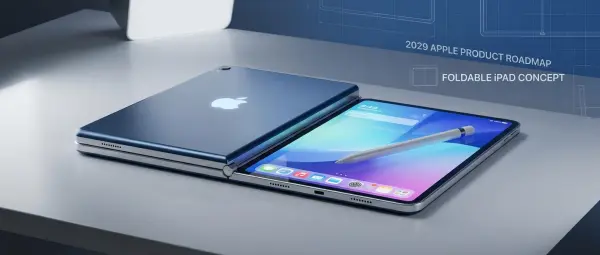


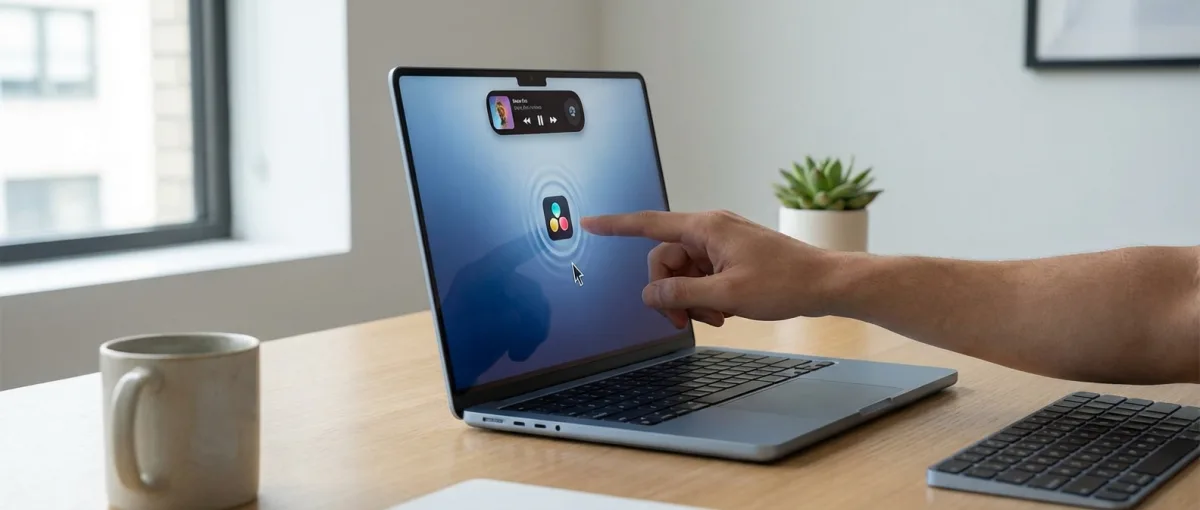
For years, Apple stubbornly refused: “Macs don't need touchscreens.” Tim Cook said it clearly, and the company insisted touch belonged on iPads. As of February 2026, Apple appears to be changing its mind.
📖 Read more: Apple March 2026: New Mac and iPad
📰 What We Know
According to multiple reliable sources (Bloomberg, Ming-Chi Kuo, recently filed patents), Apple is internally testing a MacBook with a touchscreen display. This isn't a convertible tablet-laptop hybrid like the Surface — it's a regular MacBook Pro or Air whose screen now accepts touch input. Expected launch? Late 2026 or early 2027, according to current estimates.
🖥️ Why Now
Three factors. First, competitive pressure. Windows laptops with touchscreens have offered what Apple refused for years — and now with excellent quality (Dell XPS, Lenovo Yoga). Second, iPadOS is approaching macOS in capability, creating confusion: why can I touch the iPad but not the Mac? Third, Apple Silicon. M-series chips are efficient enough that adding a touch layer won't significantly impact battery life.
📖 Read more: Honor Robot Phone: Gimbal Camera in a Smartphone
"Apple isn't changing its philosophy because it was wrong. The market simply forced its hand."
— Bloomberg Analyst
📖 Read more: Silicon-Carbon Batteries: 2 Days of Autonomy
🔧 Technical Challenges
Adding touch to a laptop isn't as straightforward as it seems. macOS was never designed for touch — buttons, menus, and toolbars are built for mouse precision, not fingertips. Apple will need to either enlarge touch targets across the UI or create a dual-mode interface that adapts based on whether you're using the trackpad or touch.
There's also the expensive OLED panel question. For touch to be worthwhile, the display quality must be exceptional. Rumors point to a ProMotion (120Hz) OLED in an even thinner panel, which would significantly increase the price tag.
📖 Read more: Stablecoin Payments: Without Banks in 2026
💭 What This Means for Users
If Apple releases a touchscreen MacBook, the impact will be massive. The line between iPad Pro and MacBook will blur even further. Designers will draw directly on the screen. Casual users will scroll websites by touch. And Apple will need to explain why you still need an iPad if the MacBook does everything.
Until we see an official announcement, the above is based on credible intelligence but remains speculation. One thing is certain: Apple doesn't drop hints without reason.