

At MWC 2026, Honor didn't just introduce another smartphone. It introduced a phone that moves, looks around, and if the company is to be believed, will actually ship in 2026. So what exactly is going on?
📖 Read more: Wi-Fi 8: Qualcomm Races Ahead of the Standard
🤖 What Is the Robot Phone
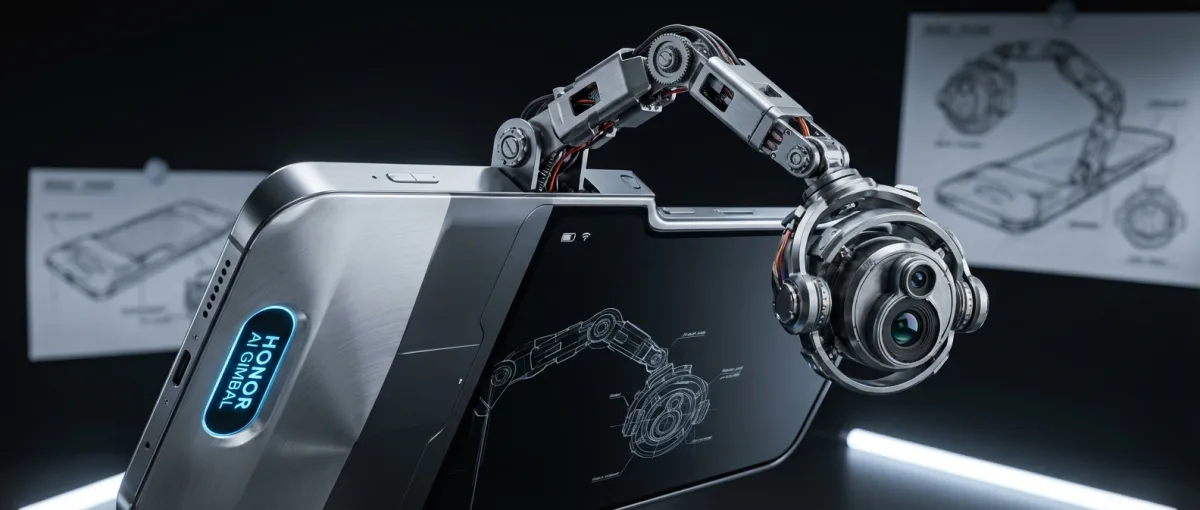
The core idea: a smartphone with a motorized, robotic camera. The rear camera isn't fixed — it unfolds, rotates, and looks up, down, left, and right. Honor calls it a “gimbal camera,” but it's more than that: a robotic eye embedded in a phone. The sensor is 200MP, and the gimbal mechanism is essentially a micro-robotic motion system.
On the MWC floor, The Verge reported finally seeing the phone powered on. It unfolded, looked around, danced to Imagine Dragons, and Honor promised new demos at its booth. At CES in January, the device was physically present but powered off. It seems to actually work now.
📖 Read more: MWC 2026: The 10 Standout Gadgets
📹 What It Actually Does
The robotic camera offers three core functions. First: video stabilization. The gimbal stabilizes footage mechanically, not just through software — hand movement, running, cycling, all compensated physically. Second: intelligent tracking. The camera can follow faces or objects autonomously, rotating the gimbal to keep its subject in frame. Third: creative modes. Time-lapse, panoramas, and slow-motion shots with physical camera movement instead of digital cropping.
🎭 Hands-On Impressions: According to journalists at MWC, the gimbal mechanism feels surprisingly smooth in use. Movement is fluid, silent, and the 200MP camera captures sharp photos even in low light conditions.

📖 Read more: Lenovo Legion Go Fold: Foldable Gaming Handheld
🔧 The Engineering Challenge
Putting a gimbal in a smartphone is no small feat. The mechanical system needs to be small, durable, energy-efficient, and silent. It must survive drops, dust, and moisture. And it can't decimate battery life. Honor hasn't shared battery specs yet, but the concern is valid: robotic parts + 200MP + AI processing = serious power draw.
There's also the durability question. Moving parts and smartphones have never been great friends (ask any early foldable owner). Honor will need to prove the gimbal survives 2-3 years of daily use without mechanical failure.
📖 Read more: Silicon-Carbon Batteries: 2 Days of Autonomy
🏭 Honor: From Phones to Robots
The Robot Phone isn't Honor's only robotic move. The company announced at MWC that it's developing a humanoid robot for household tasks. According to Bloomberg, Honor is planning an IPO in the near future, and the robotics pivot may be a strategic move to boost valuation.
The move makes sense when you consider that the smartphone market is maturing. Growth is slowing, models look increasingly similar, and a robotic phone could differentiate the brand. Especially if it actually works.
📖 Read more: Woolworths AI Bot: The Viral Fail
💰 When and How Much
Honor says it'll launch within 2026 but hasn't committed to a specific date or price. Analysts estimate it will land at €800-1,100 in Europe, in the premium flagship tier. The market will decide whether a robotic phone can justify a premium price or ends up as an eccentric novelty collecting dust on shelves.
One thing is certain: nobody was looking at any other booth that morning at MWC.