

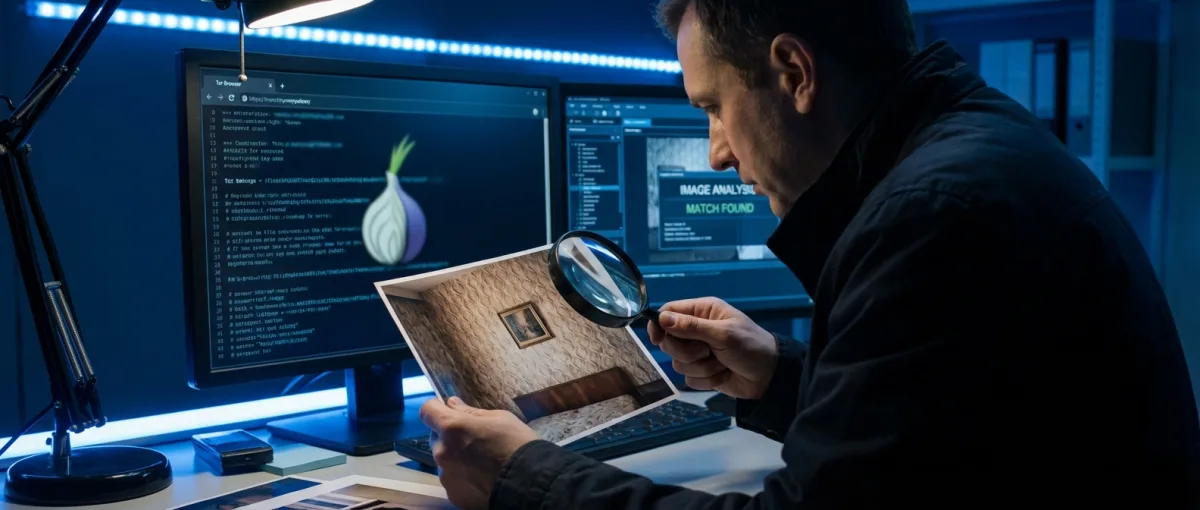
A single photograph — a hotel room with a few distinctive objects. It was enough. Europol, using AI image analysis, identified the location, found the victim, and arrested the perpetrator. The story unfolded in January 2026.
🔍 The Case
In seized material from a dark web forum, investigators found an image of a minor victim. The background showed a room: a wallpaper pattern, a wall outlet, a TV brand, and a sliver of view from a window. No perpetrator's face. No metadata in the image — it had been stripped.
📖 Read more: EU Digital Identity Wallet: Europe's New Digital ID System
Europol used its “TraceAnObject” tool combined with new AI image-matching capabilities. The system compared the wallpaper against hotel databases across 14 countries. It narrowed down to 3 possible matches — all at a budget hotel chain in southeastern Europe.
🏨 How They Found It
The outlet was Schuko-type (European). The TV was an LG model sold only in Balkan countries. The window view — a tiled roof and a gray building — was matched through Google Street View to a city in Romania.
Authorities identified the hotel within 72 hours. From booking records, they identified the suspect. The arrest took place in his home country — Germany. The victim was found alive and safe.
📖 Read more: Digital Nomad Visas 2026: Top Countries
"Every pixel counts. A wallpaper pattern, an outlet, the angle of sunlight — they're all evidence. AI gives us the ability to connect them faster than ever."
— Europol, Digital Forensics Division
📖 Read more: Top Digital Skills in Demand in Greece 2026
🤖 The Technology Behind It
Europol is developing AI “object recognition” tools specialized in detecting location markers: outlet types, lighting, floor patterns, electronics brands. These elements, combined with open-source geospatial data, can pinpoint a location within a few kilometers.
The technology is already being used in over 40 cases. Interpol and Europol are training national police forces — including Greece's Hellenic Police — in using these tools.
📖 Read more: Digital Work Card: What Changes for Employees and Businesses in 2026