


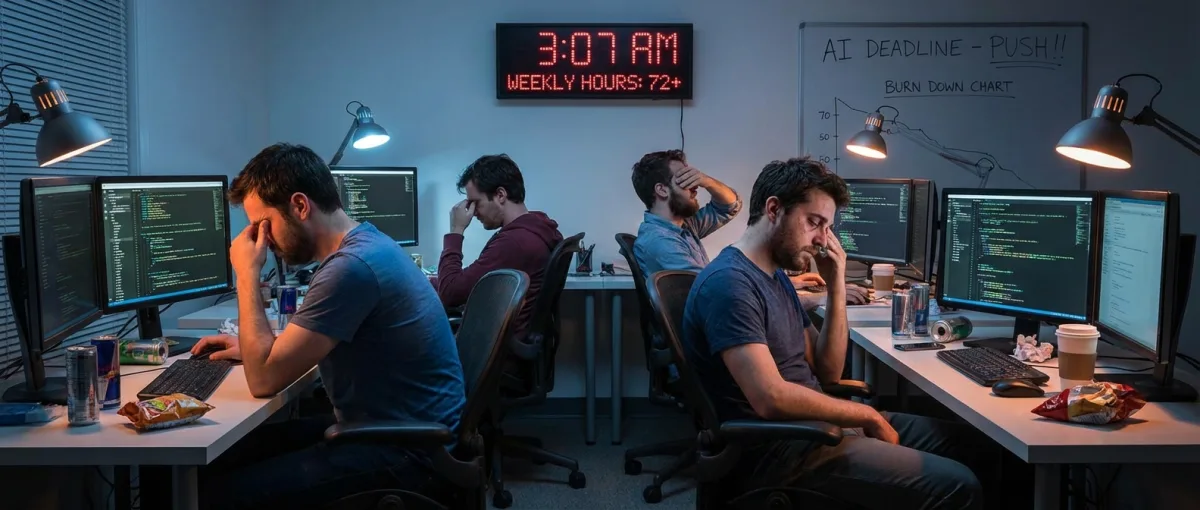
At AI companies, the 40-hour week is a joke. Engineers at OpenAI, Google DeepMind, and Anthropic report 60-72 hours weekly as normal. The AI race doesn't just cost electricity — it costs health.
📖 Read more: Anthropic vs Pentagon: AI Clash
⏰ What Happens Inside Companies
Anonymous testimonies (and some public, via Glassdoor and Blind) reveal: Sunday night meetings. 2 AM calls for production incidents. Expected Slack presence 7 days a week. Managers asking “why didn't you reply within 15 minutes” on Saturdays. Gaming industry's crunch culture has moved to AI.
🏃 Why It Happens
Two words: race dynamics. OpenAI competes with Google, which competes with Anthropic, which competes with Meta, which competes with DeepSeek. Every month of delay means a competitor ships first, grabs headlines, steals talent. No CEO wants to be second. And that pressure flows top-down.

📖 Read more: OpenAI vs Anthropic: Battle for the Pentagon
💰 Good Pay at Least?
Yes, but that doesn't solve the problem. A senior AI researcher at OpenAI earns $300,000-500,000 annually (base + equity). But in hourly terms, working 72 hours means less per hour than someone working 40. And money doesn't replace relationships, health, or mental balance.
🌍 European Perspective
In Europe, labor law protects — theoretically — against excessive workload. But AI labs in London, Paris, and Berlin report similar patterns. Startup culture doesn't recognize borders. The societal question: is technological progress worth it if it costs the physical and mental health of thousands of workers?