

The 2026 Deaflympics showcase groundbreaking technology for deaf athletes. Real-time captioning, vibration-based coaching, smart glasses with sign language — technology is finally leveling the playing field for ~70 million deaf people worldwide.
🏅 Deaflympics: The Hidden Major Institution
The Deaflympics (formerly Silent Olympics) is the largest sporting event for deaf athletes — larger even than the Paralympics by number of sports (21 sports, 3,000+ athletes). The 2026 games in Tokyo introduce technologies that will transform how deaf athletes compete, train, and experience sports.
The core challenge: sports depends heavily on sound — whistles, starting signals, coach instructions, crowd reactions. How do you compete when you can't hear anything?
📖 Read more: Smart Glasses AR 2026: Who Will Win?
📖 Read more: EU Made in Europe: Cheaper Batteries
📳 Vibration Coaching
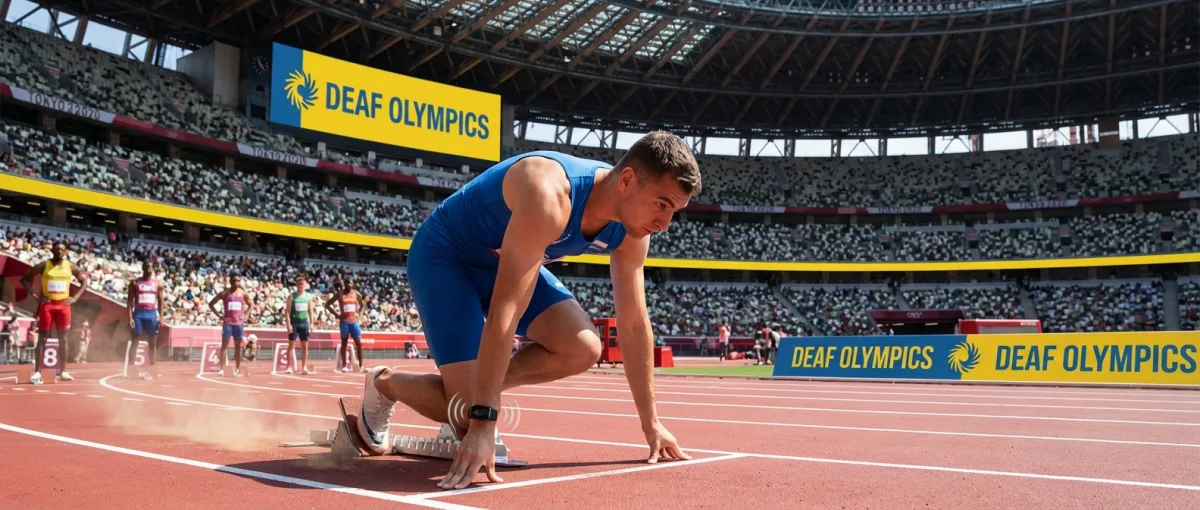
The most impressive innovation: wearable vibration devices translating audio signals to haptic feedback. Athletes wear a band on wrist or ankle. Starting signals transmit as vibration. Coaches send instructions via preset vibration patterns — one pattern for “faster,” another for “change tactics.”
Sony developed a special “Haptic Coach Band” for the Deaflympics with 12 distinct vibration patterns. Samsung Galaxy Ring is already being piloted with 4 teams.

📖 Read more: Fiber 10Gbps Greece: When in Your Neighborhood
👓 Smart Glasses and AI Captioning
XRAI smart glasses (AR-based) translate speech to text in real-time, displaying it in the user's field of vision. At press conferences, ceremonies, and even during competitions, deaf athletes can see what's being said around them. The technology supports 40+ languages.
💡 Worth noting: Deaf athletes aren't “deficient” — they compete at standard levels. Some explain deafness can actually be an advantage: greater visual focus, fewer distractions during performance.
📖 Read more: Foldable iPad 18″: Apple's Plans for 2029
🌍 Beyond the Games
The technology debuted at the Deaflympics has applications far beyond sports. Vibration coaching could help deaf workers in noisy environments. Smart glasses with captioning transform workplace meetings. The innovations are accessible enough to benefit the entire deaf community worldwide.