

The EU Made in Europe initiative targets European battery production at competitive prices. New gigafactories in Germany, Hungary, and Sweden promise to end dependence on China. Will Europe manage to build cheaper batteries?
📖 Read more: Battery That Lasts 50 Years: Never Charge Again
🔋 The “EU Made” Strategy
The European Commission announced in February 2026 a €12 billion subsidy program for battery manufacturing within the EU. The goal: by 2030, 60% of EV batteries sold in Europe will be made within the bloc. Currently, China controls over 75% of global production.
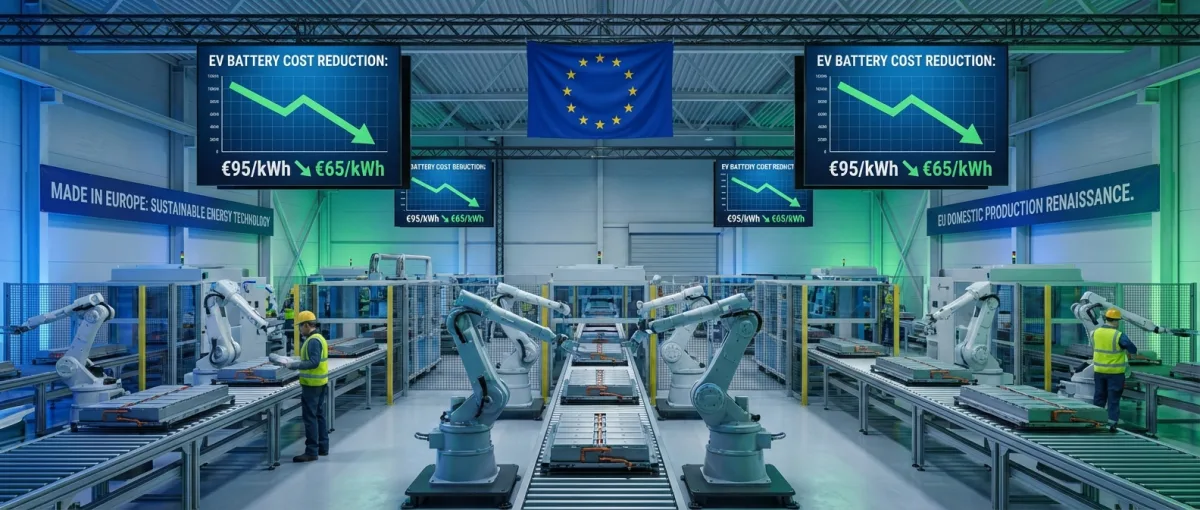
Northvolt in Sweden, ACC (Stellantis-Mercedes-Total) in France, and CATL in Hungary lead the effort. New LFP (lithium iron phosphate) technologies are dramatically cutting costs — European battery cell prices dropped to $85/kWh in March 2026, down from $120 a year earlier.
⚡ Why Prices Are Falling
Two factors explain the decrease. First, LFP batteries — cheaper and safer though slightly heavier — are gaining ground over NMC. They use no cobalt or nickel, reducing both costs and geopolitical risks. Second, economies of scale are working: gigafactories reduce per-unit costs.
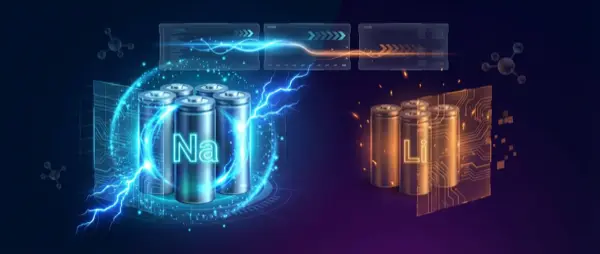
📖 Read more: Sodium-Ion Batteries Threaten Lithium's Energy Dominance
The solid-state battery, the industry's “holy grail,” is also approaching. Toyota announced pilot production for 2027. Solid-state batteries promise 50% more energy at the same weight, 10-minute charging, and zero fire risk.

🌍 Europe's Role in the Supply Chain
European nations are positioning themselves across the entire battery value chain. Lithium deposits in Northern and Southern Europe are being explored. Battery recycling represents another opportunity — the EU wants new recycling plants to create a circular economy for critical materials.
💡 Important: Cheaper batteries change everything. A €20,000 electric car with 400km range isn't a dream anymore — it's 2-3 years away. And Europe wants those cars to carry European batteries.
📖 Read more: HEDNO: Massive Smart Meter Rollout in 2026
🔮 What Changes for Consumers
European consumers will see: cheaper EVs, cheaper home energy storage, and cheaper electric e-bikes/scooters. The battery represents 30-40% of an EV's cost — every reduction translates directly to a lower car price. The battery revolution isn't just about cars; it's about energy independence.