

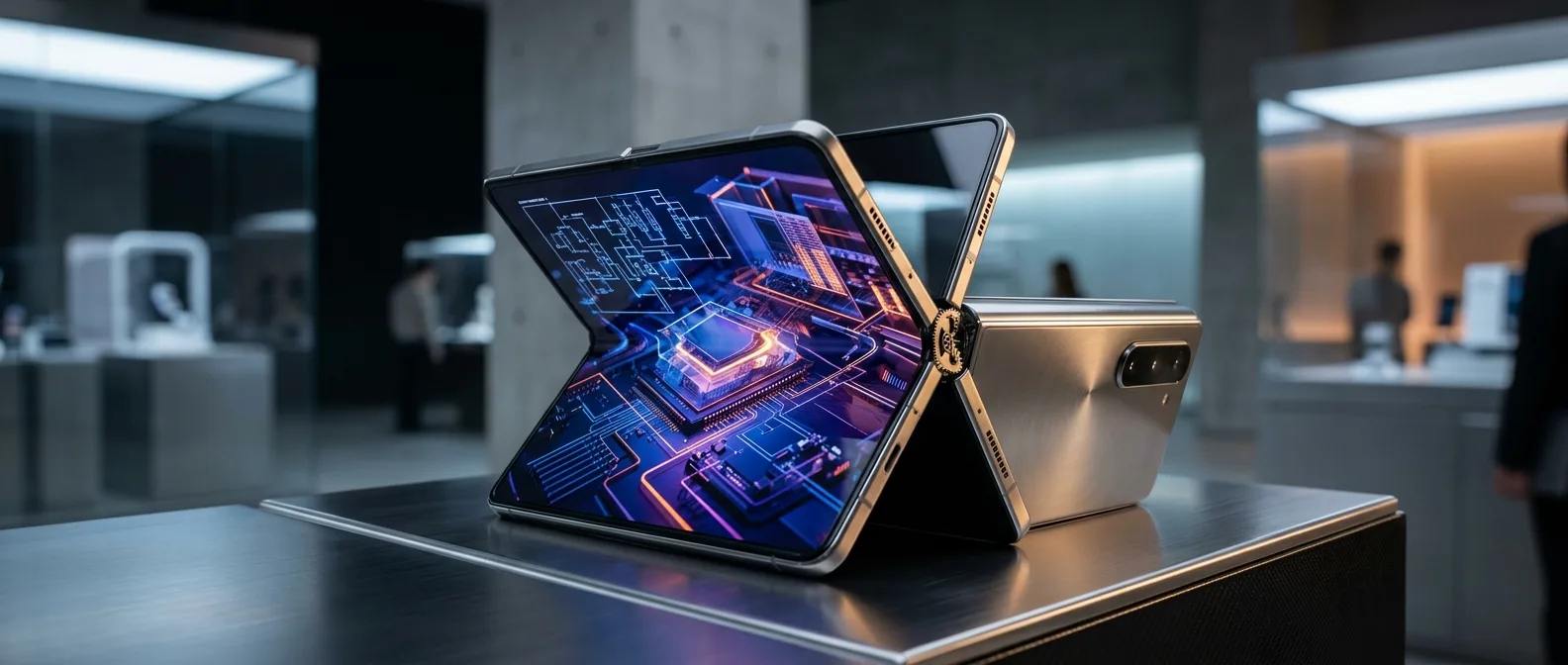
Three screens in one phone. That's what hits you when you pick up the Samsung Galaxy Z TriFold — the ultimate evolution of foldable phones that debuted at CES 2026. My first instinct was to hate it for the thickness. Then I opened it. That's when I realized Samsung might have struck gold.
Foldable phones have reached a weird inflection point. Just months ago, Samsung achieved what we'd always dreamed of with the Galaxy Z Fold 7: a foldable so thin it's indistinguishable from a regular flagship. Just as I was thinking "finally, no more bricks," the same company drops a device that weighs 309 grams and measures 12.9mm thick. But when it unfolds, it reveals a 10-inch AMOLED display that makes every tablet look puny.
📖 Read more: AST SpaceMobile: Satellite Direct to Phone
📱 From Phone to Tablet in Two Moves
The Galaxy Z TriFold plays by different rules than the Huawei Mate XT we saw in 2024. Where Huawei chose the Z-fold design that lets you use one, two, or three screens, Samsung went all-or-nothing. You either get the front 6.5-inch display, or you unfold the entire device for 10 inches of screen real estate.
Key specs: The TriFold runs on Snapdragon 8 Elite (not the newer Gen 5), packs the same 200MP camera as the Z Fold 7, and houses a 5,400mAh battery — 23% larger than its predecessor.
The magic lies in the details. Samsung uses two different types of magnets that push or pull depending on their position, making the opening mechanism surprisingly smooth. There's only one correct way to unfold it — left side first, then right. Get it wrong and the device vibrates aggressively while flashing warnings. Smart, but I wonder how many people will ignore it in their rush.
🎯 Three Apps, Zero Compromises
Here's where the real revolution hides. On the Z Fold 7, three simultaneous apps means three cramped windows that feel like pixel prison. On the TriFold, you can split the screen into thirds and each app maintains natural smartphone proportions. Slack, Chrome, YouTube — all running simultaneously, all with breathing room.
Samsung DeX runs natively on the device without an external display. This isn't exclusive to the TriFold — newer Samsung tablets have it too — but on a phone it's unprecedented. We're talking full desktop environment with taskbar and windowed apps. The "pocket PC" that sci-fi movies promised finally exists.
⚡ The Display That Changes Everything
The 4:3 aspect ratio on the main screen is a breakthrough. Compared to the Z Fold 7 and its nearly square display, you get dramatically more horizontal space for widescreen content. I tested it with "The Odyssey" trailer from Christopher Nolan — shot entirely on IMAX cameras — and the difference was striking.
But there's a catch: the larger screen makes you pickier about resolution. At 10 inches, the difference between 1080p and 4K becomes much more apparent than on smaller displays. Good or bad? Depends on how much of a perfectionist you are about video quality.
📊 Multitasking That Actually Works
For those of us who live in multitasking mode, the TriFold feels like discovering fire. You can run three full-size apps simultaneously without feeling like you're sacrificing the experience. Testing with simultaneous YouTube, note-taking app, and browser was revelatory — none of that cramped stacking sensation you get on smaller screens.
Samsung added another clever feature: if you try to fold the device incorrectly, the software reacts immediately. Flashing screen, intense vibration that gets stronger as you continue. It's impossible to ignore — unless you're really determined to destroy a €2,300 device.
📖 Read more: Tap to Phone Payments Launch in Greece for Small Business
🏋️ The Cost of Innovation
But the weight tells a different story. The TriFold is a technological marvel, but it's also a step backward in terms of portability. At 309 grams, it's nearly 100 grams heavier than the Z Fold 7. The 12.9mm thickness brings it close to the old Z Fold 5 (13.4mm), but even that was much lighter.
"It feels like carrying a brick, reminiscent of the early days of foldables."
Android Authority
The problem isn't just the user experience — it's the philosophy. We just achieved with the Z Fold 7 the goal we'd been chasing for years: a foldable that feels natural in your pocket. Now we're taking steps backward to chase the next dream.
⚙️ Engineering Excellence with Limits
Samsung faced massive engineering challenges. Two hinges, three panels, carbon-reinforced glass panels for durability without extra thickness. The impressive part is that the device's thinness is actually limited by... the USB-C port size. If Samsung wants to make the next model even thinner, they might need to go fully portless.
The IP48 rating for dust and water is respectable for a foldable, but not impressive for 2026. The cameras remain "good enough" rather than excellent — a limitation of the tight space constraints. And the 5,400mAh battery, despite the 23% increase, will likely struggle with the millions of pixels it needs to power.
💰 The Price of the Bleeding Edge
Roughly €2,300-2,850, based on current pricing in Korea and Singapore. It's exorbitant even for a "halo product," and Samsung is probably selling it at a loss just to build buzz. For comparison, that money gets you an excellent tablet and a flagship phone.
Advantages
- True tablet experience in a phone
- Pure multitasking with three apps
- Desktop environment without external display
- Stunning mechanical construction
Disadvantages
- Massive weight (309g) and thickness
- Prohibitive price (€2,300+)
- "Good" rather than excellent cameras
- Limited initial availability
🔮 The Future Arrived, But With Compromises
The Samsung Galaxy Z TriFold creates an odd contradiction: it solves problems I didn't know I had while creating new ones I definitely notice. After a week of intensive Z Fold 7 use, the thought of returning to a heavier, thicker, and more expensive phone annoys me. But the pull is undeniable — once you've tasted 10 inches of real multitasking, 8 inches suddenly feels cramped.
It took six years to perfect the single fold. I hope it doesn't take another six to make the double fold something people actually want to carry in their pockets, at a price that won't drain them financially. Until then, the TriFold stays expensive and heavy — a glimpse of tomorrow that asks you to sacrifice today's convenience.
Samsung promises a US launch within 2026, while it's currently available in Korea, China, and Singapore. I'll probably wait to see if the next generation solves the portability issue — or if I'll continue carrying two devices instead of one that does everything.
🎯 Frequently Asked Questions
How much does the Samsung Galaxy Z TriFold cost globally?
Samsung hasn't announced official global pricing, but based on prices in other markets it's estimated around €2,300-2,850. Currently it's only available in Korea, China, and Singapore.
How different is it from the Huawei Mate XT?
The Samsung TriFold folds inward with two hinges, while the Huawei Mate XT has a Z-fold design that allows using 1, 2, or 3 screens. Samsung better protects the foldable screen when closed.
Is the extra weight and thickness worth it?
Depends on your needs. If you do intensive multitasking or want desktop environment on-the-go, the trade-offs might be worth it. If portability is your priority, the Z Fold 7 remains the better choice.
Sources: