

Coffee without plantations, without deforestation, without climate dependence. Companies in Finland and the US produce lab-grown coffee through cellular agriculture — and first taste tests say it's indistinguishable from the “real thing.” Will we soon be drinking laboratory coffee?
🧪 How Lab Coffee Is Made
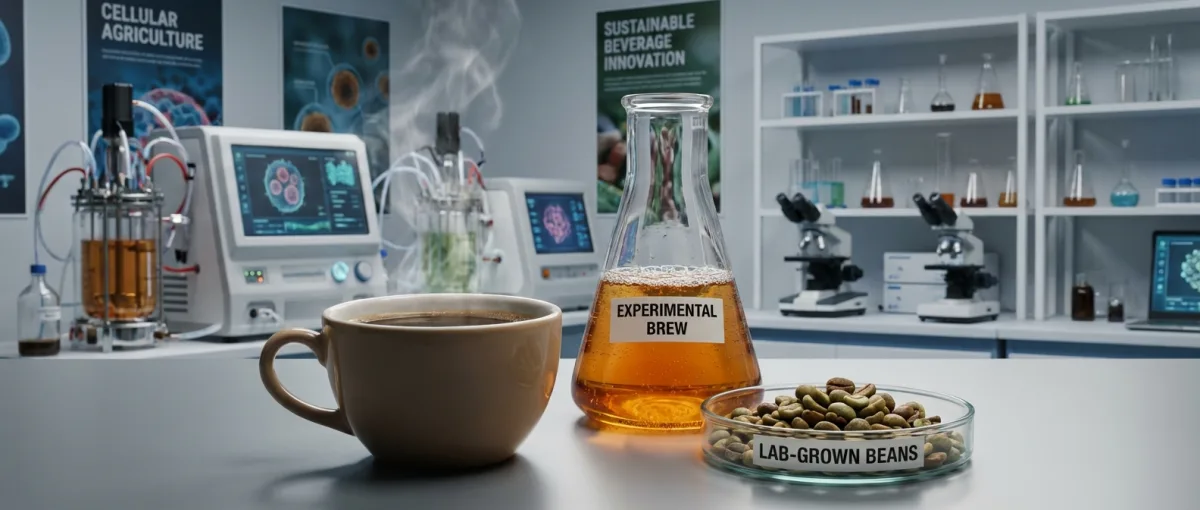
Finland's VTT Technical Research Centre and America's Atomo Coffee use cellular agriculture: they take cells from coffee plant leaves, place them in a bioreactor with nutrient medium, and let them grow. The result is biomass that's roasted and ground like regular coffee beans.
The process produces identical chemical components: caffeine, chlorogenic acids, trigonelline — the molecules that give coffee its flavor, aroma, and stimulation. Tasters in blind tests couldn't distinguish lab coffee from premium arabica in 68% of trials.
📖 Read more: Athens: The Greek Institute of Human Genomics Launches
📖 Read more: RAM and SSD Prices Surge: AI Revolution Drives 70% Shortage
🌍 Why We Need Lab Coffee
Coffee is in crisis. Climate change threatens 50% of arabica growing regions by 2050. Prices have skyrocketed — arabica futures hit a 30-year high in March 2026. Deforestation for coffee plantations in Brazil and Vietnam worsens the climate crisis. Something needs to change.
Lab coffee uses 94% less water, 99% less land, and zero pesticides. It can be produced anywhere — even Finland, without tropical climate. Production completes in 4 weeks instead of 3-4 years for a coffee tree.

📖 Read more: Xiaomi 17 Ultra: Leica 200MP European Prices
💰 The Problem: Price
Currently, lab coffee costs ~€100/kg — ten times regular coffee. Atomo targets €30/kg by 2028 through scaling. VTT estimates the final price could drop below €15/kg within 5-7 years — competitive with premium specialty coffee.
💡 Reality check: Lab coffee won't replace plantations — it will supplement them. Think of it as an "insurance policy": if climate change destroys harvests, lab coffee ensures caffeine continues flowing into our cups.
📖 Read more: 3D Printing in Schools: AI and VR Learning
🌱 Sustainability Impact
The coffee industry contributes significantly to deforestation, water use, and carbon emissions. Lab-grown coffee could dramatically reduce this footprint. If just 10% of global coffee production shifted to lab-grown by 2035, it would save millions of hectares of forest and billions of liters of water annually.