

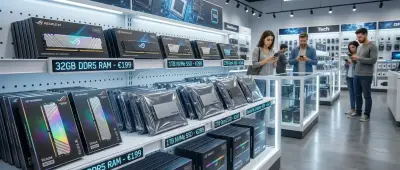
If you've recently tried to upgrade your computer with more RAM or a faster SSD, you've probably noticed something alarming: prices have skyrocketed. Where two years ago you could find a 32GB DDR5 kit for under €100, the same product now costs €150 or more. What happened in the market and why are consumers paying the bill for the AI revolution?
📖 Read more: The End of Fake Invoices: Real-Time VAT Monitoring Is Coming
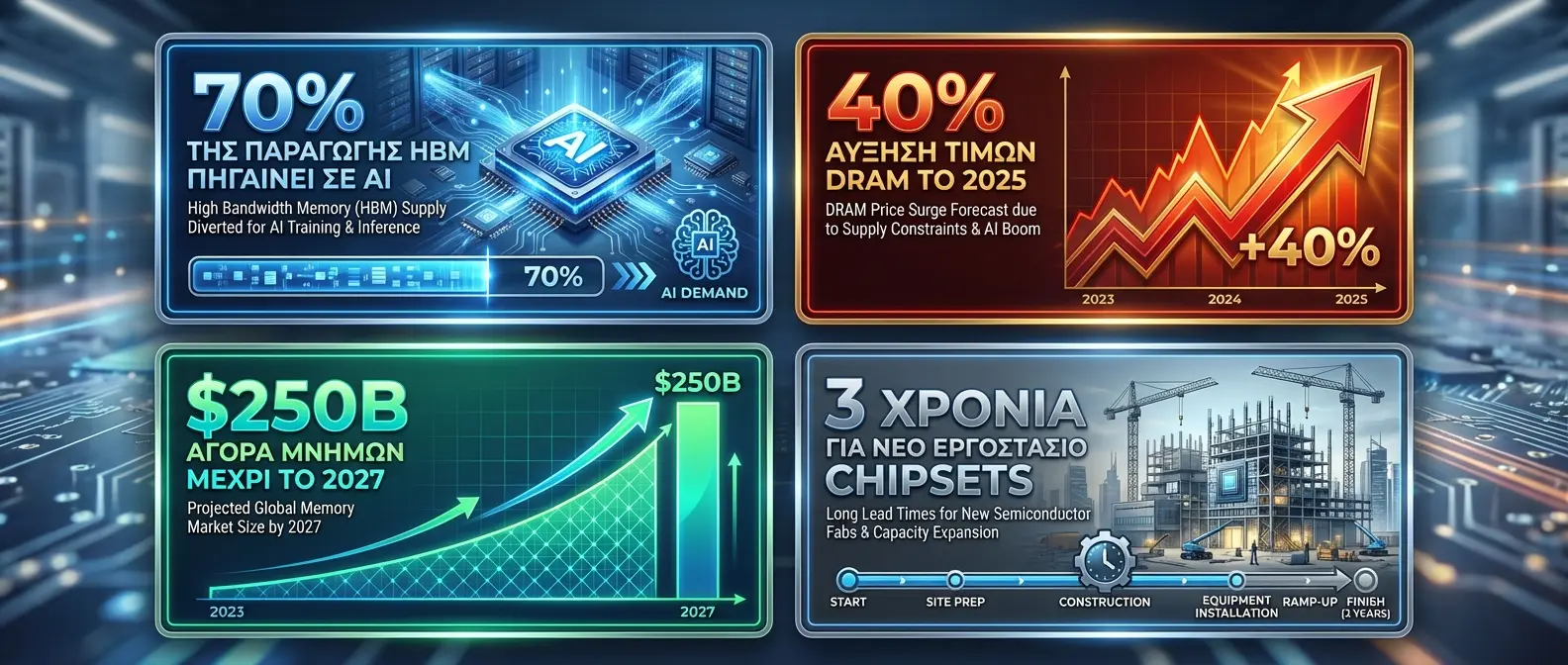
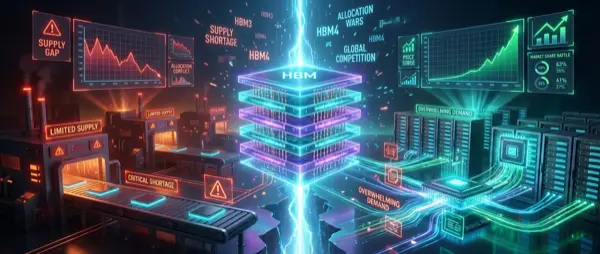
📊 The Numbers Are Shocking: DRAM prices rose by up to 40% in 2025, while NAND flash chips for SSDs saw a 25-35% increase. The cause? AI data centers now consume 70% of global high-performance memory production.
The truth is that this price increase is neither random nor temporary. It is the result of a perfect storm of factors: from the explosive demand for AI infrastructure, to production constraints and geopolitical tensions. Let's break down exactly what's happening.
🤖 The Main Culprit: AI Data Centers
The rise of ChatGPT, Gemini, Claude, and dozens of other AI systems didn't come without a cost. Every time you ask a chatbot a question or generate an image with AI, enormous computing resources are required. And those resources need memory — a lot of it.
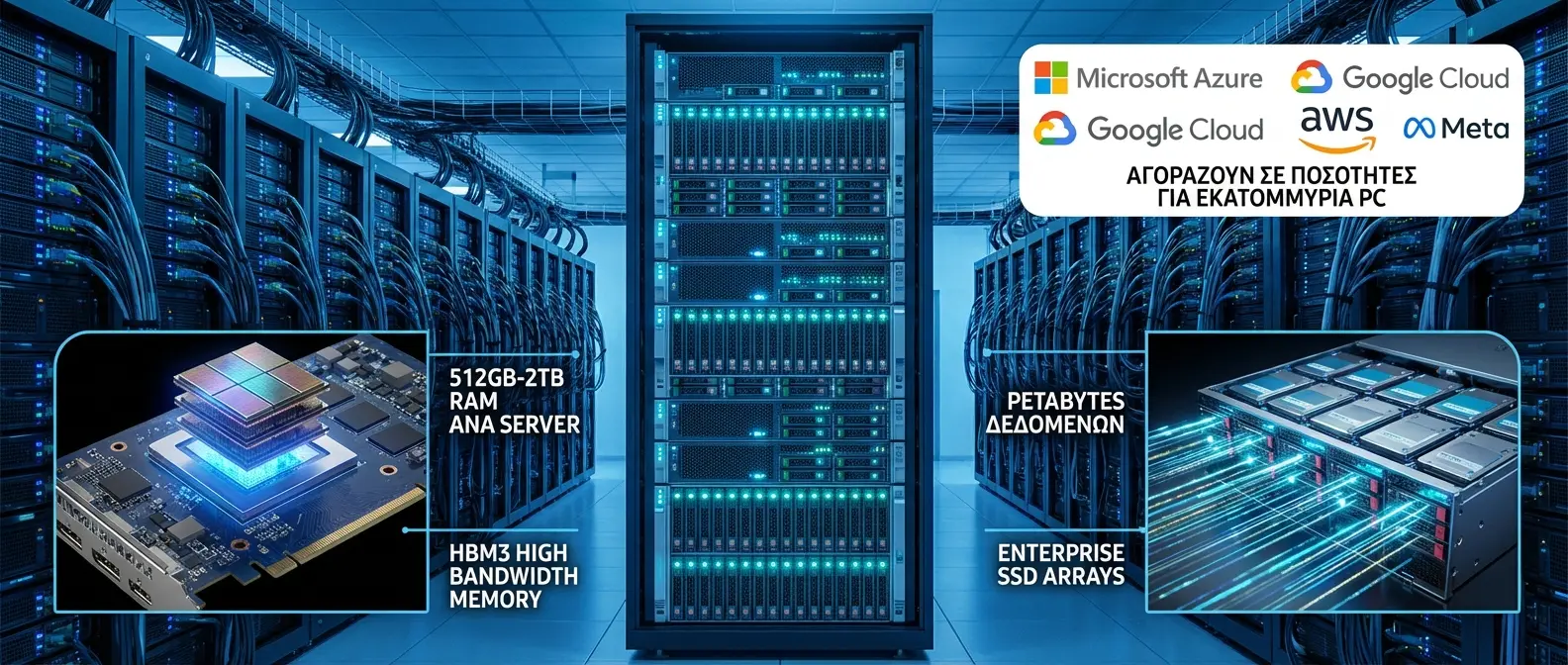
The servers running AI models are nothing like your home computer. A typical AI server can have 512GB to 2TB of RAM, and often uses specialized high-performance memory like HBM3 (High Bandwidth Memory). This memory costs many times more than conventional DDR5, and production is limited.
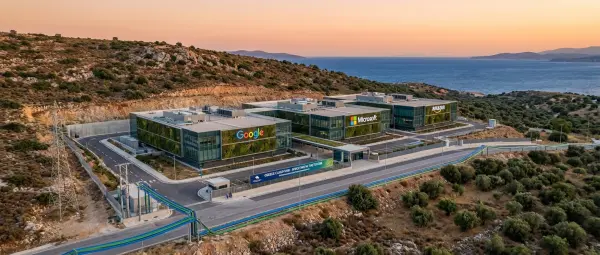
Companies like Microsoft (Azure), Google (Cloud), Amazon (AWS), and Meta are buying memory in quantities that could supply millions of consumer PCs. And they're paying premium prices to secure priority deliveries. When the big players grab the largest slice of the pie, regular consumers are left with the crumbs — and pay dearly for them.
🏭 Why Isn't Production Increasing?
The obvious question is: if demand is so high, why don't manufacturers build more factories? The answer is complex and reveals the nature of the semiconductor industry.
Building a fab (fabrication plant) for memory production is perhaps the most complex and expensive industrial process on the planet. A modern factory costs $15–20 billion and takes 3–4 years to build and begin production. This means that even if manufacturers decide to invest today, new production won't be available before 2029.
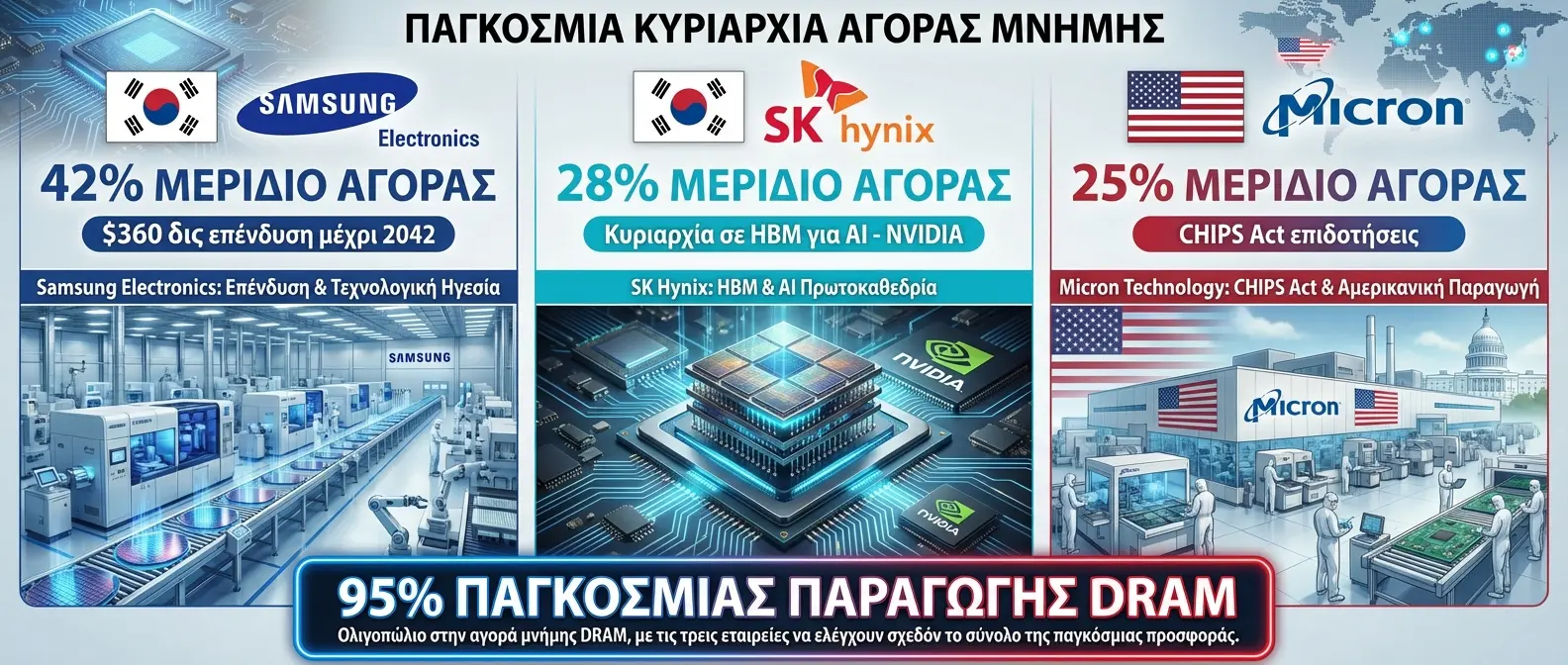
🇰🇷 Samsung Electronics
The world's largest DRAM producer. Investing $360 billion through 2042 in new facilities.
Market share: ~42%🇰🇷 SK Hynix
Dominates HBM for AI. Near-monopoly position in memory production for NVIDIA.
Market share: ~28%🇺🇸 Micron Technology
The only American producer. Receiving CHIPS Act subsidies for new factories.
Market share: ~25%These three companies control nearly 95% of global DRAM production. This concentration means that any decision they make affects the entire market. And right now, all companies are hesitant to invest massively because they're not sure whether AI demand will remain at these levels for a decade.

💾 What's Happening with SSDs?
The SSD market follows a similar dynamic, though with some differences. SSDs are based on NAND flash memory, which is produced by the same companies (Samsung, SK Hynix) plus Western Kioxia (formerly Toshiba Memory) and Western Digital.
📖 Read more: Turkey 10% Crypto Tax: What Changes
Data centers don't just need RAM — they also need massive storage space to store the training data for AI models. A model like GPT-4 requires petabytes of data for training. Cloud computing providers are buying enterprise SSDs in quantities that defy imagination.
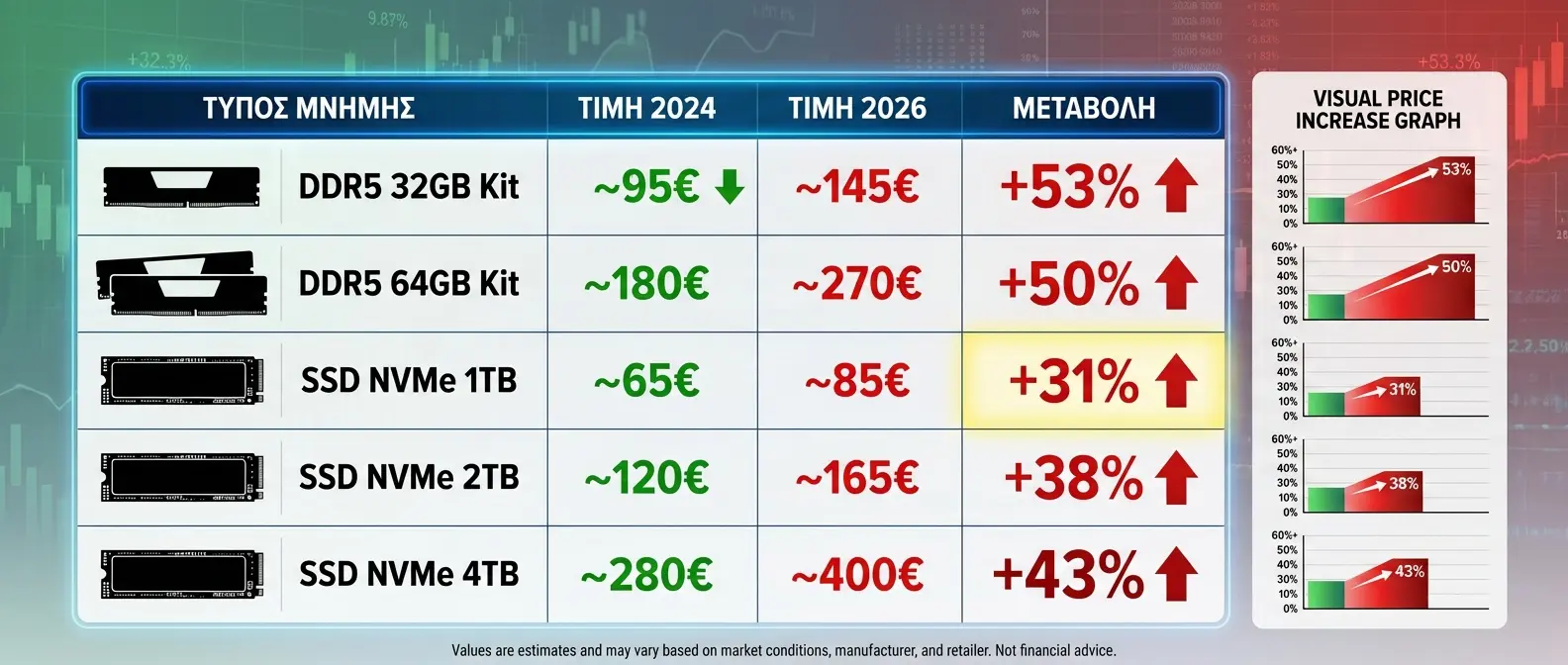
| Memory Type | Price 2024 | Price 2026 | Change |
|---|---|---|---|
| DDR5 32GB Kit | ~95€ | ~145€ | +53% |
| DDR5 64GB Kit | ~180€ | ~270€ | +50% |
| SSD NVMe 1TB | ~65€ | ~85€ | +31% |
| SSD NVMe 2TB | ~120€ | ~165€ | +38% |
| SSD NVMe 4TB | ~280€ | ~400€ | +43% |
As you can see in the table, the increases are not uniform. Larger capacities have been hit harder because those are what data centers primarily demand. A consumer who wants a 1TB SSD pays less of a “premium” than one who needs 4TB.
🌍 Geopolitical Tensions and Trade Wars
The situation is worsened by geopolitical tensions between the West and China. The US has imposed strict restrictions on exports of advanced chips to China, aiming to slow down Chinese AI development. This has created an atmosphere of uncertainty in the market.
China, for its part, is trying to develop its own memory industry through companies like YMTC (Yangtze Memory Technologies). However, American sanctions have significantly delayed this effort. The result is a global market that remains dependent on three companies, with all the risks that entails.
⚠️ Analyst Warning: In the event of escalating tensions over Taiwan — where TSMC produces most SSD controller chips — prices could double within weeks.

📈 Other Factors Driving Prices Up
Beyond AI demand and geopolitical constraints, there are other factors contributing to price increases:
⚡ Energy Costs
Memory production is extremely energy-intensive. Chipset factories consume as much energy as a small city. With rising energy prices in recent years, production costs have increased significantly. Manufacturers pass this cost on to consumers.
🚢 Shipping and Logistics
Memory is primarily produced in Asia (South Korea, Japan, Taiwan) and shipped worldwide. The elevated shipping costs since the COVID-19 pandemic have not fully returned to pre-crisis levels. This adds another layer of cost.
💱 Currency Fluctuations
The weakness of the euro against the dollar means European consumers pay even more. Memory is priced globally in dollars, so every drop in the euro translates to higher shelf prices.
🔮 What to Expect in 2026–2027?
Market analysts have different views on the future of memory prices. There are two main scenarios:
📖 Read more: Vodafone + Amazon Satellites: Internet in Europe
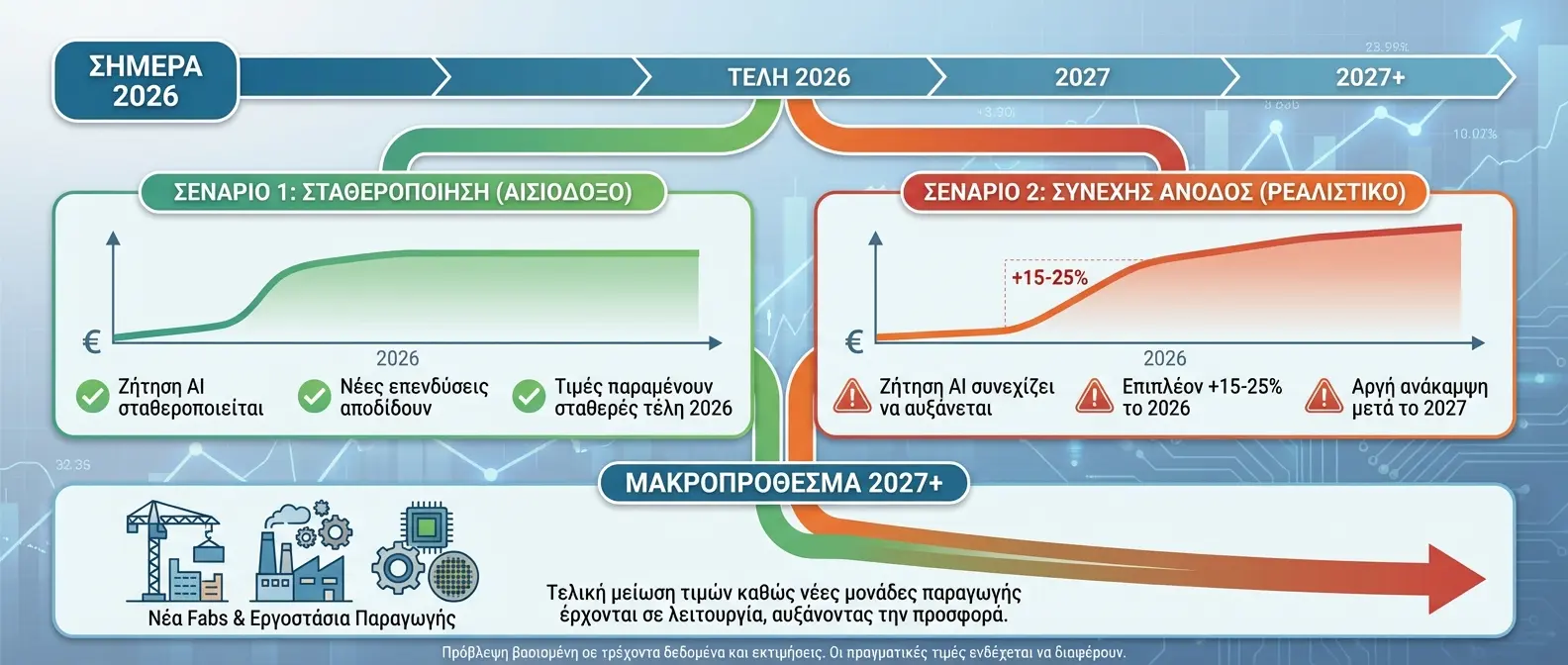
Scenario 1: Stabilization (Optimistic)
If AI demand stabilizes and new investments begin to yield results, prices could level off at current levels by late 2026.
Scenario 2: Continued Rise (Realistic)
If demand for AI infrastructure continues growing at current rates, prices will rise an additional 15–25% in 2026.
Long-term (2027+)
New factory investments will begin bearing fruit. A gradual price decline is expected as supply increases.
💡 What Can You Do?
As a consumer, your options are limited, but there are some strategies you can follow:
- Buy now if you need it: If you're planning an upgrade, don't wait for a big price drop. It may not come anytime soon.
- Track deals: Websites like Skroutz show price history. Use alerts to catch the best moments.
- Consider used/refurbished: For RAM and SSDs that don't require the latest technology, the second-hand market can offer significant savings.
- Assess your actual needs: Do you really need 64GB of RAM or would 32GB suffice? Smaller capacities have been less affected.
💡 Tip: If your laptop needs a memory or storage upgrade, get in touch with us. We can advise you on the best solution based on your needs.
📱 How Does It Affect Smartphones and Tablets?
The price increase doesn't just affect desktops and laptops. Smartphones and tablets also use DRAM and NAND memory. This is one of the reasons flagship smartphones have surpassed €1,000 and continue to get more expensive.
An iPhone 16 Pro with 256GB of storage contains chips that have increased significantly in cost. Apple and Samsung absorb part of this cost, but inevitably pass some of it on to consumers through higher prices or fewer available storage tiers.
🏁 Conclusion
The rise in RAM and SSD prices is not a random market phenomenon. It is the result of a fundamental shift in how we use technology. Artificial intelligence has created a massive new market that absorbs production capacity, while the industry cannot adapt quickly enough.
For consumers, this means they need to be more strategic with their purchases. The era of continuously falling hardware component prices appears to be over, at least temporarily. The good news is that the major investments in new factories will begin bearing fruit in the coming years, bringing some relief.
Until then, the electronics market will remain a challenge for those seeking the best value for money. Patience and research are your best tools.