

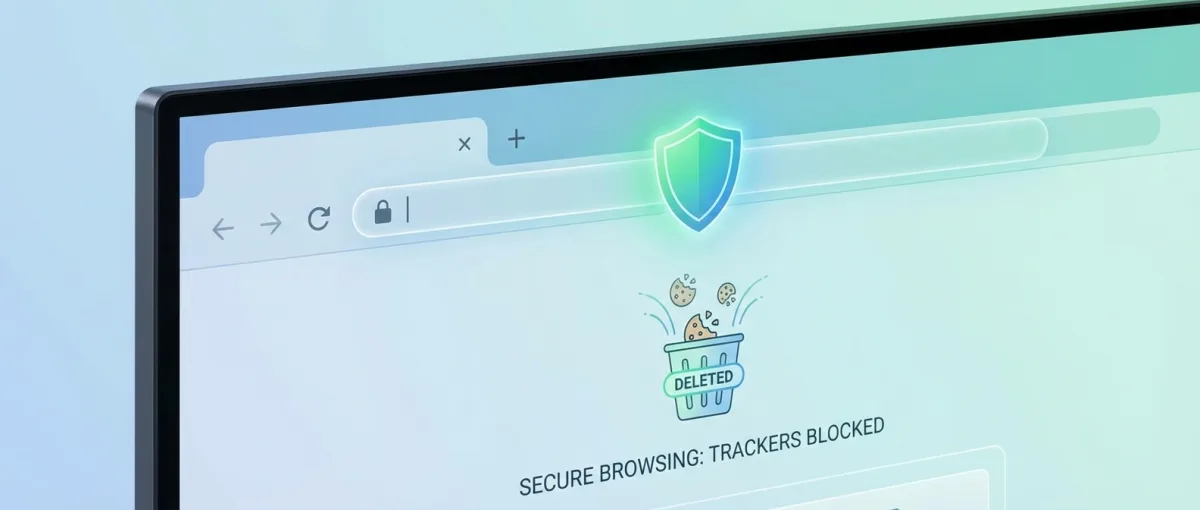
Privacy browsers are gaining ground at a pace nobody expected. Brave, Arc, DuckDuckGo Browser, and Vivaldi now offer a cookie-free, tracker-free, ad-free experience. What does a life without cookies look like in 2026, and how is it changing our relationship with the internet?
📖 Read more: Charter-Cox: $34.5B Megamerger in the USA
🛡️ The New Generation of Privacy Browsers
Brave Browser surpassed 80 million monthly users in March 2026. Arc Browser, with its innovative design, entered the top 5 downloads on the App Store. Even Firefox is making a strong comeback with Enhanced Tracking Protection 3.0. The trend is clear: users no longer want to be tracked.
The key difference from regular Chrome? These browsers block third-party cookies, fingerprinting scripts, and invisible trackers by default. No extension or configuration needed — privacy is the default state, not the exception.
🍪 What Do You Lose Without Cookies?
The truth is, life without cookies isn't as dramatic as many fear. Third-party cookies — those that track you from site to site — offer nothing to the user. First-party cookies, which maintain your logins and preferences, remain intact. You essentially only lose the “creepy” targeted ads.
What you gain, however, is massive: speed. Without dozens of trackers and scripts, pages load significantly faster. Tests show Brave loads pages up to 3 times faster than Chrome on ad-heavy sites. Your phone battery lasts longer. And your mobile data isn't wasted on invisible tracking.
📖 Read more: Chemical Plastic Recycling: Why It's the New Hot EU Topic

💰 How the Advertising Industry Is Responding
Google, which earns over $200 billion annually from advertising, isn't sitting idle. Instead of cookies, it's pushing the Privacy Sandbox — a system that groups users into “topics” rather than tracking them individually. Critics say it's simply a new form of tracking with better marketing.
The real change comes from contextual ads — advertisements based on page content, not your history. If you're reading about travel, you see hotel ads. Without anyone knowing who you are. Brave has already created such a system that pays users in crypto for (voluntarily) viewing ads.
💡 Worth noting: Privacy doesn't mean anonymity. Even with a privacy browser, your ISP, employer, and government agencies can see your activity. For full anonymity, you need a VPN in combination.
📖 Read more: Cyber Resilience Act: Greek Companies Affected in 2026
📱 Which Browser to Choose
For the average user, Brave is the best starting point. It's Chromium-based (same engine as Chrome), so extensions and compatibility are identical. For power users, Vivaldi offers unmatched customization. Arc Browser is ideal for creatives wanting a minimal interface. And DuckDuckGo Browser on mobile is the ultimate fire-and-forget privacy solution.
The big change isn't technological — it's cultural. For the first time, millions of users are actively choosing browsers based on privacy rather than convenience. And the market is responding.