

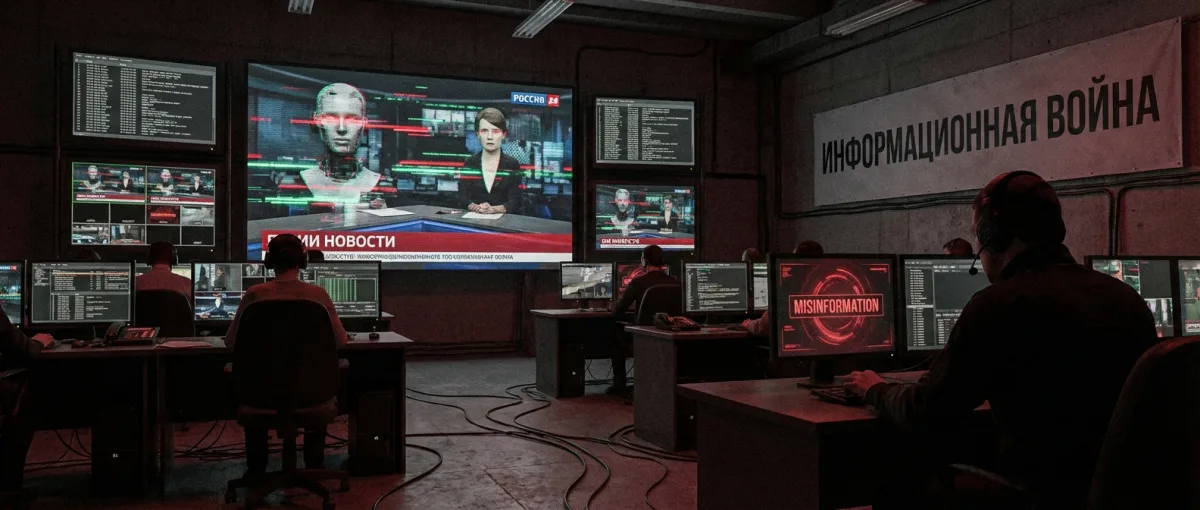
Russia has taken propaganda to a new level. Using AI-generated video, it creates fake reports from Western media outlets, fabricated statements from European leaders, even entire news bulletins with presenters who don't exist.
📖 Read more: Deepfake CEO: $25M Corporate Fraud
🎬 The New Tactic
In January 2026, the EU identified a network of over 300 websites publishing AI-generated videos bearing BBC, DW, and Le Monde logos. The videos were remarkably convincing: presenters with perfect lip-sync discussed “secret” NATO decisions or “internal crises” in the EU.
These weren't simple deepfakes. They used AI voice-over in multiple languages (German, French, Greek, Polish), AI-generated graphics, and even fake lower-thirds with fabricated journalist names. Producing such a video, according to experts, costs less than $500.
📖 Read more: EU Deepfakes Law: What's Being Prepared
🎯 The Targets
Three main target categories: (1) Undermining trust in NATO and Western democracies, (2) Creating confusion around Ukraine and the Baltic states, (3) Stoking xenophobia and internal divisions within European societies.
The most alarming aspect? The videos target smaller markets. Instead of English-speaking audiences (which have fact-checking tools), they target Greek, Bulgarian, Romanian audiences — markets with fewer verification resources.
📖 Read more: Deaflympics Tech: Technology for Deaf Athletes
🇬🇷 Greece targeted: At least 15 AI-generated videos targeting Greek audiences were detected in January 2026 — including a fake report by an “ERT” commentator about a “secret Greece-Turkey deal.”

📖 Read more: Digital Euro Stalled: Brussels Political Deadlock in 2026
🛡️ The Response
EUvsDisinfo, the anti-Russian disinformation service, expanded its teams. Meta and Google removed thousands of accounts. But it's an uneven fight: creating AI videos is cheap and fast, while detection costs several times more.
The challenge for citizens is simple but difficult: don't trust any video if you can't find the source. AI-generated reports don't exist on official media sites. A quick search is enough.