

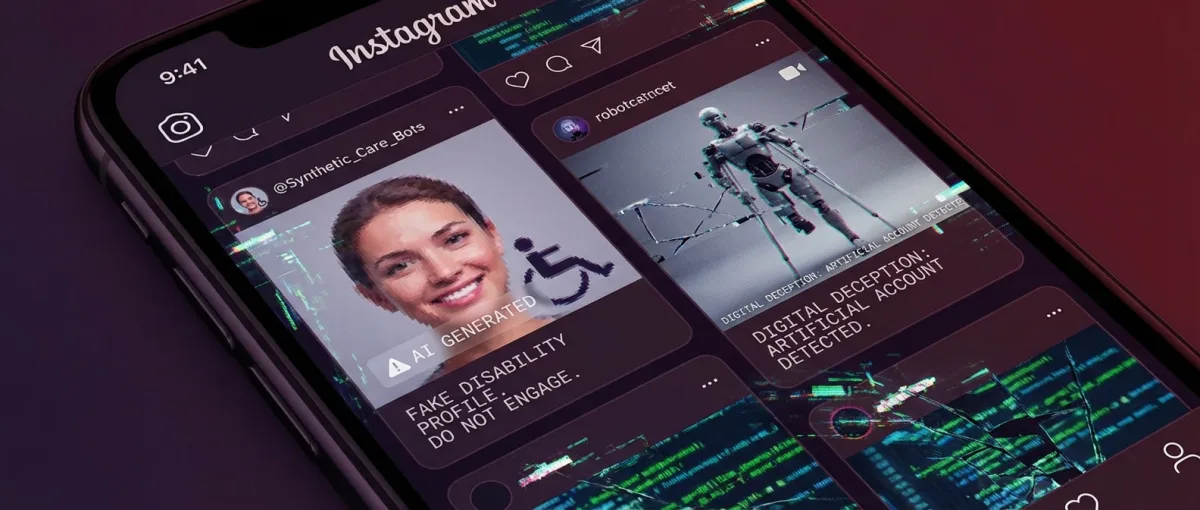
If you've been scrolling through Instagram recently, you might have seen accounts of people in wheelchairs — with perfect lighting, flawless skin, and smiles that look like stock photos. They're not real people. They're AI-generated images — and this trend is becoming increasingly disturbing.
🤖 What's Going On
Thousands of Instagram accounts use AI-generated photos of people with disabilities to collect followers, engagement, and profit. The images show young women — almost always women — in wheelchairs or with visible disabilities, photographed in exotic settings or in modeling-style poses.
📖 Read more: Fed vs AI: How the Global Economy Is Changing
The telltale signs they're AI? Hands with six fingers, ears with odd contours, backgrounds that “melt” in places, and faces so perfect they don't look real. But the average user doesn't notice — and that's exactly what the creators exploit.
💰 The Motive
Engagement. Posts with disability themes collect higher engagement rates on Instagram because of the algorithm — people like, comment, or share these images more readily. This boosts the account's reach, which translates into ad revenue, affiliate links, or selling the account once it acquires enough followers.
In a sample of 500 accounts identified in January 2026, over 70% were created within the last 6 months. Many already had over 50,000 followers.
📖 Read more: Seedance 2.0: Chinese AI vs Hollywood
🚨 Spotting fake profiles: Look at the hands (fingers), hair (unnatural lines), and wheelchair-body connection points. If a profile has only model-quality photos and no videos, the probability of AI is high.

📖 Read more: AI Copyright Wars: Who Owns AI-Created Works
👥 Why It Matters
The disability community reacted strongly. The problem isn't just deception. It's that these AI images reproduce a “perfect” version of disability that doesn't match reality. They create false representation, stealing visibility from real creators who share their actual experiences.
Meta, Instagram's parent company, announced it tags AI-generated images with a “Made with AI” label. The reality? Many fake accounts bypass detection by using light post-processing or tools that strip metadata.
📖 Read more: AI Deathbots: Chatbots of Deceased Loved Ones
📊 The Broader Trend
Fake AI profiles aren't limited to disabilities. Similar tactics are used with military, health, widow, and orphan themes. The goal is always the same: “touch” the algorithm through emotional content.
The challenge for platforms is both technological and philosophical. If you ban AI-generated profiles, what about AI avatars that users use legitimately? If you only flag images, what about text? The line between “AI-assisted” and “AI-fabricated” isn't clear — and some people exploit that ambiguity.
📖 Read more: Block: Jack Dorsey Replaces Employees with AI