

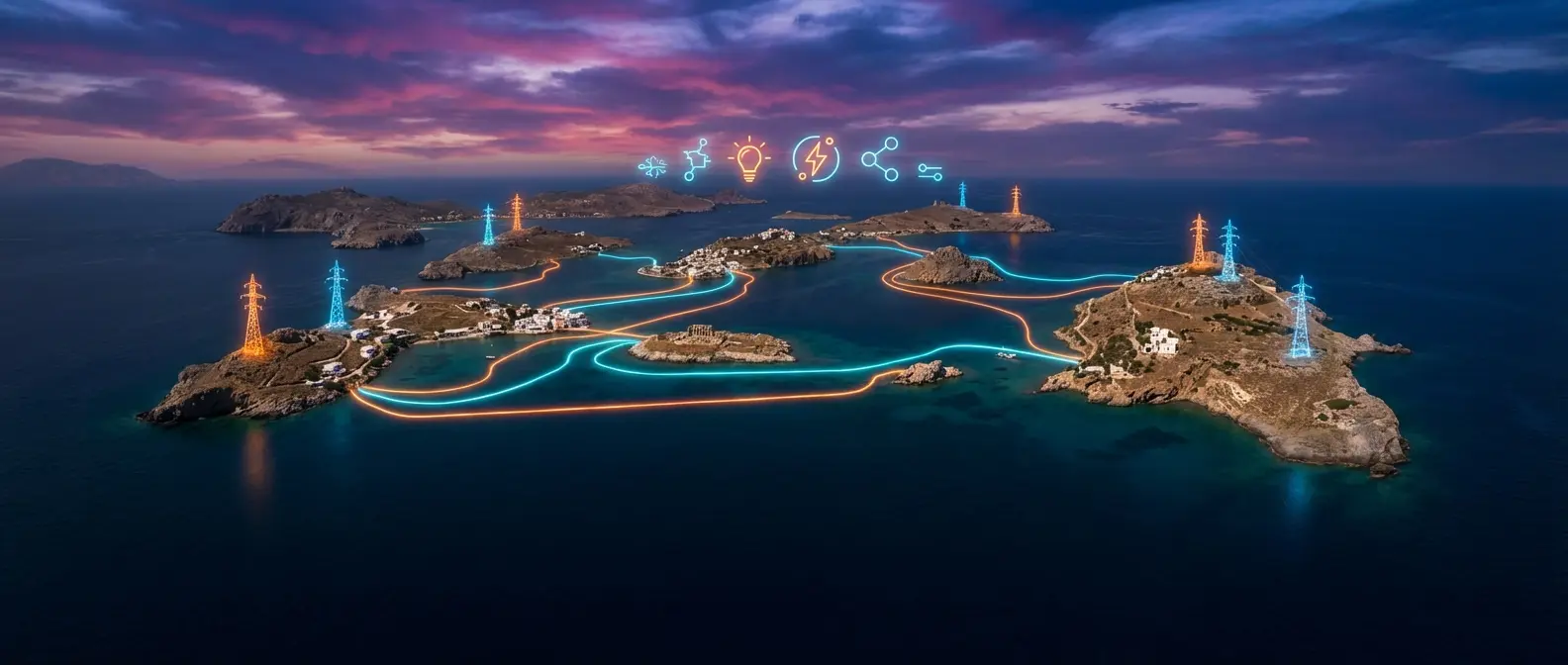
The Dodecanese generate electricity using oil — an expensive, polluting, and outdated practice. Connecting them to the mainland grid is one of the country's largest energy projects. When will it be completed and what does it mean for the islands?
📖 Read more: Sodium-Ion Batteries Threaten Lithium's Energy Dominance
❓ Why the interconnection is necessary
Today, Rhodes, Kos, and the rest of the Dodecanese depend on local power stations that burn heavy fuel oil and diesel. This means high production costs — roughly triple the mainland grid — burdening all consumers through the special PSO levy. Moreover, emissions are significant, especially in summer when demand surges due to tourism.
The interconnection will allow clean energy supply from the national grid, will drastically reduce costs, and will pave the way for renewable sources. The islands have enormous solar and wind potential that is currently not fully utilized.
⚡ Technical specifications
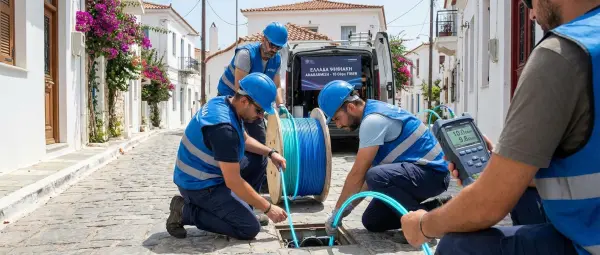
The project involves an HVDC 380 kV subsea cable connecting Crete to Rhodes, and from there to Kos. Capacity will reach 700 MW, sufficient to cover even peak summer demand. At the same time, new substations are being built on all major islands.
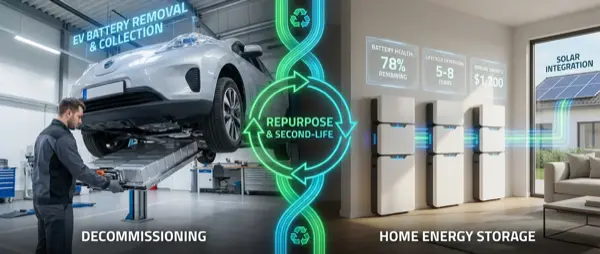
📖 Read more: Battery Repurposing: The New Trend in Home Energy Storage
⏰ The timeline
Phase 1 (Crete-Rhodes) began in 2024 and is expected to be completed in 2027. Phase 2 (Rhodes-Kos-Kalymnos) follows with completion in 2028. By the end of the decade, all major Dodecanese islands will be interconnected.
Local power stations won't shut down immediately — they will remain as backup for emergencies. Gradually, however, they will be decommissioned as grid reliability increases.
💰 Economic benefits
- 40-50% reduction in energy costs
- €200M/year savings on PSO levy
- More attractive prices for businesses
- New investments in renewables
🌱 Environmental benefits
- Zero emissions from power generation
- End of heavy fuel oil pollution
- Harnessing solar potential
- Wind farms without restrictions

📖 Read more: Clean Hydrogen 2026: EU Invests €105M in Green Technologies
📌 The challenges
The project is not without obstacles. The sea depth in some areas exceeds 1,000 meters, making cable laying technically demanding. Also, there are archaeological zones that must be avoided. Meanwhile, the increase in material costs in recent years has burdened the budget.
Despite all this, the project is moving forward. Its strategic importance — both in terms of energy and geopolitics — leaves no room for delays.
OnOff Energy
We cover the major energy projects transforming Greece.