

Meta, the parent company of Facebook, may be eyeing the smartwatch market. Following the success of Ray-Ban Meta smart glasses and years of neural interface research, Meta is reportedly reconsidering a wrist-worn wearable. But can it realistically challenge Apple Watch dominance?
Meta's Wearable Ambitions
Meta is no stranger to the wearables space. Mark Zuckerberg's company has already made a significant mark with the Ray-Ban Meta smart glasses, which achieved impressive commercial success since their launch in 2023. These glasses, combining a camera, speakers, and the Meta AI assistant, proved that Meta can build consumer hardware that people actually want to wear every day.
Equally important is the 2019 acquisition of CTRL-Labs, a startup developing neural interface technology for the wrist. The EMG (electromyography) technology developed by CTRL-Labs can translate the electrical signals traveling through the wrist into device commands, enabling control without physical touch. This technology appears tailor-made for a smartwatch form factor.
Together, these moves paint a picture of a company that has been methodically building the pieces needed for a wrist-worn device. The question is whether Meta will assemble those pieces into a product that can compete with the Apple Watch, or whether the challenges will prove too great.
Meta Watch Rumors and Leaks
The first leaks about a Meta smartwatch surfaced back in 2021-2022, when internal renders revealed a wrist device with a built-in camera and a detachable display. That initial project was reportedly shelved, but recent reports from early 2026 suggest that Meta is revisiting those plans with a refreshed approach.
Based on patents, leaks, and analyst predictions, a potential Meta Watch could feature:
- Meta AI Assistant: Full integration with Meta AI, providing access to Llama language models from your wrist for conversation, translation, and information retrieval
- Neural Interface: EMG technology for finger-gesture control without touching the screen
- Social Integration: Deep integration with Instagram, WhatsApp, and Messenger for rich notifications and quick replies
- AR/VR Companion: Connection to Meta Quest headsets as a controller and navigation device
- Camera: A possible wrist camera for quick photos and video calls
Understanding EMG Technology
Electromyography measures the electrical signals that the brain sends to the fingers through the wrist. Meta is developing a wristband that can interpret these signals as commands. Imagine controlling your watch by simply twitching a finger — no screen tap needed. This could revolutionize how we interact with wearable devices.
Meta vs Apple: Competitive Analysis
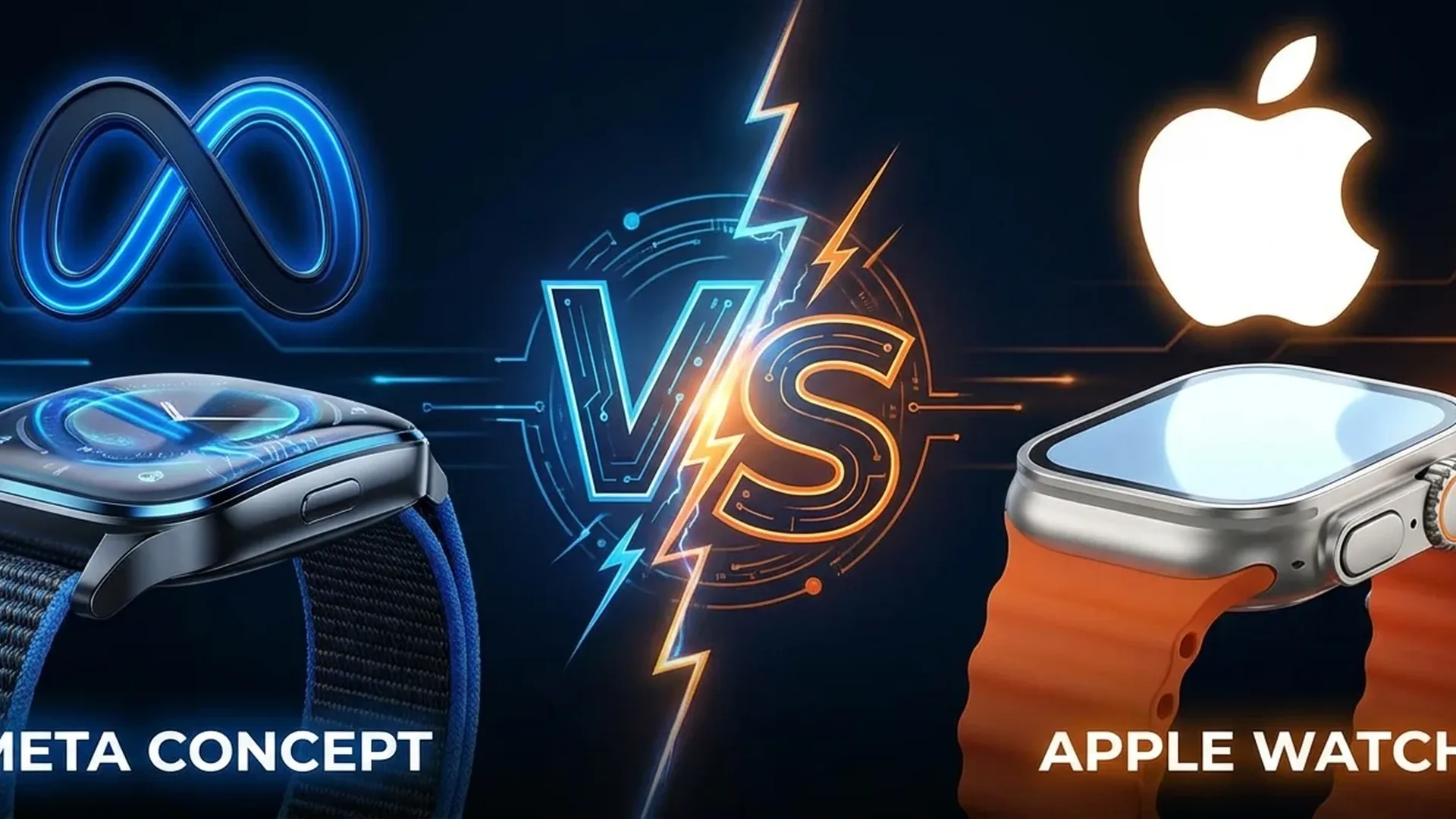
To understand whether Meta can genuinely threaten Apple Watch, we need to examine the strengths and weaknesses on both sides of this potential rivalry.
Apple's Strengths
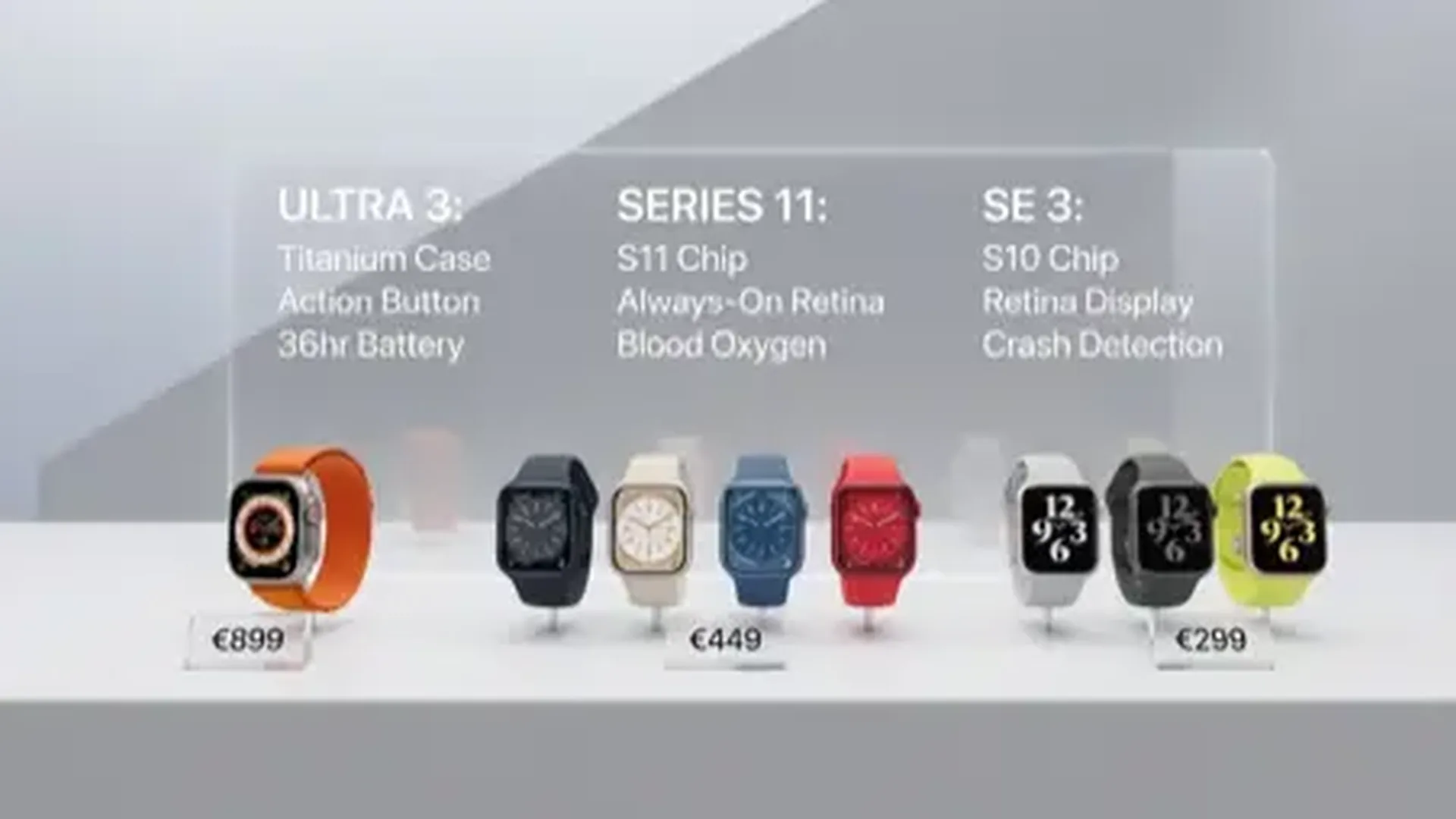
Apple Watch has dominated the smartwatch market for over a decade. Apple has built an enormous ecosystem of apps, health sensors, and accessories that no competitor has managed to replicate. The SpO2 sensor, ECG, fall detection, Crash Detection, wrist temperature measurement, and Satellite SOS represent a suite of features that required years of research and regulatory approvals across dozens of countries.
The watchOS App Store hosts thousands of third-party applications. From banking apps to airline boarding passes, from fitness trackers to games, the ecosystem is unmatched. Meta would be starting from zero in this department, which is a massive disadvantage when users expect a rich app selection from day one.
Meta's Strengths
Meta commands the largest social media user base on the planet. With > 3 billion users across Facebook, Instagram, WhatsApp, and Messenger, the company has an unparalleled distribution network. If a Meta Watch offered deep integration with these platforms — think instant story posting from your wrist, voice messages through WhatsApp, or live video sharing to Instagram — it could attract users who prioritize social connectivity over health tracking.
Meta AI is another significant advantage. Powered by Llama language models, Meta's AI assistant is evolving rapidly. A smartwatch with deeply integrated AI could function as a truly intelligent personal assistant capable of natural conversation, text generation, real-time translation, and health data interpretation.
Challenges Facing Meta
Despite its strengths, Meta faces serious obstacles if it decides to enter the smartwatch arena.
Privacy Concerns
Meta has a significant trust deficit when it comes to personal data. From the Cambridge Analytica scandal to GDPR fines and congressional hearings, the company's reputation in the privacy domain remains tarnished. A smartwatch that collects health data — heart rate, sleep patterns, location, activity levels — requires an enormous level of user trust. Many potential customers would hesitate to hand over such intimate data to a company with Meta's track record.
Hardware Track Record
Meta's hardware history is mixed. While the Quest headsets sell well and the Ray-Ban Meta glasses have been a hit, earlier products like Facebook Portal and the original Oculus Go failed commercially. Building a smartwatch requires expertise in miniaturized sensors, compact battery technology, and biomedical engineering that Meta has not yet demonstrated at scale.
App Ecosystem Building
Even if Meta released impressive hardware, it would need a developer ecosystem. Without third-party apps, a smartwatch remains limited. Apple spent years convincing developers to build for watchOS, and it still took multiple generations before the app ecosystem became truly rich. Meta would likely face an even steeper uphill battle given the smaller initial user base.
The AR/VR Companion Strategy
The most likely entry strategy for Meta is not a direct Apple Watch competitor. Instead, we may see an EMG wristband companion device for Quest headsets, used to control VR and AR experiences through finger gestures. This could gradually evolve into a full-featured smartwatch over time, reducing the risk of a head-on collision with Apple.
Why Apple Watch Remains Strong
Apple Watch possesses something no competitor can easily replicate: over a decade of continuous refinement. Since the original Apple Watch launched in 2015, Apple has methodically built a product that serves health, fitness, communication, payments, and personal safety. Every year brings meaningful upgrades, and users who have invested years of health data into HealthKit are deeply embedded in the ecosystem.
The health sensor advantage is enormous. ECG, blood oxygen measurement, arrhythmia detection, and Sleep Apnea Detection (watchOS 11) each require regulatory approvals in every market. Apple already holds these certifications worldwide. A new competitor would need years just to match the regulatory groundwork, let alone innovate beyond it.
The seamless integration with iPhone is another moat. Apple Watch works harmoniously with AirPods, iPhone, iPad, and Mac. Features like Handoff, Universal Clipboard, Find My, and Apple Pay create a network effect that keeps users firmly within the Apple ecosystem. Meta would need to offer a compelling reason for users to split their attention across two different ecosystems.
Market Implications
If Meta ultimately enters the smartwatch market, the implications would be fascinating for consumers. More competition means faster innovation and potentially better prices across the board. Apple would not sit idle if a company with < 3 billion users started competing for wrist real estate.
However, the market has shown that brand loyalty in wearables is exceptionally high. Apple Watch users rarely switch platforms, especially those who have built years of health data in HealthKit. Meta would likely need to target Android users who do not yet own a smartwatch, or users seeking an affordable social-media-focused wearable rather than a health device.
Final Assessment
As of February 2026, Meta does not pose an immediate threat to Apple Watch. The company has not officially announced a smartwatch, and even if it does, it would take years to reach a mature product. The EMG technology is impressive but still in its early stages of consumer readiness. The AR/VR companion device strategy is more realistic than an outright Apple Watch killer.
What we should watch is the evolution of Meta AI and the neural interface wristband. If Meta manages to create a unique value proposition around AI, social interaction, and neural control, it could carve out an entirely new category of wearable rather than competing directly with Apple Watch. That would be the smartest path forward.
Frequently Asked Questions
Has Meta announced a smartwatch?
Not officially. There are leaks, patents, and internal prototypes, but Meta has made no formal smartwatch product announcement as of February 2026.
What is EMG technology?
Electromyography measures the electrical signals traveling through the wrist when the brain sends commands to the fingers. Meta developed this technology through its 2019 acquisition of CTRL-Labs and has been refining it for consumer use.
Are Ray-Ban Meta glasses a smartwatch?
No. Ray-Ban Meta glasses are smart glasses with a camera, microphones, and speakers. They do not replace a smartwatch, but they demonstrate that Meta can successfully build and market consumer wearable hardware.
Would a Meta Watch work with iPhone?
Likely yes, at least at a basic level. Meta supports both Android and iOS in its existing apps. However, deep system integration — like Apple Watch has with iPhone — would require Apple's cooperation, which is highly unlikely.
Can Meta be trusted with health data?
This remains a major question. Meta has improved its privacy practices in recent years, but its reputation in this area remains contested. User trust will be critical, and Meta will need to demonstrate a fundamentally different approach to data handling for health information.