

Release Date
The timing is now virtually confirmed . Tim Cook posted on social media that “new products start Monday morning.” According to 9to5Mac, a press experience (dubbed “Apple Experience”) will follow in New York City on Wednesday, March 4. Mass production began in January 2026 at Foxconn facilities.
For reference, the iPhone 16e launched on February 19, 2025, so Apple is maintaining an annual refresh cycle for the “e” lineup. In Europe, availability is expected throughout March via Apple.com, authorized resellers, and carriers 🇪🇺.
Three Key Upgrades
According to multiple reports (9to5Mac, MacRumors), the iPhone 17e brings three significant changes over its predecessor:
A19 Chip — Flagship Power
The A19 is built on TSMC's 3nm N3P process — the same chip found in the standard iPhone 17. According to MacRumors, Apple likely uses a downclocked variant (lower clock speeds) with a 4-core GPU instead of 5-core 🔧. However, it still features an upgraded Neural Engine and Neural Accelerator per GPU core — critical for Apple Intelligence. Combined with 8 GB RAM, it fully supports Writing Tools, Genmoji, Image Playground, and Siri with ChatGPT 🧠.
MagSafe — Finally!
The biggest disappointment of the iPhone 16e was the lack of MagSafe — wireless charging topped out at 7.5W and zero magnetic accessory compatibility . The iPhone 17e fixes this entirely: MagSafe at 15W or higher, full compatibility with hundreds of cases, chargers, power banks, and accessories dating back to iPhone 12 . For comparison, iPhone 17 supports 25W MagSafe, while iPhone Air reaches 20W.
Dynamic Island
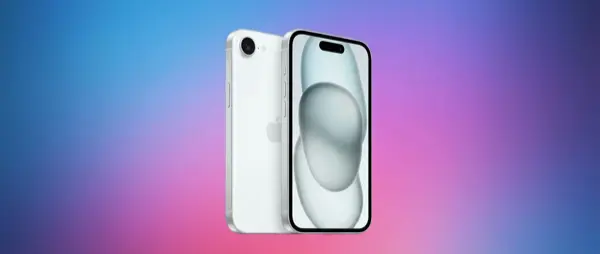
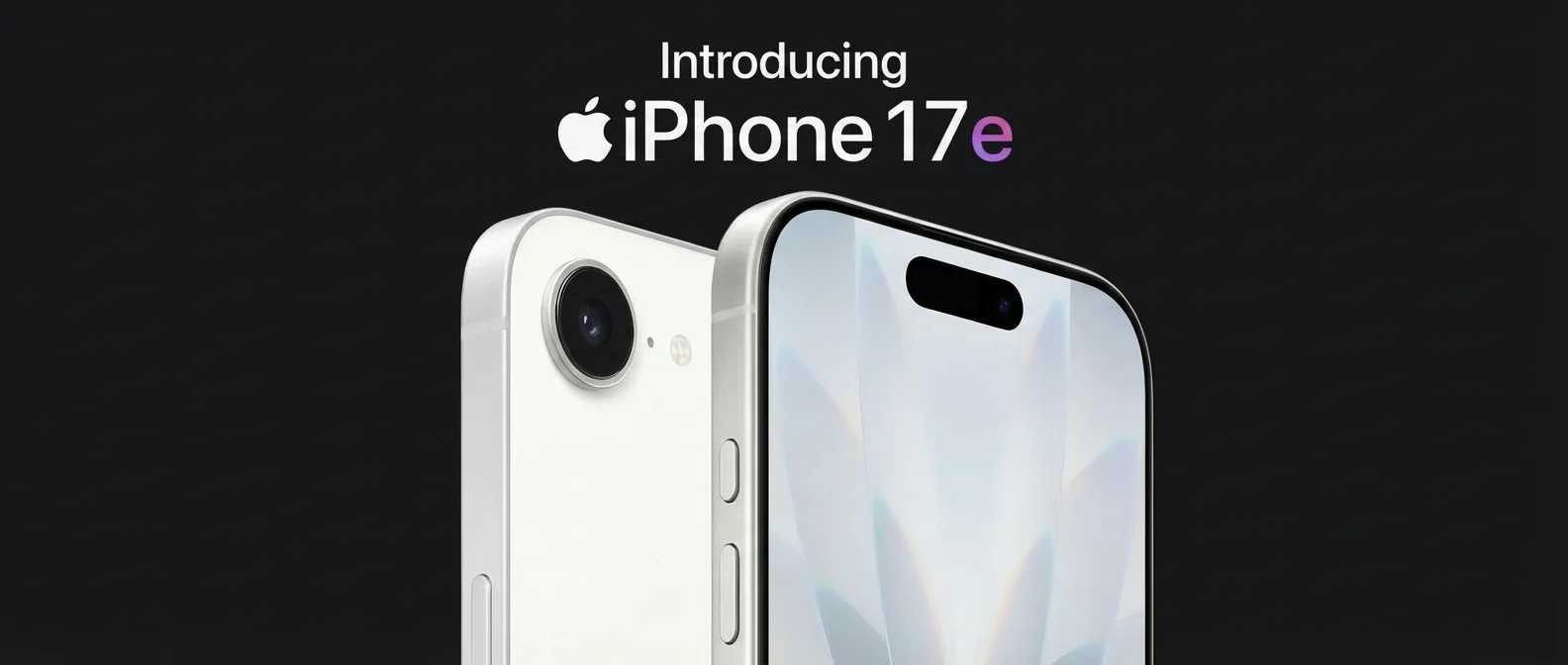
The notch is gone, replaced by the pill-shaped Dynamic Island that integrates directly with software 💊. It shows Live Activities (timers, navigation, Uber, music), notifications, and interactions — all without opening an app. It turns “dead space” into a functional surface, a feature previously reserved for Pro models.
Design & Specs
The iPhone 17e keeps a 6.1″ OLED display at 60Hz (no ProMotion or always-on) but with thinner bezels . Build quality mirrors the iPhone 16, featuring Face ID and USB-C. There's no Action Button or Camera Control button — those remain exclusive to pricier models.
iPhone 17e Specs
- Display: 6.1″ OLED 60Hz with Dynamic Island
- Chip: A19 3nm (downclocked, 4-core GPU)
- RAM: 8 GB — full Apple Intelligence
- Camera: 48MP rear + 12MP front
- Battery: ~3,279 mAh
- Charging: USB-C + MagSafe 15W+
- Modem: Apple C1X (2× faster than C1)
- Biometrics: Face ID
C1X Modem — Faster Connectivity
The iPhone 17e adopts the Apple C1X modem — the same silicon that debuted in the iPhone Air. It's up to 2× faster than the C1 in the 16e, with improved energy efficiency over previous Qualcomm modems . However, it lacks the N1 chip (Wi-Fi/Bluetooth) found in the iPhone 17 — a cost-saving measure. For full satellite internet via C2, you'll need to wait for the iPhone 18 Pro 🛰️.
Pricing
According to 9to5Mac, the price isn't changing . The iPhone 16e started at $429 in the US (~€529 in Europe with VAT). We expect the iPhone 17e at €529–€549 for 128 GB — significantly cheaper than the iPhone 17 (~€899) while offering the same core AI capabilities.
For context: iPhone 17 ≈ €899, iPhone Air ≈ €999, iPhone 17 Pro ≈ €1,229. At ~€529, the iPhone 17e is the most affordable entry into Apple's Intelligence ecosystem 💡.
Is It Worth Upgrading?
- From iPhone 16e: Only if you want MagSafe + Dynamic Island. The A19 isn't a massive leap over the A18
- From iPhone SE / 14 / 13: Excellent buy — OLED, Face ID, Apple Intelligence, all under €550
- If you can wait: The iPhone 18e (Spring 2027) will bring the A20 2nm chip, 12 GB RAM, and a 24MP selfie camera
iOS 26 runs fully on the 17e: Liquid Glass, Call Screening, Hold Assist, Shortcuts AI, Genmoji, and Image Playground. You're not missing much compared to pricier models on the software side 🔮.