

Retail theft costs over $100 billion annually worldwide. Now, a new generation of AI cameras promises to catch you before you even leave the shelf. But how reliable is this technology — and how far does it go?
📖 Read more: Woolworths AI Bot: The Viral Fail
📷 How They Work
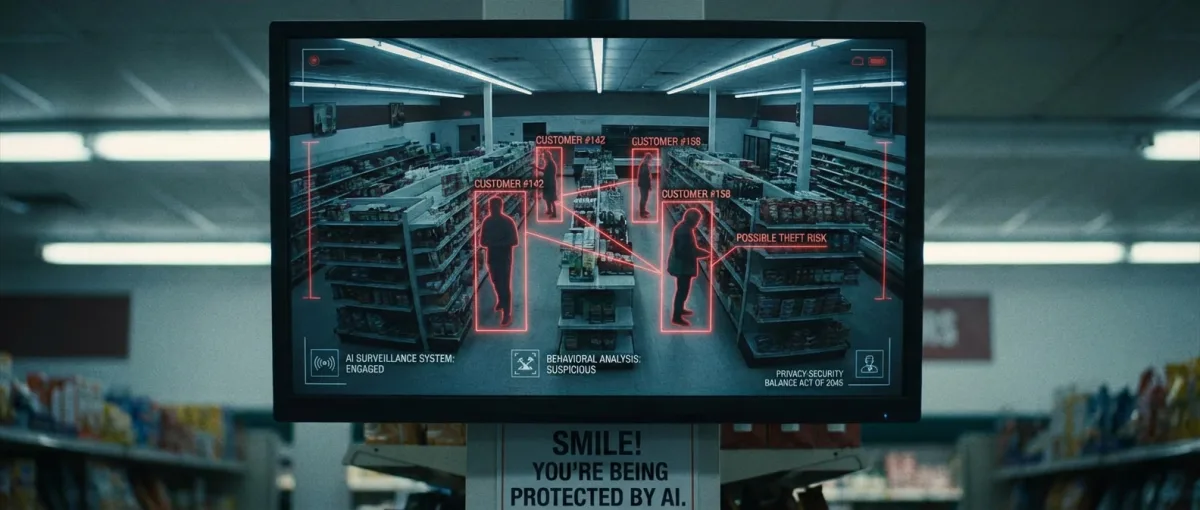
Companies like Vaak (Japan) and Veesion (France) develop AI systems that analyze body language in real time. The cameras don't search for known faces — they look for movement patterns. Hiding objects in bags, nervous glances toward cameras, unnatural hand movements near shelves.
When the AI detects suspicious behavior, it sends a notification to security staff via mobile. The guard evaluates the video and decides whether to intervene. Veesion reports its system reduces theft by 60% in stores that use it.
⚠️ The Ethical Problems
The technology detects “suspicious” behavior — but who defines what's suspicious? MIT researchers show that models exhibit bias: tall, dark-dressed, or nervous-looking customers are flagged more often. They might just be in a rush or anxious.
France, through CNIL, asked Veesion to prove privacy compliance. The company claims it doesn't store faces, only movement patterns — but the line between “anonymous analysis” and “surveillance” isn't always clear.

🇬🇷 Greece: Could It Happen Here?
In Greece, supermarkets lose millions annually to theft. The AB Vassilopoulos chain is piloting AI camera systems in 3 stores in Attica. However, the Hellenic Data Protection Authority (HDPA) is monitoring closely, as Greek legislation is particularly strict on video surveillance in workplaces.