

Australia has passed the world's toughest AI law. AI applications that don't meet strict safety criteria are banned from app stores. Social media with AI chatbots for minors face multi-million-dollar fines. What does the new law mean and why is the entire world watching?
📖 Read more: TikTok Deal USA: How the App Was Saved
⚖️ What the Law Covers
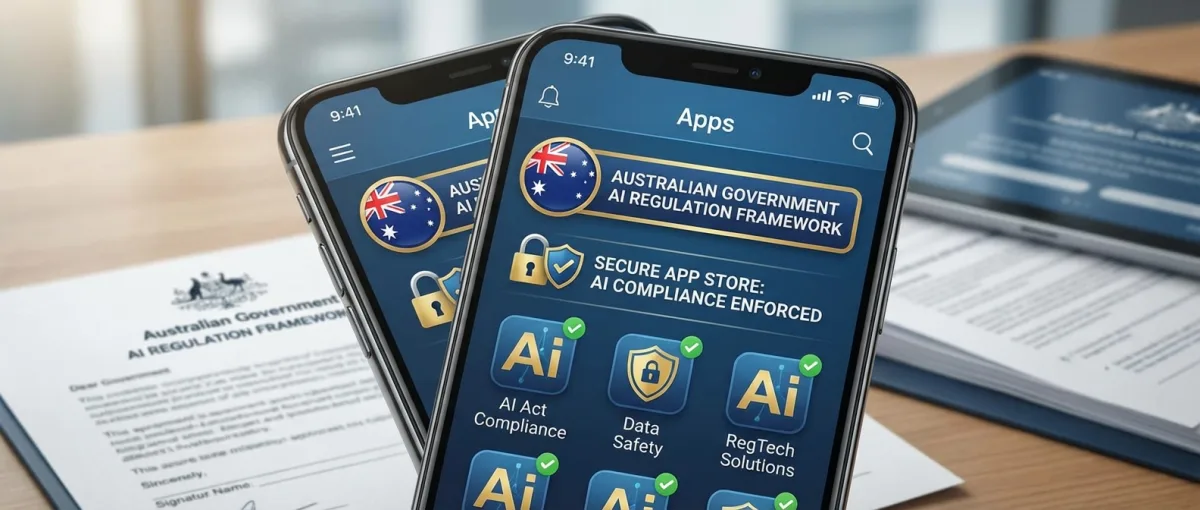
The Online Safety Amendment (AI Applications) Act 2026 introduces three pillars. First, every AI app must pass a safety audit before launching in Australian app stores. Second, AI chatbots interacting with users under 16 must have special guardrails — no romantic roleplay, no self-harm content, no manipulation. Third, AI companies are legally liable for harm caused by their technology.
Fines are severe: AUD 50 million (€30M) for companies or 10% of annual turnover — whichever is greater. For serious violations involving minors, there's criminal liability for executives.
🇦🇺 Why Australia Is Leading
It's no coincidence Australia is at the forefront. In 2025, a series of incidents shook the country: a chatbot “encouraged” suicidal ideation in a 14-year-old, deepfake images of high school girls circulated widely, and AI-powered scam bots defrauded elderly citizens for millions. Public pressure was immense.
The government responded with an express process: the law passed in under 6 months, faster than any comparable legislation worldwide. The eSafety Commissioner serves as the enforcement arm — a regulatory body with real power.

🌍 Global Reactions
Silicon Valley reacted negatively. OpenAI called the law “excessively restrictive” and hinted at blocking Australian users from certain features. Meta expressed concern about “misalignment with international standards.” Conversely, the EU is studying the law as a model for its own AI Act integration.
💡 Critical point: Australia isn't banning AI. It's banning unsafe AI. The difference is massive. Companies that pass safety audits operate normally — the law targets those launching without oversight.
📱 How It Affects Users
Australian users are already seeing changes. Character.AI and Replika must implement age verification. Deepfake apps without consent mechanisms will be removed. AI writing tools must clearly disclose output is AI-generated. For the average adult user, the change is minimal — for minors, it's massive.
Critics wonder if Australia can practically enforce these measures on overseas companies. The answer: it doesn't need to. By controlling app stores (Apple, Google) in the Australian market, it effectively controls what reaches users.