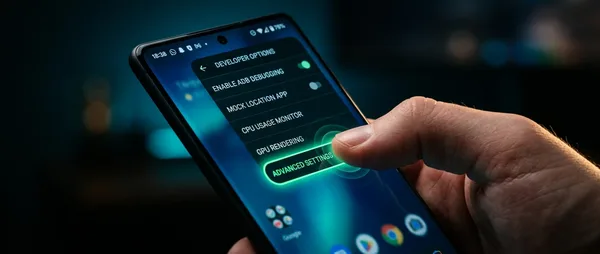


What do "this phone has 16GB RAM" and "my car hits 175 mph" have in common? Both sound impressive on paper. Neither changes your daily life one bit. In 2026, specs have stopped mattering — at least not the way we read them on feature lists.
Instead of chasing numbers that look attractive in marketing materials, it's time to focus on what actually counts: Android features that improve your user experience. What's the point of having the fastest chip if your phone throttles after two minutes of intensive use? Or a display with 3000 nits peak brightness that you can't read under sunlight?
Let's examine which features deserve your attention in 2026 — and which spec sheet myths we need to abandon forever.
📖 Read more: Hidden Android Setting Doubles Your Phone's Speed
🔋 Battery: Consistency Beats mAh Numbers
Every manufacturer creates headlines with their 7000mAh, 8000mAh, nearly 10000mAh capacities crammed into their flagships. Silicon-carbon cells did bring a revolution — bigger batteries in thinner bodies. But here's the problem: manufacturers use that extra capacity as an excuse for worse optimization.
The paradox? The iPhone with 50% smaller battery competes with — and often beats — phones with massive batteries in real-world endurance. This happens because Apple focused on software and hardware optimization, not marketing big numbers.
What to Actually Look For
Instead of capacity, focus on predictable battery life. Choose a phone that guarantees steady 6-8 hours of screen time over one that promises "12 hours" but delivers anywhere from 4 to 14 depending on your chip's mood. We don't want surprises when we leave home without a power bank.
📱 Display: Anti-Reflective Coating Beats Nits
"2800 nits peak brightness!" "3500 nits maximum!" Every time a new phone launches, the first ad talks about how bright its display gets. While this sounds logical — more brightness means better visibility in sunlight — reality is complicated.
The Samsung Galaxy S25 Ultra has lower peak brightness than many competitors. But its anti-reflective coating makes it infinitely more readable outdoors than displays that boast bigger numbers on spec sheets.
Why Anti-Reflective Coating Matters
When you look at your screen under sunlight, you're not just fighting the display's light output. You're also battling sun reflections off the glass. Good anti-reflective coating dramatically reduces these reflections, making the screen visible even at lower brightness levels.
Unfortunately, only Samsung Galaxy flagships and iPhone 17 models have serious anti-reflective coating in 2026. We hope more manufacturers realize this matters more than chasing useless brightness numbers.
📖 Read more: Android Optimization: 8 Tricks for +1 Year Phone Life
⚡ Performance: Sustained vs Peak — The Battle You Don't See
Every year new processors from Qualcomm and MediaTek get faster. Every year Android phones break new benchmark records. And every year — paradoxically — the actual user experience doesn't improve proportionally.
The reason is simple: benchmarks measure peak performance for 30-60 seconds. But in reality, how often do you use your phone at maximum load for one minute? Usually you need sustained performance for 10-20 minutes — navigation with Google Maps in summer heat, recording 4K video, or gaming sessions with demanding titles.
The Throttling Problem
Push any flagship Android from recent years to its limits, and it will start overheating or reducing its speed (throttling). In summer, when you use your phone outside for navigation, photos, or other demanding tasks, this becomes a serious problem.
In those moments, your phone's raw horsepower means nothing. You want stability, not explosive power that lasts 60 seconds.
In 2026, choose a phone that stays cool and stable under sustained load over one that breaks benchmark records but starts struggling after one minute of heavy use. Look for good cooling systems and optimized software, not the fastest AnTuTu score.
📸 Camera: Reliability Beats Megapixels
On paper, the Samsung Galaxy S25 Ultra has a more versatile camera setup than the iPhone 17 Pro Max and Google Pixel 10 Pro XL. Primary 200MP sensor, ultrawide camera, and two telephoto lenses with 3x and 5x optical zoom. Impressive specs that would have thrilled geeks in 2020.
But here's the plot twist: many will choose the iPhone over the Samsung flagship. Or a premium phone from Oppo or Vivo. Why?
Moving Subjects
Samsung flagships struggle to capture moving subjects clearly. Photos of children or pets come out blurry.
Video Quality
iPhone remains undoubtedly number one in video recording, despite "inferior" hardware.
Consistency Over Megapixels
In reality, computational photography has made hardware specs less important than ever. All phones have good camera hardware today — what makes the difference is software processing and result consistency.
Some phones oversaturate colors and sharpness, others prefer more realistic appearance. Some excel in low light but terrible at video, others create cinematic masterpieces but lack fun filters and features. Chaos, thank you very much.
In 2026, choose cameras based on experience reliability, not paper specs. Prefer a phone with slightly inferior hardware that gives consistent results over a tech monster that delivers amazing photos once and disappointing ones ten times.
📖 Read more: 7 Hidden Android Features Outside Settings Menu
🔄 Software Updates: Delivery vs Promises
All Android manufacturers now promise five to seven years of software updates for their premium and flagship phones. This long-term support is a welcome step forward — but it's not enough by itself in 2026.
What matters equally is how these updates get delivered. What's the point of a phone getting seven years of OS updates when each new Android version arrives 6 to 8 months after Google uploads the code to AOSP?
What to Demand in 2026
- Fast major updates: New Android version within 2-3 months
- Regular security patches: Monthly or bi-monthly security updates
- Feature drops: New functions throughout the year, not just in major releases
Even worse, some companies can't deliver regular monthly or bi-monthly security patches for their phones. So on paper, a promise of seven years of OS updates sounds impressive. But in 2026, this is no longer a feature that will convince you to buy a phone.
🤖 AI Features: From Marketing Fluff to Real Help
"AI-powered" appears everywhere in ads. Most of the time we ignore it as marketing buzzword. Wrong. The phone in your pocket (whether it's iPhone 17, Samsung S26, or Pixel 10) has a dedicated NPU (Neural Processing Unit) — a supercomputer designed to do things for you.
You paid for these features. Time to start using them.
Live Call Translation: The End of Language Barriers
You're booking a hotel in Japan or talking to a relative who only speaks Telugu while you speak English. Language barrier getting awkward?
Live Translation solves this problem real-time. It's not Google Translate where you type and wait. It happens during the call. You speak English, they hear robotic voice in Japanese. They respond in Japanese, you hear it in English. Instant, seamless.
Generative Edit: Magic Eraser on Steroids
You took the perfect photo at the Taj Mahal. The light is gorgeous, you look good. But there's a random guy scratching his head in the background. Or a trash can ruining the vibe.
Generative Fill doesn't just "blur" the background. It reconstructs reality. You circle the guy, tap "Erase," and the AI doesn't just leave a smudge. It analyzes the Taj Mahal's marble texture and fills the empty space perfectly. You can even move people around the frame.
📖 Read more: Android App Shortcuts: 5 Ways to Save Hours Daily
💡 Android 2026 Tips That Transform Your Usage
Beyond major features, there are hidden functions that will dramatically improve your daily experience.
Circle to Search: The End of Typing
You're watching a YouTube video or scrolling Instagram. You see nice shoes or a beautiful lamp. You want to buy it.
Old way: Close app, open Google, type "black shoes with white stripe nike...", scroll through results, give up.
New way: Long press the Home Button, circle the shoes on your screen with your finger. Google instantly finds the exact product, price, and buy link.
Audio Notes Transcriber: Your Personal Secretary
You're in a meeting or lecture. You're desperately taking notes and missing half of what's being said. Or you have a brilliant idea while driving and record a Voice Memo, but never listen to it again because it's too long.
Auto-Transcribe & Summarize turns your Voice Recorder app into a secretary. Record a one-hour meeting. The AI will transcribe every word to text, create a Summary with bullet points, and make a To-Do List based on what was discussed.
🎯 Frequently Asked Questions
If I don't care about specs, how do I choose a phone?
Focus on daily experience: how fast does the camera open when you want to take a photo? How well can you see the screen in sunlight? How predictable is battery life? These matter more than RAM and CPU benchmarks.
Are AI features worth it or just marketing?
AI features became genuinely useful in 2026. Live Translation, Generative Photo Editing, Auto-Transcription, and Circle to Search aren't gimmicks — they actually change how you use your phone. But you need to enable them in settings.
Why do expensive flagships have worse battery life than cheaper phones?
Flagships often have more demanding processors, higher resolution displays, and more complex features that consume more energy. Manufacturers target thinness and premium design, not maximum battery life. That's why a mid-range phone with a big battery can last longer than a flagship.
2026 isn't about what the spec sheet says — it's about how you feel when using your phone. If you're still choosing Android phones based on benchmarks and numbers, you're missing the picture. Technology has matured — time for us to mature in how we evaluate it.
Sources: