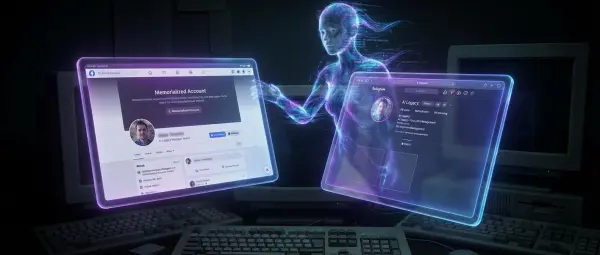


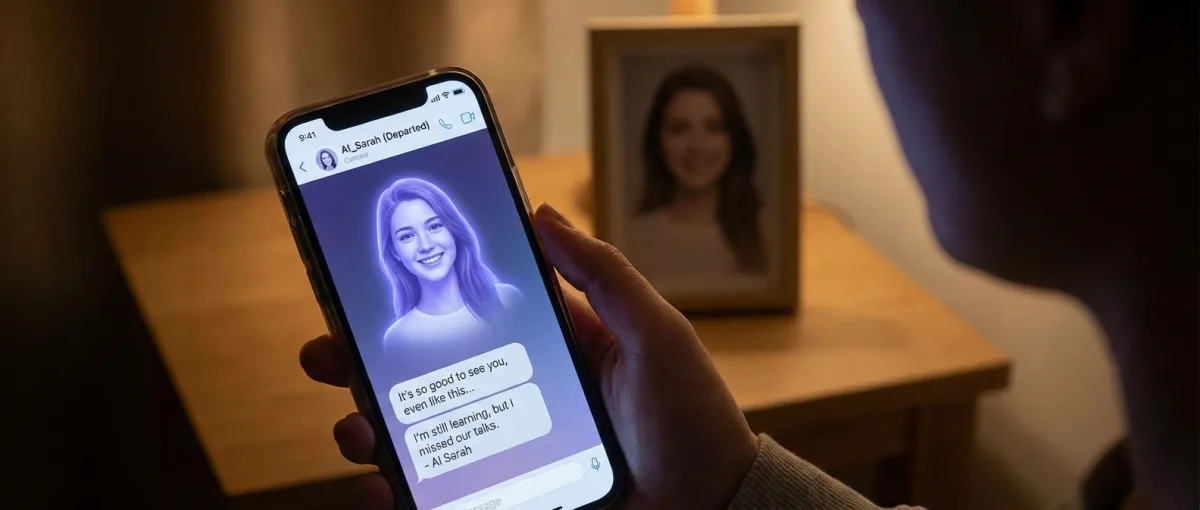
AI applications are recreating deceased loved ones as chatbots — with their voice, writing style, even their jokes. The “AI afterlife” market is skyrocketing, but psychologists and ethicists are pumping the brakes. Should we “talk” to the dead through AI?
📖 Read more: AI Copyright Wars: Who Owns AI-Created Works
💬 How Deathbots Work
Companies like HereAfter AI, StoryFile, and the new Replika Memories use deceased people's data (messages, emails, recordings, videos) to train AI chatbots that “talk” like them. The most advanced models can reproduce voice, writing style, and even thought patterns based on years of digital footprint.
The process: the family provides data (WhatsApp messages, posts, photos, videos). The AI trains on them. The result is a chatbot you can “ask” things — and receive answers in the deceased person's style. Some services even offer video calls with AI-generated avatars.
😢 The Psychological Dimension
There are two opposing views. Supporters say deathbots help with grief — the gradual “disconnection” from the deceased can be mediated by the chatbot instead of being cut abruptly. Cambridge researchers report 62% of users claim reduced feelings of loneliness.
Opponents, however, warn seriously. Psychiatrists explain that deathbots can impede the natural grieving process. Instead of accepting death, the person creates a false sense of continuity that can lead to prolonged grief or psychopathology.

📖 Read more: Copilot Tasks: AI Uses Your PC on Its Own
⚖️ Legal and Ethical Issues
Who “owns” a deceased person's digital chat-clone? The family? The company? If the deceased didn't give consent (most haven't!), is it ethical? What happens if the chatbot says something the deceased would never have said — who's responsible? These questions don't yet have answers.
💡 Critical thought: A deathbot isn't the deceased. It's an AI interpretation based on limited data. The false sense of familiarity can be more dangerous than silence — because it provides a false sense of comfort to those who need real support.
🌍 Regulation in Progress
The EU is examining incorporating deathbot regulations into the AI Act. GDPR coverage of deceased people's data is unclear — “personal data” doesn't clearly cover the dead. France passed a specific “digital death law” giving families control. Most countries still lack comparable legislation, creating a regulatory vacuum that companies are exploiting.