

Six times cheaper materials, four times faster performance. KAIST researchers in South Korea just cracked the solid-state battery puzzle that's been stumping the industry for years. Instead of throwing expensive rare metals at the problem, they changed how lithium ions see the pathways inside the battery. The result could finally make solid-state batteries practical for everyone.
📖 Read more: Battery Repurposing: The New Trend in Home Energy Storage
🔬 The Simple Idea That's Shaking Up Battery Companies
Solid-state batteries work. That's not the issue. The issue is they cost more than a new car. Until now, manufacturers tried making them faster by adding rare, expensive metals — like trying to make your car faster by putting diamonds in the gas tank.
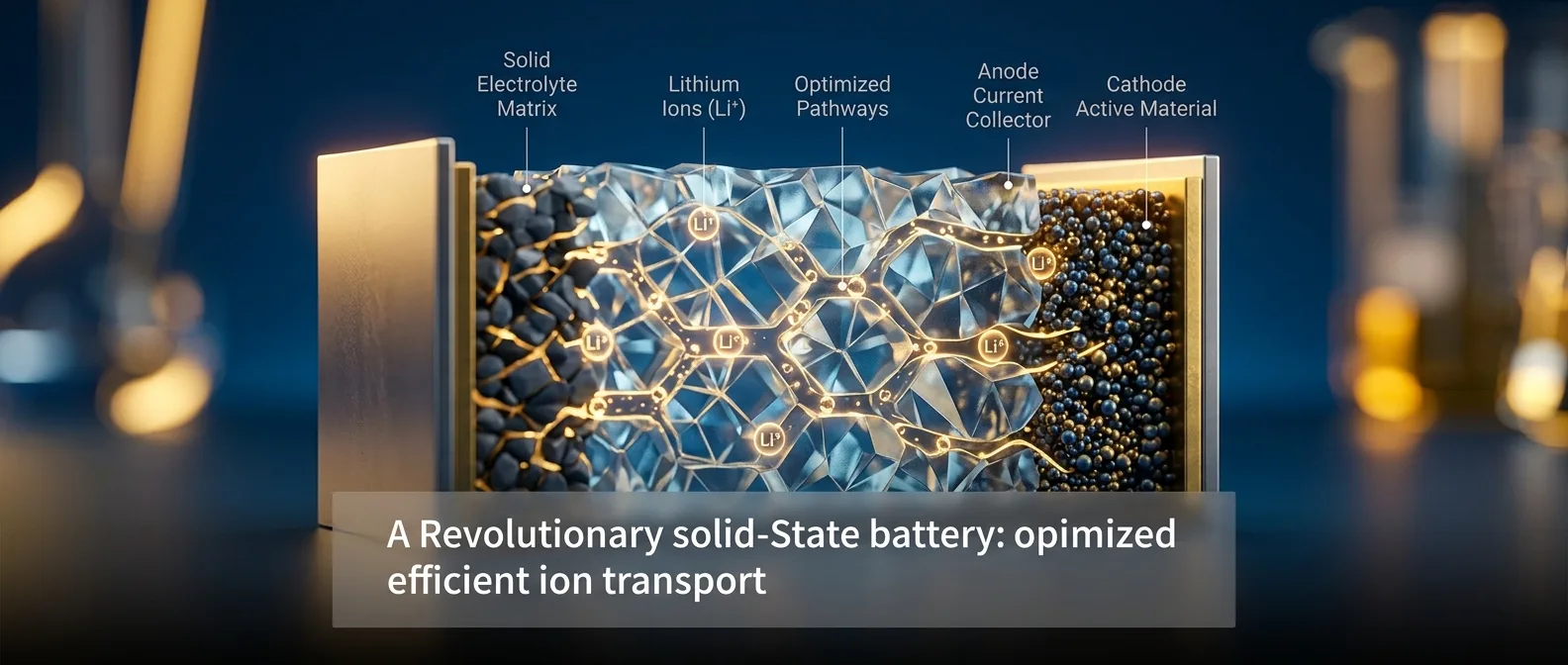
Professor Dong-Hwa Seo's team at KAIST's Department of Materials Science and Engineering had a smarter approach. Instead of adding pricier materials, they restructured what was already there. It worked — lithium ions now move four times faster through their solid electrolytes.
⚡ From Liquid to Solid — And the Cost Challenge
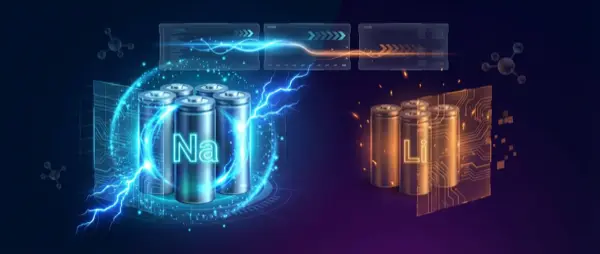
Traditional lithium batteries rely on liquid electrolyte. This lets lithium ions move easily between electrodes, but creates safety problems. When the battery fails, that liquid can catch fire or explode.
Solid-state batteries replace that liquid with solid electrolyte. Result? Virtually zero fire risk. The only problem is lithium ions move much slower through solid materials — like trying to run underwater instead of through air.
The Price of Safety
To compensate for this slow movement, companies used expensive metals like cobalt or complex manufacturing techniques. The result? Batteries so expensive they stayed in labs.
🧬 "Framework Regulation Mechanism" — When Chemistry Becomes Architecture
Here's where KAIST's innovation kicks in. Instead of changing the material, they changed how it's organized. Their technique is called "Framework Regulation Mechanism" and it's simpler than it sounds.
They use what they call "divalent anions" — mainly oxygen and sulfur. These elements integrate into the electrolyte's crystal structure and change how lithium ions see the pathways through the material.
How it works: Imagine a maze where the corridors are too narrow. Instead of building a new maze, you just remove some walls and make the existing corridors wider.
The Numbers Don't Lie
The researchers applied this approach to cheap zirconium-based electrolytes. The results were striking:
- The oxygen-enhanced electrolyte hit 1.78 mS/cm ionic conductivity at room temperature
- The sulfur version reached 1.01 mS/cm
- Both exceed the 1 mS/cm threshold considered necessary for practical applications
To understand the significance: they went from a 50 mph highway to a 200 mph highway without changing cars.
📖 Read more: AI Deathbots: Chatbots of Deceased Loved Ones
📊 Scientific Proof — Not Just Theory
One thing to claim something works, another to prove it. KAIST's team used advanced tools to confirm their structural changes actually improve ion movement:
- Synchrotron X-ray diffraction: To "see" how the crystal structure changed
- X-ray Absorption Spectroscopy: To understand electronic changes
- Density Functional Theory modeling: To predict how ions move
"Through this research, we presented a design principle that can simultaneously improve the cost and performance of solid-state batteries using inexpensive raw materials."
— Professor Dong-Hwa Seo, KAIST
From Material Selection to Smart Design
What makes this research particularly interesting is how it shifts focus from finding new materials to smartly designing existing ones. It's a philosophical change that could influence the entire industry.
🚗 What This Means for Electric Cars and Smartphones
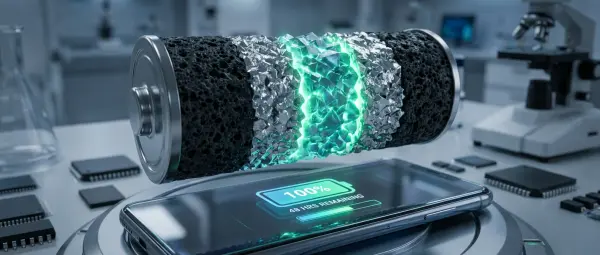
If this technology reaches production, the benefits will be immediate. Electric cars could charge faster and travel farther on a single charge. Smartphones and laptops could have batteries that last longer and won't explode in your pocket.
But are we overselling this? Samsung Electronics Future Technology Promotion Center funded the research, suggesting they see commercial potential. When Samsung puts money somewhere, they usually have mass production plans.
Safety
Zero risk of explosion or fire from solid-state batteries
Cost
Using cheap materials like zirconium instead of rare metals
Performance
Four times faster lithium ion movement
Manufacturing
No complex production techniques required
The Reality of Timelines
Let's not forget we're still in the research stage. The publication appeared in Nature Communications in November 2025, and from there to seeing the technology in stores could take several years.
Tech history is full of "revolutionary" discoveries that never reached consumers. But this time, the fact they're using cheap materials and simple production techniques increases the odds of success.
🔋 How This Will Change the Battery Market
If KAIST is right, we'll see a substantial market shift. Companies that invested millions in expensive materials for solid-state batteries might find themselves in a tough spot. Those that quickly adopt this approach will gain a massive competitive advantage.
The question that remains is whether the technology will scale easily. One thing to work in lab conditions, another on a production line that needs to pump out millions of batteries per month.
Industry Reaction
We haven't seen reactions from major battery companies yet, but they're certainly watching closely. Tesla, Panasonic, CATL and other giants won't want to fall behind a technology that could make their products obsolete.
🎯 Frequently Asked Questions
When will we see solid-state batteries in stores?
If everything goes well, the first commercial applications could appear in 3-5 years. We'll likely see them first in premium products, then expand to mass market.
Will they be more expensive than current batteries?
Initially yes, but using cheap materials like zirconium means production costs will be significantly lower than previous solid-state technologies. Long-term, they might become cheaper than current lithium batteries.
Are they really safer?
The solid electrolyte virtually eliminates fire or explosion risk, making solid-state batteries significantly safer than traditional lithium batteries.
KAIST's discovery isn't just a technical improvement — it's a different way of thinking. Instead of trying to find the perfect material, we can make existing materials work better. Sometimes, that's all it takes to change an entire industry.