

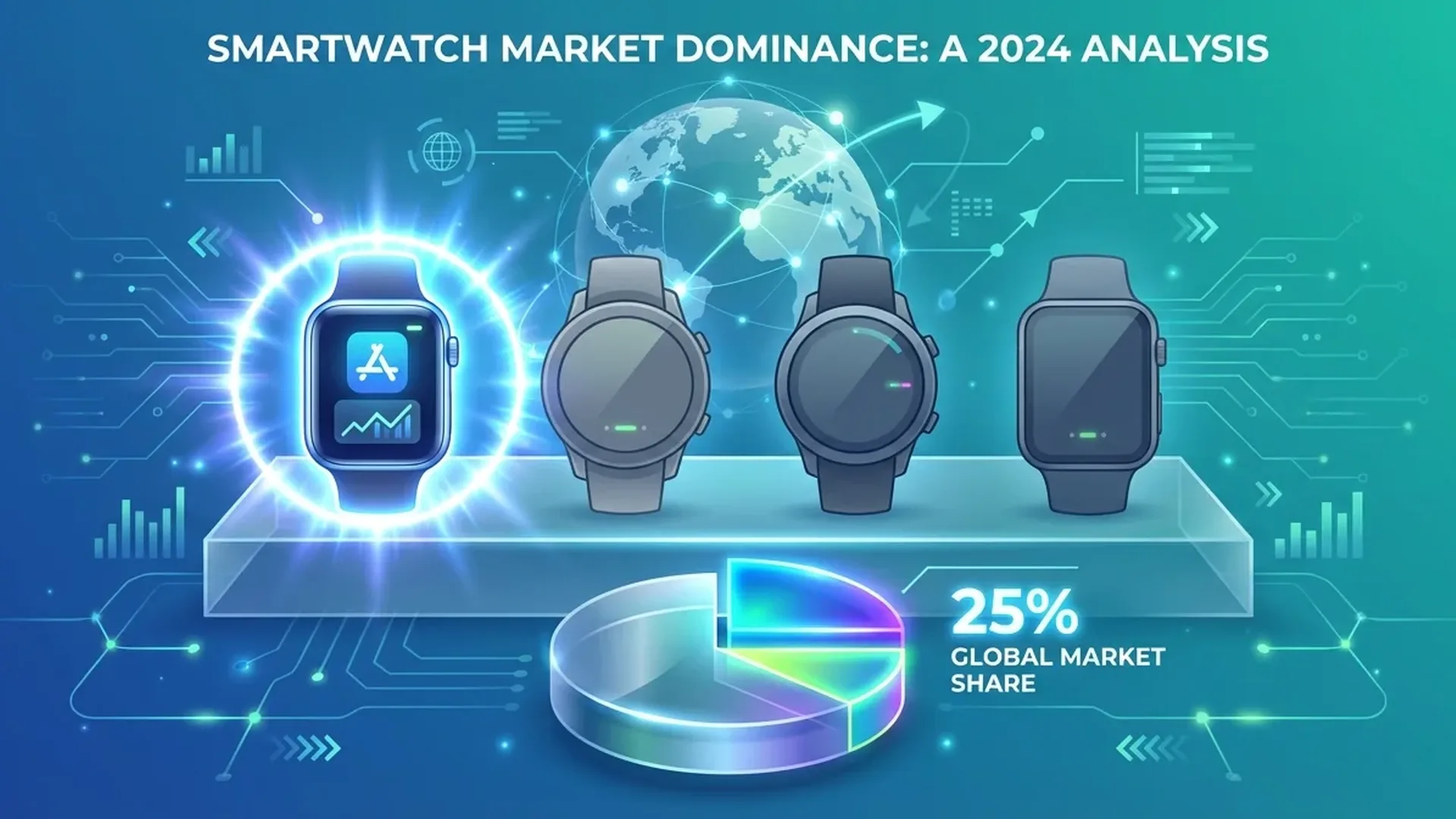
One in every four smartwatches sold worldwide is an Apple Watch. Apple's dominance in the smartwatch market is no accident — it's the result of a decade of innovation, a powerful ecosystem, and a strategic focus on health. In this article, we break down the numbers, the competition, growth drivers, and what it all means for consumers.
Apple Watch Dominates — The Numbers Speak
According to data from market analysis firms like IDC and Counterpoint Research, Apple holds approximately 30% of the global smartwatch market through late 2025 and into early 2026. In raw numbers, that translates to more than < 50 million units shipped annually.
In North America, the dominance is even more striking, reaching roughly 55% market share. In the premium segment (watches above < €300), Apple approaches 50%, leaving minimal room for competitors. These numbers paint a picture of a company that doesn't just sell watches — it defines the category.
The Competition — Who Follows Behind
Samsung Galaxy Watch (~15%)
Apple's primary competitor is Samsung, holding roughly 15% of the global market. The Galaxy Watch series, particularly after the transition to Wear OS, has gained significant ground in recent years. Samsung has a strong presence in Asia and Europe but trails significantly in North America, where Apple reigns supreme.
Huawei (~10%)
Huawei holds approximately 10% of the global market, with very strong presence in China and developing markets. Huawei watches offer impressive battery life and competitive prices, but the app ecosystem is far more limited compared to watchOS.
Garmin (~8%)
Garmin focuses on the premium athletic segment with roughly 8% share. Garmin watches (Fenix, Forerunner, Epix) are preferred by serious athletes thanks to specialized sports metrics and massive battery life. However, they don't target the average consumer.
Google/Fitbit (~7%)
Following the Fitbit acquisition, Google integrated fitness tracking capabilities into the Pixel Watch. With ~7% share, Google is steadily improving, but the lack of a unified ecosystem (compared to Apple) and limited hardware variety hold it back.
Amazfit (~5%)
Amazfit (a subsidiary of Zepp Health) holds ~5% with budget-friendly watches. The T-Rex, GTR, and GTS models offer impressive features at low prices (< €50-150), making them popular in price-sensitive markets.
Why Apple Wins the Competition
Apple's dominance isn't due to a single factor. It's the combination of ecosystem (iPhone + Watch + AirPods + Mac), health features (ECG, SpO2, temperature), App Store with thousands of apps, regular watchOS updates, and brand loyalty that makes iPhone users not think twice.
Health Features as a Growth Driver
Health features are the number one reason new users buy an Apple Watch. The ECG (electrocardiogram), blood oxygen monitoring (SpO2), temperature sensor, fall detection, and crash detection aren't just features — they're life-saving tools. Every few weeks we see media stories about users who discovered atrial fibrillation or had emergency services called automatically after a fall.
This creates a powerful cycle: the more health features Apple adds, the more users buy in, the more data gets collected, the better the algorithms become. The anticipated addition of blood pressure monitoring (likely arriving with Apple Watch Series 12 or Ultra 4) is expected to drive even greater demand.
"The real power of Apple Watch isn't that it tells time — it's that it can warn you about something you didn't know was happening in your body."
— Tim Cook, Apple CEOThe Apple Ecosystem — An Unrivaled Advantage
Apple doesn't sell watches — it sells an ecosystem. If you own an iPhone, the transition to Apple Watch is natural: the watch unlocks your Mac, answers calls, displays notifications, controls music, opens your car (CarKey), and pays with Apple Pay. No competitor offers this level of integration.
This explains why Apple dominates the premium segment but falls behind in lower price tiers. In countries where iPhone doesn't dominate (India, Southeast Asia, Africa), Samsung, Huawei, and Amazfit win market share with watches costing a fraction of the Apple Watch price.
The Journey from 2015 — A Decade of Dominance
The first Apple Watch launched in April 2015. Many analysts were skeptical — “who needs another watch?” A few years later, Apple Watch surpassed the entire Swiss watch industry in sales. The turning point came with the Series 4 (2018), which added ECG — suddenly, the Apple Watch wasn't a gadget but a medical device.
Since then, every generation has added something significant: blood oxygen sensor (Series 6), temperature sensor (Series 8/Ultra), Double Tap gesture (Series 9/Ultra 2), and Apple Intelligence (Series 11/Ultra 3). This trajectory explains how a watch went from “nice to have” to “essential accessory” for millions of users.
Challenges and Obstacles
High Price in Developing Markets
The cheapest Apple Watch (SE) starts at ~< €249 — a sum that represents several salaries in many countries. Samsung and Amazfit sell decent watches for < €50-100, capturing markets Apple simply cannot reach.
iPhone Dependency
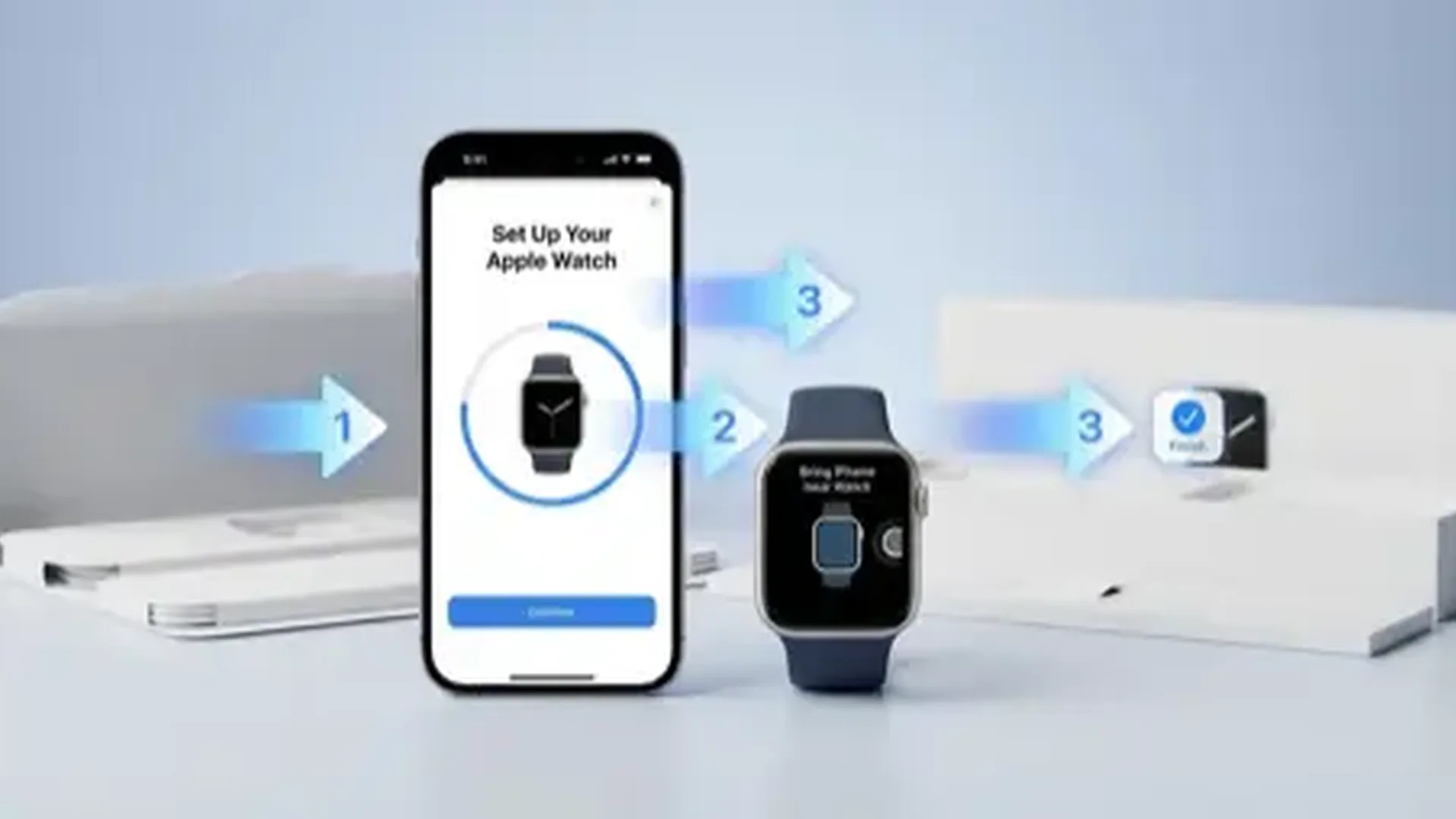
For full functionality, Apple Watch requires an iPhone. This automatically excludes roughly < 70% of smartphone users globally who use Android. Samsung exploits this gap with the Galaxy Watch line.
Chinese Brands and Budget Watches
Companies like Amazfit, Xiaomi, and Huawei sell massive numbers of watches at low prices. While they don't threaten Apple in the premium segment, they eat into market share in raw unit sales.
Data and Sources
Market data comes from analyses by firms including IDC, Counterpoint Research, and Canalys covering 2024-2026. Apple does not publish exact Apple Watch sales figures — percentages are based on shipment estimates and market surveys.
What the Future Holds
Analysts predict the smartwatch market will continue growing at < 8-12% annually through 2030. Apple is expected to maintain its share through new health sensors (blood pressure, continuous blood glucose), stronger AI integration, and possibly a more affordable model for emerging markets.
Another significant trend is “health prescriptions” — an increasing number of doctors are recommending Apple Watch to patients with cardiac conditions, diabetes, or fall risk. This medical recognition transforms what was once a gadget into a clinically acknowledged health tool, opening up massive new markets.
Cellular connectivity is expanding rapidly — more and more carriers support Apple Watch eSIM, making the watch increasingly independent. This opens new user categories: seniors without smartphones, children with Family Setup, athletes wanting full independence. Each new category means new buyers.
Frequently Asked Questions (FAQ)
How many Apple Watches are sold per year?
It's estimated that Apple sells more than < 50 million Apple Watches annually. Apple does not publish exact figures — estimates are based on shipment data from IDC and Counterpoint.
Which country buys the most?
The United States is the largest market, followed by China, Japan, Germany, and the United Kingdom. In Greece, Apple Watch is popular but the high price limits market penetration.
Why can't Samsung catch up?
Samsung lacks Apple's unified ecosystem. While Galaxy Watches are excellent hardware, the software experience doesn't match watchOS — especially now with Apple Intelligence. Additionally, Samsung shares the Android user base with Google Pixel Watch and Garmin. The fragmentation of the Android wearable space works in Apple's favor, as iPhone users have one clear choice while Android users have many competing options to split the market.
Will Apple ever lose the top spot?
Unlikely in the short term. The only realistic threat would be a unified Google/Samsung ecosystem or a revolutionary technology (e.g., smart glasses). But Apple invests massively in R&D, so it would likely pioneer those areas as well. History shows that Apple rarely loses markets it captures — especially when its ecosystem acts as a loyalty lock.
What does this mean for consumers?
Competition benefits consumers. Apple's dominance pushes Samsung, Google, and Chinese brands to innovate faster, improve pricing, and add health features. Even if you buy a Galaxy Watch, the existence of Apple Watch in the market benefits you indirectly.
Is Apple Watch worth buying just for health features?
Absolutely. The ECG, SpO2 monitoring, fall detection, and temperature measurement are features you won't find at this level of accuracy and certification anywhere else. If health is a priority, Apple Watch is the top choice. With blood pressure monitoring expected in the next generation, the health value proposition will only get stronger. Many users report that the peace of mind alone is worth the investment.