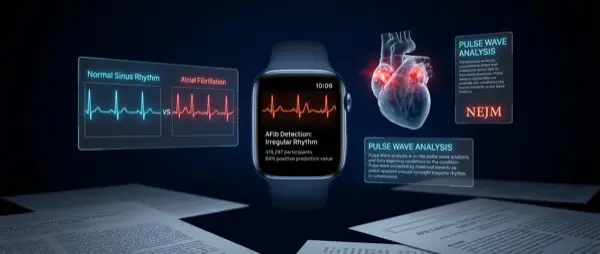


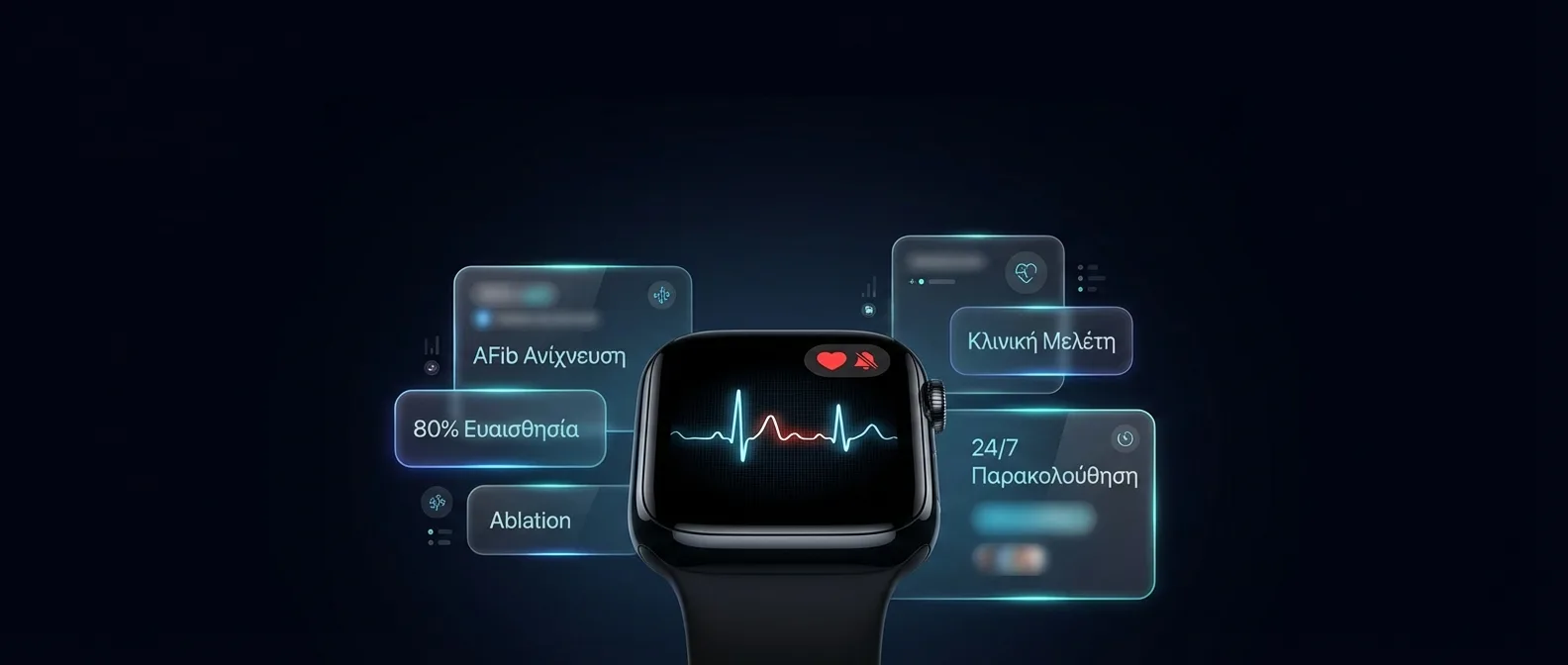
A new clinical study published in 2025 investigates whether Apple Watch can reliably monitor patients after catheter ablation for atrial fibrillation (AFib).
📖 Read more: Apple Watch Beats Doctors at Detecting Atrial Fibrillation
Ablation is a minimally invasive procedure that destroys the tissue causing arrhythmias. But post-procedure monitoring remains a challenge — and this is where wearable technology comes into play.
Catheter ablation is currently one of the most effective treatments for atrial fibrillation. However, after the procedure, patients need long-term monitoring to detect any recurrences. Traditionally, this is done with Holter monitors or implantable loop recorders — devices that are expensive, cumbersome, or invasive.
The question posed by the new study is simple but important: can an Apple Watch replace or supplement these traditional methods?
What Is Catheter Ablation for AFib
Catheter ablation is a procedure in which a cardiologist inserts thin catheters through blood vessels (usually from the groin area) up to the heart. There, they use radiofrequency or cryoenergy to destroy the cardiac tissue causing electrical abnormalities.
Radiofrequency Ablation
Uses heat to destroy problematic tissue. The most widely used technique worldwide.
Cryoablation
Uses extreme cold to “freeze” the tissue. A faster procedure with similar effectiveness.
Pulsed Field Ablation (PFA)
A newer technology that uses electrical pulses. More selective, with lower risk of collateral damage.
According to clinical data, ablation achieves a success rate of 70-80% for paroxysmal AFib and 50-70% for persistent AFib. However, recurrence is not uncommon — especially during the first 3-6 months (the so-called “blanking period”). That's why post-procedure monitoring is critical.
What Exactly the Study Examined
The study included patients who underwent catheter ablation for atrial fibrillation and subsequently used an Apple Watch for long-term heart rhythm monitoring. The goal was to evaluate:
- Whether Apple Watch’s irregular rhythm notifications reliably detect AFib recurrences after ablation
- How quickly recurrences are detected compared to traditional methods
- Whether continuous passive monitoring can replace periodic Holter monitors
- Patient experience and acceptance of the technology
Important clarification
Apple Watch is not medically certified for diagnosing AFib after ablation. The irregular rhythm notification feature was approved by the FDA as a screening tool — not as a diagnostic or post-procedure monitoring tool. This study investigates precisely whether it could also be used in that context.
The Findings: What the Study Showed
The results were encouraging but with important nuances:
📖 Read more: Apple Watch Redesign 2028: Why It's Delayed
Sensitivity
Correctly detected recurrences
Specificity
Avoided false notifications
Faster Detection
Compared to scheduled Holter monitors
Advantages Over Traditional Methods
Holter monitors are typically applied for 24-48 hours at regular intervals after ablation (e.g., at 3, 6, and 12 months). This means that arrhythmias occurring outside these monitoring windows are completely missed.
In contrast, Apple Watch monitors 24/7, 365 days a year. The algorithm passively checks the pulse in the background and notifies the user if it detects an irregular rhythm. This continuous monitoring can catch paroxysmal arrhythmias that a 48-hour Holter would miss.
Blanking Period: Why the First Months Are Critical
After an ablation, there is a so-called "blanking period" — typically the first 3 months — during which it is normal for arrhythmias to occur due to inflammation and healing of the cardiac tissue. These early arrhythmias do not necessarily mean the procedure has failed.
At this point, Apple Watch can cause unnecessary anxiety for the patient if it sends notifications during the blanking period. The study acknowledges this issue and suggests that physicians should inform patients that:
Advice for patients after ablation
If you wear an Apple Watch after ablation, don’t panic if you receive irregular rhythm notifications during the first 3 months. Inform your cardiologist, but be aware that early arrhythmias are common and often self-limiting. The real assessment of success comes after the blanking period.
📖 Read more: Apple Watch Saved Journalist's Life With Heart Alert
Limitations You Should Know About
The study, while encouraging, has significant limitations:
Sample Size
Wearable studies after ablation remain relatively small. Larger, multicenter trials are needed for definitive conclusions.
Single-lead ECG
Apple Watch’s ECG records only a single lead (Lead I). It cannot detect all forms of arrhythmias or structural abnormalities.
Motion artifacts
Wrist motion can create artificial signals that resemble arrhythmia, leading to false positive notifications.
Asymptomatic AFib
Brief episodes of asymptomatic AFib (<30 seconds) may not be detected by the Watch’s algorithm.
What This Means for the Future
This study represents another step toward the "democratization" of cardiac monitoring. If the findings are confirmed in larger studies, it could fundamentally change how patients are monitored after ablation:
- Fewer hospital visits for Holter monitoring — especially important in areas with limited access
- Faster detection of recurrences thanks to 24/7 monitoring
- Reduced costs for patients and healthcare systems
- Patient empowerment through active participation in monitoring their own health
Apple continues to expand the Watch’s health capabilities. With watchOS 26, the AFib History app now records more detailed data — Apple Watch can now estimate how much time a user spends in atrial fibrillation (AFib burden) on a weekly basis.
Practical Advice: What to Do If You Wear an Apple Watch After Ablation
✅ Do This
- Enable irregular rhythm notifications
- Share your Health data with your cardiologist
- Take an ECG from the Watch when you feel symptoms
- Keep a log of notifications
❌ Avoid This
- Don’t self-diagnose based on the Watch
- Don’t stop medications due to “good” readings
- Don’t panic during the blanking period
- Don’t skip your scheduled appointments
Conclusion
The new clinical study confirms what many cardiologists are already observing in practice: Apple Watch is a valuable tool for supplementary monitoring after ablation. It doesn’t replace the clinical electrophysiologist, but it can catch recurrences that would otherwise be missed between scheduled examinations.
As technology evolves — with improved sensors, AI-driven algorithms, and potential FDA clearance for post-ablation monitoring — Apple Watch could become an integral part of the post-procedure care protocol. Until then, use it as a supplement — not a replacement — for medical monitoring.
If you’re considering ablation or have already had one, talk to your cardiologist about how Apple Watch can be integrated into your monitoring plan. Technology can help — as long as it’s used correctly.