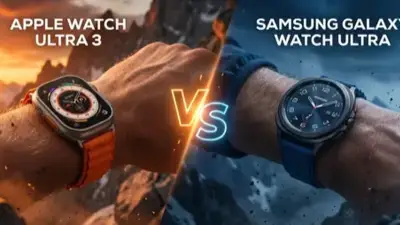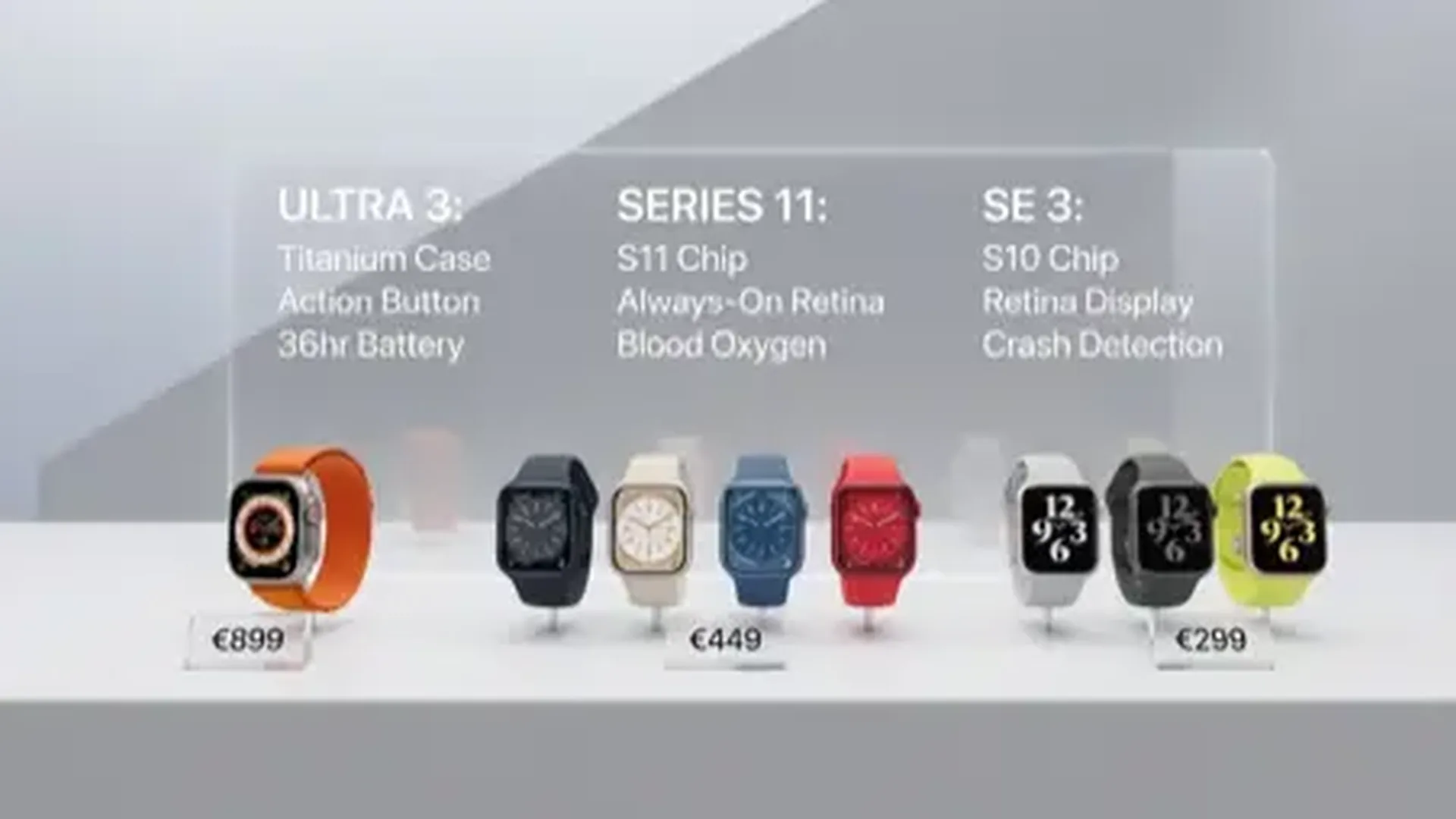


The Apple Watch Series 11 and Samsung Galaxy Watch 7 represent the best smartwatches from the two largest ecosystems. Which one deserves your money in February 2026? We break down every aspect in detail.
Design & Build Quality
The first and most obvious difference is the shape. Apple remains committed to its rectangular design with rounded corners, while Samsung uses a circular form factor reminiscent of a traditional watch. Which one you prefer is purely a matter of taste, but the Galaxy Watch 7's circular shape earns elegance points, while the Apple Watch's rectangular display makes better use of screen real estate for text and apps.
Both watches use premium materials: aluminum and sapphire crystal on the Apple Watch, aluminum and Sapphire Crystal on the Galaxy Watch 7. Water resistance is comparable, with both rated to < 50 meters. However, the Apple Watch Series 11 features a slightly more durable build thanks to Ion-X glass or Sapphire Crystal depending on the model you choose.
Display & Visuals
Both smartwatches offer impressive AMOLED displays with always-on functionality. The Apple Watch Series 11 reaches < 2000 nits of peak brightness, making it perfectly legible even in direct sunlight. The Galaxy Watch 7 counters with < 3000 nits at peak, although these measurements aren't directly comparable due to different testing methodologies.
The rectangular screen of the Apple Watch utilizes every pixel efficiently. Messages, notifications, and lists display more naturally. Conversely, the circular screen of the Galaxy Watch gives a great watch-like feel but wastes space in the corners when showing text-based content.
Health & Sensors
The two watches share quite a few health sensors. Both feature ECG (electrocardiogram), blood oxygen monitoring (SpO2), heart rate sensors, and sleep tracking. However, each has significant exclusive features that set them apart.
Samsung Exclusive: BIA Body Composition
The Galaxy Watch 7 features a BIA (Bioelectrical Impedance Analysis) sensor that measures body composition: fat percentage, muscle mass, body water, and basal metabolic rate. This is a major advantage for those who want to track their fitness in depth.
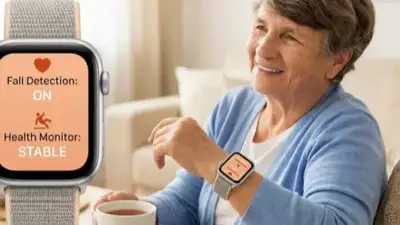
On the Apple side, the Series 11 stands out with its wrist temperature sensor for ovulation cycle tracking, fall detection, crash detection, and the Double Tap gesture that allows control without touching the screen. Apple also offers a more mature health ecosystem through the Health app and its clinical-grade data sharing with doctors.
Battery Life
Battery is one area where the Galaxy Watch 7 holds a slight advantage. Samsung promises up to < 40 hours of autonomy with typical use, while the Apple Watch Series 11 reaches up to < 36 hours. In practice, both will need charging every night or every other night depending on your usage patterns.
Fast charging is available on both models. The Apple Watch reaches 80% in about 45 minutes, while the Galaxy Watch 7 needs approximately 30 minutes for the same charge level. If battery life is your number one priority, Samsung wins by a narrow margin.
Operating System & Apps
This is arguably the biggest difference between the two. The Apple Watch runs watchOS, while the Galaxy Watch 7 uses Wear OS 5 based on Google's platform with Samsung's One UI Watch overlay. WatchOS is more optimized, faster to navigate, and has a significantly larger app library with better-quality third-party apps.
Wear OS has improved dramatically in recent years and now provides access to Google Maps, Google Assistant, YouTube Music, and many more third-party applications. However, the overall optimization still doesn't quite match the smoothness of watchOS in daily use.
Payments & Digital Wallet
The Apple Watch exclusively supports Apple Pay, while the Galaxy Watch 7 gives you access to both Samsung Pay and Google Pay. This flexibility from Samsung can be an advantage depending on your bank and payment preferences.
Fitness & Workout Tracking
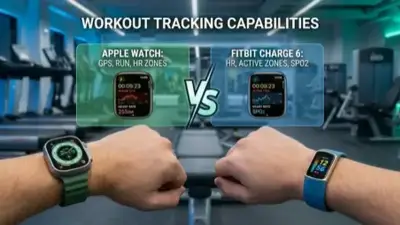
Both watches handle basic fitness needs excellently. Multi-band GPS, tracking for < 100 workout types, automatic workout detection, and detailed statistics are standard on both. The Apple Watch stands out with its Activity Rings that motivate users daily, while Samsung counters with Body Composition tracking and BIA measurements.
For running, both offer GPS accuracy, cadence measurements, pace alerts, and automatic splits. Apple provides detailed running metrics with updated watchOS, while Samsung leverages workout data through the Samsung Health app for comprehensive analysis.
Camera Control & Connectivity
Both watches can function as a remote camera shutter. The Apple Watch shows a live preview from your iPhone camera and lets you take photos remotely. The Galaxy Watch 7 offers an equivalent feature through the Camera Controller app for Samsung Galaxy phones, complete with timer and zoom controls.
In terms of connectivity, both support Wi-Fi, Bluetooth 5.3, and NFC. A cellular version with eSIM is available as an option on both, starting from an additional < €100 over the base price.
The choice between Apple Watch and Galaxy Watch comes down primarily to your phone. If you own an iPhone, the Apple Watch is the only real option. If you're on Android, the Galaxy Watch 7 is the best choice available.
— Fundamental smartwatch buying rule, 2026Ecosystem & Compatibility
This is the deciding factor for most buyers. The Apple Watch works exclusively with iPhone. You cannot pair it with an Android phone. The Galaxy Watch 7, on the other hand, works with any Android phone, though the best experience is enjoyed with Samsung Galaxy devices thanks to deeper integration.
If you're already in the Apple ecosystem with an iPhone, iPad, Mac, and AirPods, the Apple Watch integration is seamless. You can unlock your Mac from your wrist, receive calls, share fitness data via iCloud, and use Handoff between devices. Similarly, Samsung offers a tight experience with Galaxy Buds, Galaxy Tab, and Samsung TV.
Final Verdict
In February 2026, the choice between Apple Watch Series 11 and Samsung Galaxy Watch 7 is determined primarily by your smartphone. If you use an iPhone, the Apple Watch offers unmatched integration, a top-tier App Store, and excellent health sensors. If you're on Android, the Galaxy Watch 7 gives you outstanding value at < €319, body composition analysis, and slightly better battery life.
The Apple Watch wins in software, apps, and ecosystem. The Galaxy Watch 7 wins in price, BIA sensor capability, and autonomy. Neither is objectively better, but one will certainly be better for you based on your existing devices and priorities.
It's also worth considering long-term software support. Apple typically provides watchOS updates for < 5 years or more, while Samsung has committed to < 4 years of Wear OS updates for the Galaxy Watch 7. Both are excellent commitments, but Apple's longer track record gives a slight edge in long-term value retention.
Frequently Asked Questions (FAQ)
Can I use an Apple Watch with Android?
No. The Apple Watch requires an iPhone (6s or later) for initial setup and ongoing operation. There is no official Android support whatsoever.
Does the Galaxy Watch 7 work with iPhone?
Samsung does not officially support pairing with iPhone. The Galaxy Watch 7 is designed for Android devices, with the best experience found on Samsung Galaxy phones.
Which one has more accurate GPS?
Both use multi-band GPS (L1+L5) with excellent accuracy. In most real-world tests, the differences are negligible and both are suitable for serious athletic use.
Which is better for swimming?
Both are water resistant to < 50 meters (5ATM). The Apple Watch automatically activates Water Lock and tracks pool laps. The Galaxy Watch 7 offers equivalent features with automatic swim stroke detection.
Is the Apple Watch worth the extra < €130?
If you're in the Apple ecosystem, yes. The integration with iPhone, the app quality, and the long-term software support justify the premium price. If you're on Android, the < €319 Galaxy Watch 7 offers exceptional value for money.
Which smartwatch has better sleep tracking?
Both track sleep stages, overnight SpO2, and provide sleep scores. Samsung includes snoring detection, while Apple offers sleep apnea detection. The right choice depends on which specific health features matter most to you.