

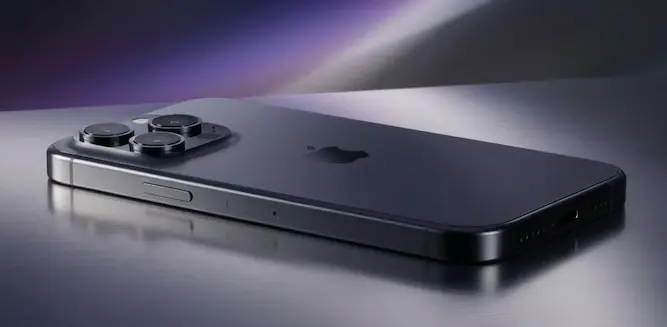
📸 What Is Variable Aperture?
The aperture controls how much light reaches the camera sensor. Until now, all iPhone 14 Pro through iPhone 17 Pro models have had a fixed aperture of ƒ/1.78 — the lens is always fully open. This means zero control:
- In low light: You can't increase the light — what you get is what the lens gives you
- In bright light: You can't reduce the light — risk of overexposure
- Depth of field: You can't control how blurry the background is (Portrait Mode creates artificial blur, it's not optical)
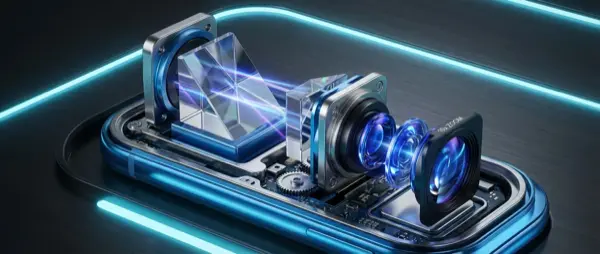
With variable aperture, users will be able to mechanically adjust how much the lens opens or closes, just like on a DSLR camera.
🔍 What Changes in Practice?
Variable aperture brings three fundamental changes to iPhone photography:
🌃 Low Light
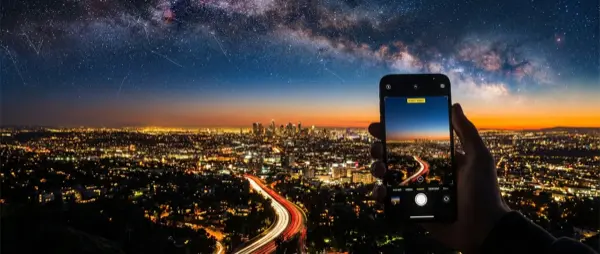
In dark environments, the aperture opens fully to let in more light. Result: brighter photos, less noise, sharper details without Night Mode.
☀️ Bright Light
At midday in sunshine, the aperture closes to avoid overexposure. Ideal for photos at the beach, in the snow, or on reflective surfaces.
🎬 Filmmakers
For video at 24fps in natural light, the ability to reduce aperture prevents overexposure without an ND filter. Effectively, it turns the iPhone into a mini cinema camera.
🎯 Depth of Field: The Big Change
The most significant application of variable aperture is real depth of field control. Unlike Portrait Mode which creates artificial blur, here we're talking about optical bokeh — real background blur that is naturally created by the lens.
💡 Three Levels of Depth of Field:
• Shallow DoF: Wide aperture (e.g. ƒ/1.78) — blurry background, ideal for portraits and close-ups
• Medium DoF: Medium aperture — some background blur but recognizable surroundings
• Deep DoF: Narrow aperture (e.g. ƒ/5.6) — everything in focus, ideal for landscapes and architecture
📱 Telephoto Lens: Also Upgraded
It's not just the main lens that's changing. According to Digital Chat Station (a Weibo leaker with a reliable track record), Apple is testing a new telephoto lens with a wider aperture for the iPhone 18 Pro models.
The iPhone 17 Pro telephoto lens has an aperture of ƒ/2.8 — it was upgraded to a 48MP sensor but kept the same aperture. A wider aperture means:
- Better light gathering — brighter telephoto shots
- Less noise — especially in low light
- Faster shutter speed — less motion blur
- Better background separation — more impressive natural bokeh when zoomed in
🔭 Teleconverter: New Zoom Technology
Beyond variable aperture, Apple is also exploring a teleconverter — an optical element that increases focal length and improves zoom range. In traditional photography, teleconverters are placed between the lens and the sensor.
📷 Variable Aperture vs Teleconverter
Variable Aperture
Controls how much light enters the lens. Affects exposure, depth of field, and noise. Dynamically adjusts based on lighting conditions.
Teleconverter
Increases the focal length — meaning greater optical zoom. Improves zoom range but slightly reduces light. If implemented, it would be a first for smartphones.
📊 Which Model Will Get It?
There's some uncertainty here. Analyst Ming-Chi Kuo (the first to mention variable aperture in December 2024) spoke generally about a “high-end iPhone 18,” while supply chain reports mention both Pro and Pro Max.
📱 iPhone 18 Pro Max (confirmed)
Digital Chat Station explicitly mentions variable aperture components in the Pro Max. The 48MP telephoto will also have a wider aperture. Teleconverter possibly exclusive to this model.
📱 iPhone 18 Pro (likely)
Supply chain reports indicate variable aperture in both Pro models. However, the telephoto may stay at ƒ/2.8 in the smaller Pro model.
🏭 Manufacturing: Samsung Austin, Texas
In an interesting development, at least some of the iPhone 18 Pro camera sensors will be manufactured in the USA. Samsung is preparing production of advanced image sensors at its factory in Austin, Texas, starting around March 2026.
Apple already uses Samsung's triple sensor — the new three-layer stacked image sensor promises:
- Faster camera response — zero shutter lag
- Reduced noise — better image quality in night shots
- Increased dynamic range — more detail in shadows and highlights simultaneously
🆚 Samsung Galaxy: Who Had It First?
Samsung was the first to bring variable aperture to a smartphone — in the Galaxy S9 (2018) and Galaxy S10 (2019). However, the company abandoned the feature in 2020 due to increased thickness and high cost.
📱 Apple vs Samsung: Variable Aperture
Samsung Galaxy S9/S10 (2018-2019)
Only two aperture positions: ƒ/1.5 and ƒ/2.4. Increased thickness, high cost. Abandoned after 2 generations.
iPhone 18 Pro (2026)
Expected to have multiple aperture positions in a thinner design. 7 years of technology evolution. Possible integration with Computational Photography.
💰 Cost & Release
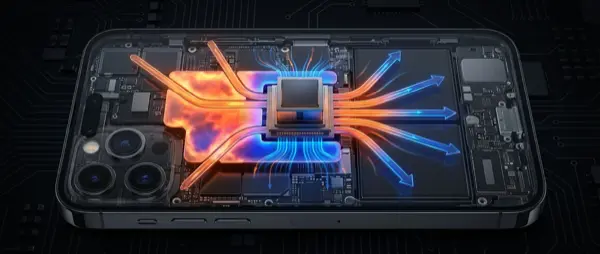
Variable aperture is not cheap technology. The new A20 Pro chip (2nm) already costs 50% more to manufacture than the A19 Pro, and the camera components will further increase the cost.
📷 Conclusion: The iPhone 18 Pro brings the most significant camera changes in years. The variable aperture, the upgraded telephoto, and the possible teleconverter transform the iPhone into a near-professional photography tool. Together with the A20 Pro chip and computational photography AI, Apple aims to close the gap with mirrorless cameras — at least for the average user.