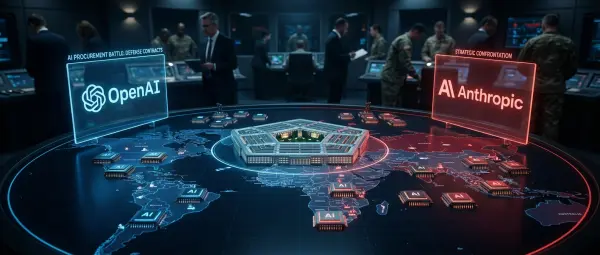


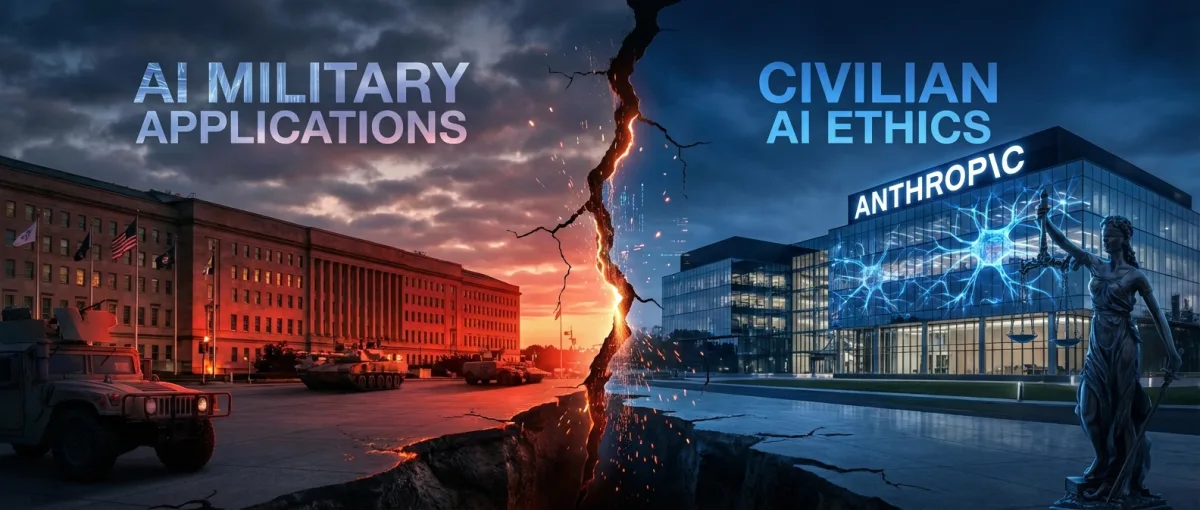
In February 2026, Anthropic did something nobody in Silicon Valley expected: it told the Pentagon “no.” That single word placed the company at the center of a collision that went far beyond the boundaries of a business negotiation.
⚔️ How the Crisis Started
Defense Secretary Pete Hegseth decided to renegotiate every AI company's contract with the US military. The goal? Full, unrestricted access to AI models for “any lawful purpose.” OpenAI and xAI agreed to the new terms almost immediately. Anthropic, however, refused.
The reason was specific. Dario Amodei's company drew two clear red lines: no mass surveillance of American citizens and no lethal autonomous weapons without human oversight. Two lines the Pentagon wasn't willing to accept.
🕐 A 24-Hour Ultimatum
In a dramatic escalation, Hegseth summoned Amodei to the White House. There, according to NPR, he issued an ultimatum: accept the new terms by Friday, 5:30 PM, or face the full weight of the US military's institutional power.
Anthropic didn't budge. Less than 24 hours before the deadline expired, Amodei published a statement: "I believe deeply in the existential importance of using AI to defend the United States and other democracies. Anthropic has worked proactively to deploy models to the Department of War and the intelligence community." But in a “narrow set of cases,” he added, “we believe AI can undermine, rather than defend, democratic values.”
"No amount of intimidation or punishment from the Department of War will change our position on mass domestic surveillance or fully autonomous weapons."
— Anthropic, official statement
💣 The Pentagon Strikes Back
Hegseth didn't wait long. Hours after the ultimatum expired, Trump first announced on Truth Social that he was banning Anthropic products across the entire federal government. Then Hegseth went further: he designated Anthropic a "supply chain risk" — a move typically reserved for companies with ties to foreign governments, never before publicly applied to a US company.
What does that mean in practice? No contractor, supplier, or partner working with the US military may conduct any commercial activity with Anthropic. Companies like Palantir and AWS, which use Claude in their operations, suddenly found themselves in a very difficult position.
🏳️ OpenAI: The Opposite Strategy
While Anthropic held firm, Sam Altman announced that OpenAI had reached a deal with the Pentagon. "Two of our most important safety principles are prohibitions on domestic mass surveillance and human responsibility for the use of force," he wrote on X. He claimed those principles “are reflected in law and policy.”
Sources at The Verge pointed out, however, that OpenAI's deal is far softer than what Anthropic was pushing for — thanks largely to three words: “any lawful use.” Laws that previously allowed mass surveillance could, theoretically, be applied here as well.
⚠️ "Any lawful use": The key phrase in the OpenAI-Pentagon agreement. Critics note that laws like FISA Section 702 have been used in the past for bulk data collection — technically “lawful” but deeply controversial.

⚖️ What It Means for the Industry
The Pentagon's message was clear: cooperate or get shut out. Anthropic was the first frontier AI company to deploy models on the government's classified networks, starting in June 2024. Now it's on the blacklist.
The situation sets a precedent that worries the entire industry. If the government can label an American company a “supply chain threat” because it refused specific contractual terms, what stops the same pattern from being applied to healthcare, finance, or education?
A former Trump advisor called the confrontation “attempted corporate murder.” Anthropic, for its part, stated it would challenge the designation in court, calling it “legally unsound” and a “dangerous precedent.”
🔮 What Comes Next
This won't be resolved quickly. Anthropic has a 6-month transition period to wind down its defense contracts. Meanwhile, reports published in March 2026 revealed that the US military used Anthropic AI during operations in Iran — despite the ban. The irony wasn't lost on anyone.
What started as a commercial disagreement has become a philosophical confrontation. On one side, the view that national security overrides any corporate policy. On the other, the position that certain uses of technology should never happen — even when the client is the world's most powerful military.