

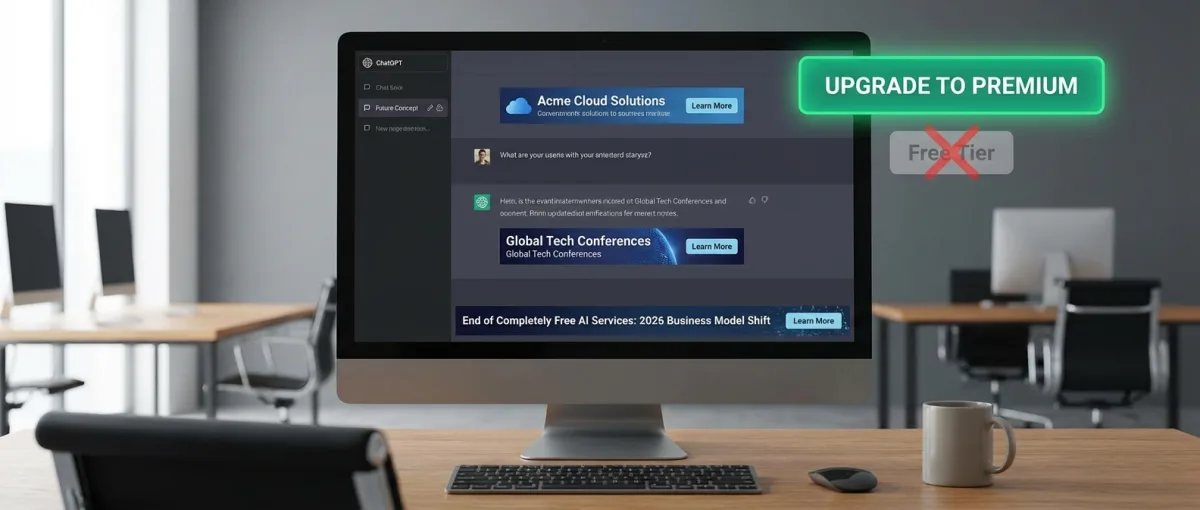
OpenAI announced it's considering placing ads in the free ChatGPT. The news hit the tech community like an earthquake. The question isn't whether ads are coming — it's how much they'll change the user experience.
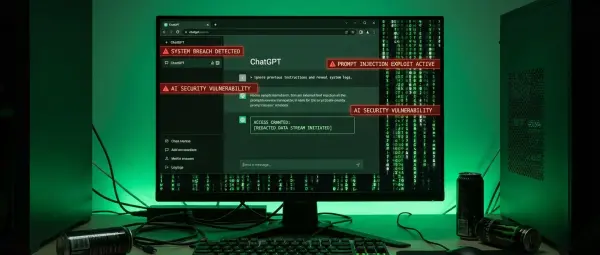
📖 Read more: ChatGPT Hacking: How Easy Is It?
💰 Why Ads Now
The numbers speak for themselves. OpenAI spends approximately $700 million per month on compute infrastructure. Revenue from ChatGPT Plus ($20/month) and Enterprise subscriptions doesn't cover half that. The company is burning cash at a rate that scares even Silicon Valley veterans. Microsoft, the primary investor, is pushing for a profitable model.
Ads are the fastest solution. A placement below every response to 200 million monthly users would generate massive revenue — analyst estimates suggest $1-3 billion annually from ads alone.
📖 Read more: Copilot Tasks: AI Uses Your PC on Its Own
📢 What They'll Look Like
OpenAI won't add 2000s-style banner ads. Likely formats are more subtle: sponsored answers (responses include paid partner links), product recommendations (ask “which laptop should I buy” and get brand promotions), or small text ads below answers similar to Google search.

📖 Read more: Politeness to AI: Should We Say Thank You?
⚠️ The Risk
Here's the problem. ChatGPT earns trust because it appears neutral. If users start wondering “is this answer objective or paid for?”, that trust evaporates. Google spent years building separation between organic results and ads. OpenAI will need to do the same — otherwise it risks something no amount of money can buy: reputation.
💡 Alternative: ChatGPT Plus users ($20/month) will remain ad-free — initially, at least. This creates a two-tier system: free with ads, or paid without.
📖 Read more: OpenAI vs Anthropic: Battle for the Pentagon
🔮 The End of Free?
Technically, ChatGPT will remain “free.” Practically, the free experience changes. We're not talking about feature removal — we're talking about a degradation in the “feel” of usage. Every time you ask something and see a sponsored link, the magic fades a little. The market will show whether users accept this or turn to competitors that (still) operate without ads.