

Remember the last time the power went out? You may have spent hours in the dark, not knowing what happened or when it would return. In 2026, smart grids are radically changing this experience. With thousands of sensors, AI systems, and automatic fault detection, power outages in Greece are becoming fewer, shorter in duration, and - most importantly - predictable.
📖 Read more: Gut Microchip: Intestine Monitoring in a Pill
⚡ The Old Grid: Blind and Slow
Greece's traditional power grid was designed decades ago, for a very different world. Energy flow was one-directional: from power plants to homes. When something went wrong - a fallen tree, an overloaded transformer - technicians had to go out in the field to locate the problem. Often, the power outage was the first indication that something was amiss.
The result? The average power outage in Greece lasted 87 minutes - nearly double the European average. Every outage costs: wasted food, lost productivity, loss of trust. For businesses, an hour without power can mean thousands of euros in damages.
87 min
Average outage duration (before)
4.2
Outages/household/year
€180M
Annual cost of outages
🔌 What Is a Smart Grid?
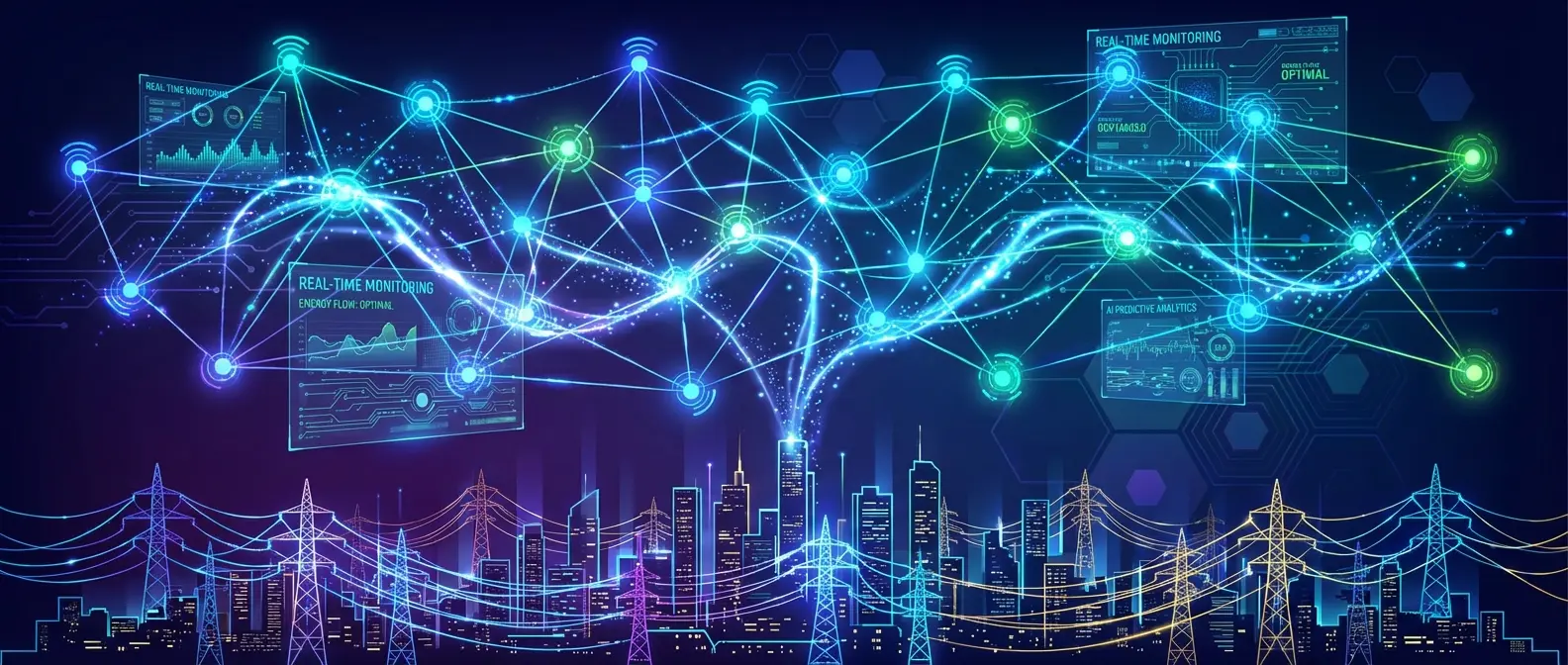
A smart grid is an electrical network equipped with digital technology for monitoring, communication, and automatic control. Imagine every transformer, every high-voltage line, every substation having “eyes” and “ears” - sensors that continuously measure voltage, current, temperature, and vibrations.
This data is sent in real time to central management systems, where AI algorithms analyze the information. If a cable starts overheating, if a transformer shows signs of wear, if demand in an area spikes suddenly - the system knows before the failure occurs.
🔬 How It Works
Thousands of sensors placed at strategic points in the network collect data every second. This data travels via 4G/5G or fiber optics to the control center, where AI algorithms search for anomalies. If a problem is found, the system either fixes it automatically (rerouting power) or alerts technicians with the exact location.

🇬🇷 The Smart Grid in Greece in 2026
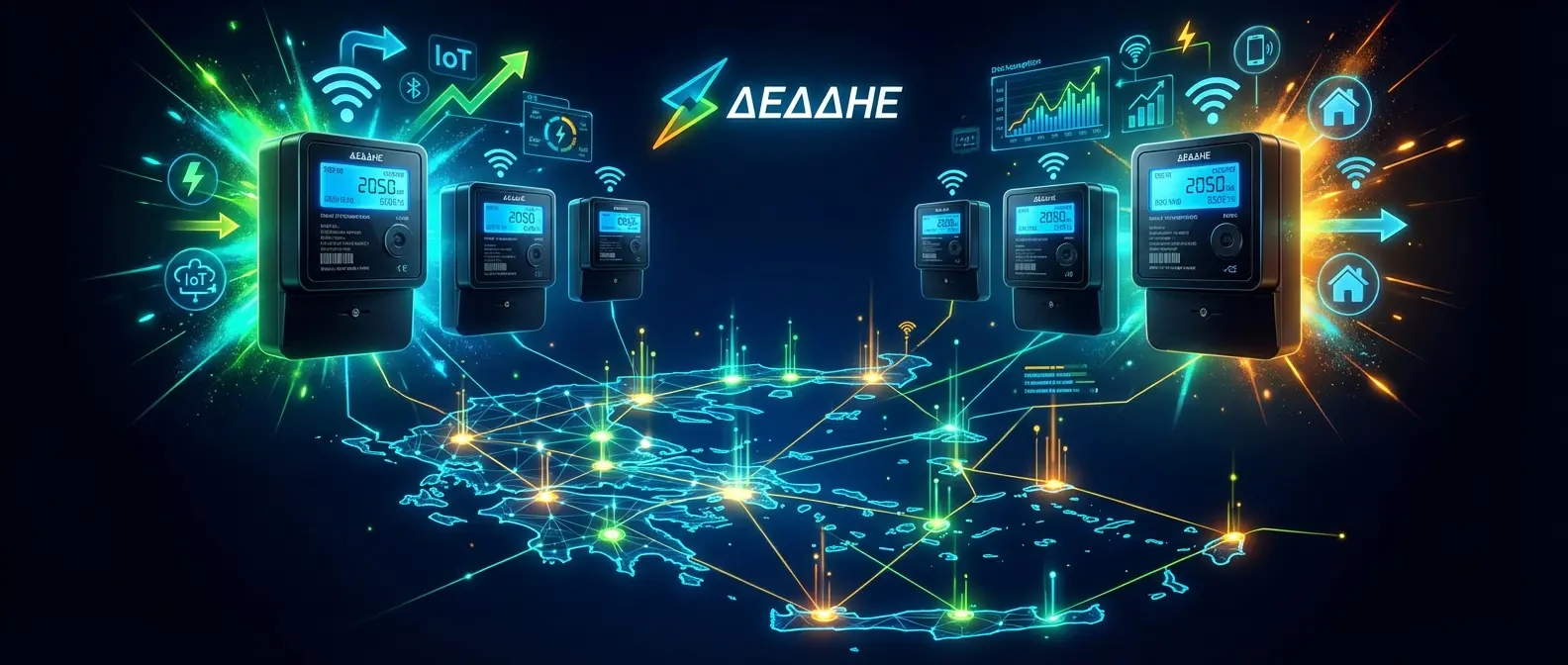
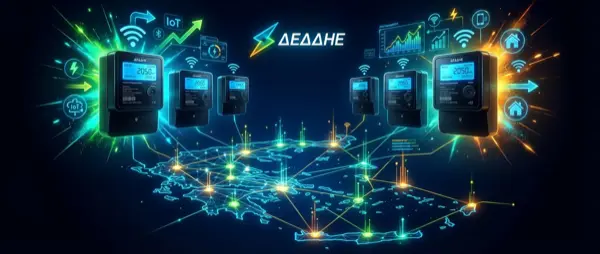
HEDNO (Hellenic Electricity Distribution Network Operator) has invested significantly in recent years in digitizing the network. The ambitious program includes installing millions of smart meters, thousands of line sensors, and dozens of automated substations.
📊 Smart Meters
Over 3.5 million smart meters have been installed across Greece. These enable remote readings, electricity theft detection, and detailed real-time consumption data.
🔍 Line Sensors
Sensors placed on medium-voltage lines measure current, voltage, and detect short circuits in milliseconds. Coverage has reached 65% of the network.
🤖 SCADA & AI
HEDNO's central SCADA system has been upgraded with AI capabilities for fault prediction and automatic power rerouting in the event of an outage.
The results are already visible. The average outage duration has dropped to 42 minutes - nearly halved. The number of outages per household dropped to 2.8 per year. And most importantly: 35% of potential faults are detected and prevented before they cause an outage.
📖 Read more: Havana Syndrome 2026: Truth or Myth
🛠️ The Technologies Behind the Smart Grid
Smart grids rely on a combination of technologies working in harmony. PMUs (Phasor Measurement Units) measure voltage phase and magnitude 30-60 times per second - a thousand times faster than traditional meters. This precision allows detecting micro-fluctuations that foreshadow problems.
FLISR (Fault Location, Isolation and Service Restoration) systems are the heart of automation. When a fault occurs, they automatically locate the problem, isolate the affected section of the network, and reroute power through alternative paths - often in less than a minute, without human intervention.
📡 IoT Sensors
Small devices with 10+ year battery life
🧠 Machine Learning
Fault prediction with 92% accuracy
📱 5G Connectivity
Ultra-low latency communication
🔄 Edge Computing
Processing at the substation

👥 What Changes for You
As a consumer, the benefits are multiple. First, fewer outages - and when they occur, shorter in duration. Second, better information: the HEDNO app notifies you about scheduled work and estimated restoration time in case of a fault.
Third, your smart meter gives you access to detailed consumption data. You can see which hours you consume the most, compare with your area's average, and even receive alerts if consumption spikes suddenly (an indication of a possible appliance fault).
For those with solar panels, the smart grid enables bidirectional energy flow. You can sell surplus energy to the grid and monitor your earnings in real time. Also, during periods of high demand, you may be asked (with compensation) to temporarily reduce consumption - a system known as demand response.
⚠️ Challenges and Criticism
Smart grids are not without challenges. Cybersecurity is critical: a digitally controlled network can be attacked. HEDNO has invested in multi-layered security, but the risk remains - as attacks on energy networks in other countries have shown.
There are also concerns about privacy. Smart meters know when you are home, when you leave, and even what appliances you use (through consumption pattern analysis). Legislation requires anonymization and access restrictions, but the debate continues.
🔒 HEDNO Security Measures
- End-to-end encryption on all communications
- Air-gapped networks for critical operations
- 24/7 Security Operations Center
- Regular penetration tests by external auditors
🔮 The Future: 2027 and Beyond
The next phase includes virtual power plants - systems that combine thousands of small energy sources (solar panels, batteries, EVs) into a single, manageable whole. Greece is expected to have full smart metering coverage by 2028 and one of Europe's most advanced networks.
The transition to green energy requires smart grids. Renewable sources - solar, wind - are variable. Without smart management, the network cannot absorb their variability. The smart grid is the backbone of the energy transition.