

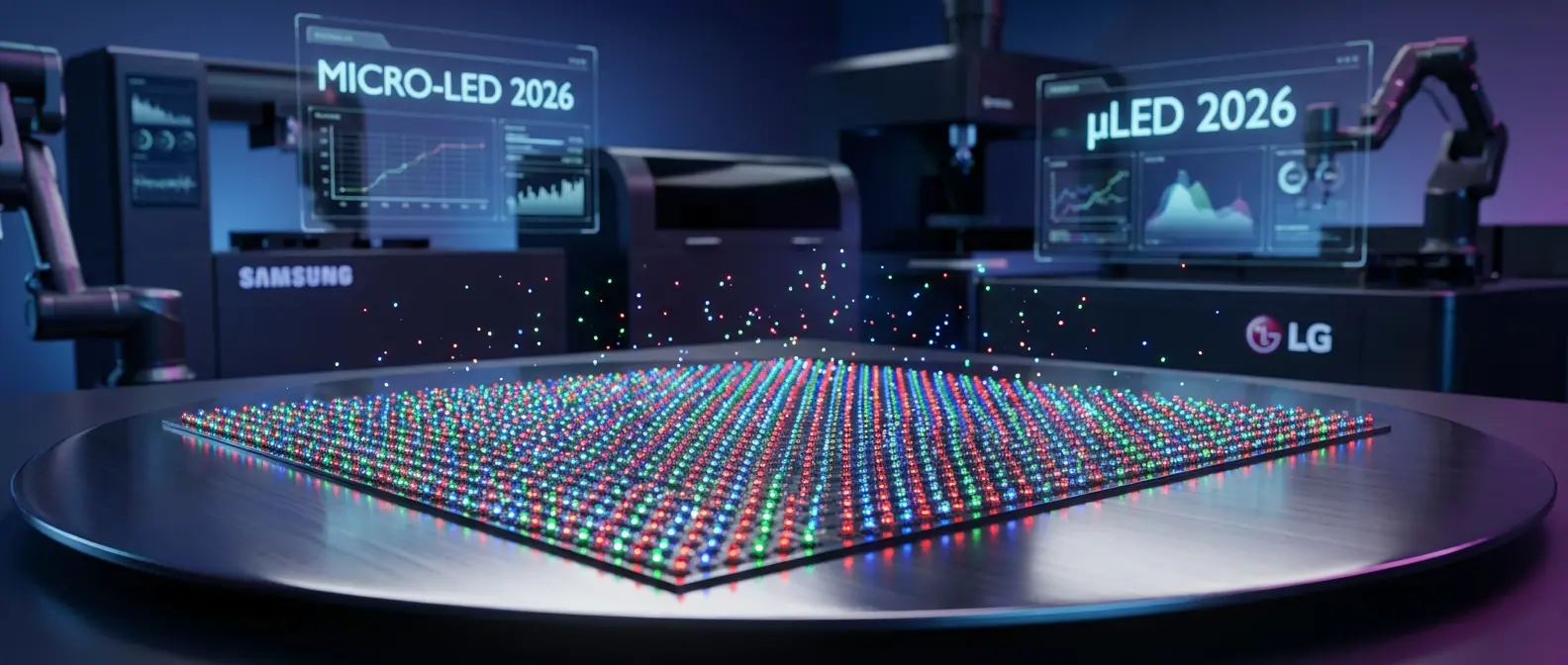
Micro-LED technology had been promising to revolutionize the display world for years, but it always remained “the technology of the future.” In 2026, however, things are changing dramatically. With new manufacturing methods, reduced costs, and major industry players getting involved, micro-LED is making a powerful comeback, promising to gradually replace both OLED and LCD across all device categories.
📖 Read more: USB-C Laptops Mandatory from 2026 — EU's New Charging Rule
🔬 What Is Micro-LED and Why Does It Matter?
Micro-LED is a display technology where each pixel consists of microscopic LED diodes smaller than 100 micrometers in size. Unlike OLEDs that use organic materials, micro-LEDs are based on inorganic semiconductors, offering significant advantages.
⚡ Brightness
10,000+ nits
Up to 10x brighter than OLED
⏰ Lifespan
100,000+ hours
No burn-in or degradation
🔋 Energy
-50%
Power consumption compared to LCD
📅 Why 2026 Is the Year of Micro-LED
After years of R&D and failed mass production attempts, five critical developments make 2026 a turning point for micro-LED technology:
- Mass Transfer Technology Breakthrough
Samsung announced a new transfer method that places 1 million LEDs per hour, reducing production costs by 70%. This had been the biggest obstacle for years.
- Chip Size Reduced to 5μm
New epitaxy processes enable 5-micrometer chips, making it possible to produce high-resolution displays for smartphones.
- New Manufacturing Plants
LG, BOE, and AUO inaugurated new production lines dedicated exclusively to micro-LED, with a combined investment of $12 billion.
- Successful CMOS Integration
Direct integration of micro-LED onto CMOS backplanes now enables high-resolution displays without a separate TFT layer.
- Strategic Shift Away from OLED Investment
Major manufacturers announced a freeze on new OLED investments, redirecting resources toward micro-LED.

⚔️ Micro-LED vs OLED: The Ultimate Comparison
While OLEDs currently dominate premium displays, micro-LEDs promise to solve their long-standing issues:
| Feature | OLED | Micro-LED |
|---|---|---|
| Burn-in | ✗ Issue | ✓ None |
| Peak brightness | ~2.000 nits | 10.000+ nits |
| Lifespan | ~30,000 hours | 100,000+ hours |
| Energy efficiency | Good | Excellent |
| Water/moisture resistance | ✗ Sensitive | ✓ Resistant |
| Price (2026) | Affordable | Premium |
📱 The First Micro-LED Products of 2026
📺 Samsung “The Wall” 89″
The first “affordable” consumer micro-LED TV at €25,000 — a 60% price reduction from 2024.
Available Q2 2026⌚ Apple Watch Ultra 3
The first wearable with a micro-LED display, reaching 5,000 nits for perfect sunlight visibility.
Expected Sept. 2026🥽 AR Glasses Premium
Meta and Snap are preparing AR glasses with micro-LED projection for vivid images even in bright light.
Developer editions 2026🚗 Automotive HUDs
BMW and Mercedes are integrating micro-LED head-up displays with AR navigation in new models.
Q4 2026 onwards
⚠️ The Challenges That Remain
Despite significant progress, micro-LED still faces serious obstacles before becoming a mainstream technology:
- High cost: Still 5-10x more expensive than OLED at the same size. Micro-LED smartphones will exceed €2,000.
- Yield rates: Production yield remains at ~85%, while profitability requires >95%.
- Repairability: Dead pixels on micro-LED displays are nearly impossible to repair.
- Color uniformity: Ensuring accurate color across millions of LEDs remains a challenge.
📊 Market Forecast 2026-2030
According to market analysts, micro-LED will follow a similar trajectory to OLED a decade ago:
2026 Market
$2.1B
2028 Market
$8.5B
2030 Market
$25B
Source: Display Supply Chain Consultants, Omdia Research 2026
🇬🇷 What It Means for the Greek Consumer
Short Term (2026-2027)
The first micro-LED products will be luxury items — TVs above €20,000 and premium wearables. For most people, OLED remains the go-to choice.
Medium Term (2028-2029)
The first 55″ micro-LED TV under €5,000 and smartphones at €1,500 are expected. The technology becomes accessible to the upper-mid market segment.
Long Term (2030+)
Micro-LED gradually replaces OLED as the dominant premium display technology, with prices comparable to today's OLEDs.
Tip: If you're considering buying a premium TV or display now, OLED remains an excellent choice. Micro-LED is only worth waiting for if your budget exceeds €15,000 or you need exceptional brightness for professional use.
💡 The Bottom Line
2026 marks the beginning of the end of the long wait for micro-LED. With manufacturing breakthroughs, the first consumer products, and massive investments from top manufacturers, the technology that has been promising for years is finally starting to deliver. Whether we're talking about TVs, wearables, AR glasses, or automotive applications, micro-LED is set to change the way we see displays.