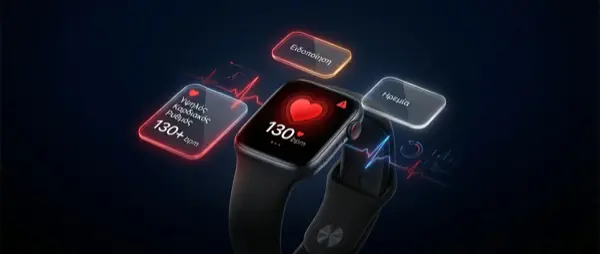


New Legal Challenge for Apple Watch
The U.S. International Trade Commission (ITC) has launched an investigation into patent infringement related to the Fall Detection feature of Apple Watch. The case could lead to an import ban — but it doesn't just concern Apple.
📖 Read more: Emergency SOS: Complete Emergency Guide
On January 20, 2026, the ITC (International Trade Commission) announced the start of a new investigation against Apple, following a complaint by Texas-based company UnaliWear. The complaint concerns two patents related to fall detection functionality in wearable devices — a technology used by Apple Watch, as well as smartwatches from Samsung, Google, and Garmin.
If this story sounds familiar, it's because this isn't the first time Apple has faced such a challenge. The recent dispute with Masimo over the blood oxygen sensor led to an actual sales ban of Apple Watch in the USA in December 2023. Let's look at exactly what's happening, who's involved, and what this means for Apple Watch users in Europe and worldwide.
The Parties Involved
UnaliWear (Plaintiff)
A medical wearables company from Texas. Manufactures the Kanega Watch, a medical alert device with fall detection for seniors. Awarded by NY Times/Wirecutter as «Best for Fall Detection».
Apple + Others
Apple (Apple Watch), Samsung (Galaxy Watch), Google (Pixel Watch), Garmin — all smartwatch companies with Fall Detection functionality are targeted in the complaint.
The Targeted Companies
Apple
Apple Watch Series & Ultra
Samsung
Galaxy Watch series
Pixel Watch series
Garmin
Venu & Forerunner
The fact that the complaint doesn't target Apple exclusively is significant. It covers every “electronic watch with fall detection capabilities, and its components,” according to official ITC documents. This means the four largest smartwatch manufacturers in the world are at the same table.
The Patents at the Center
UnaliWear cites two U.S. patents related to the RealFall™ technology used in their own Kanega Watch:
U.S. Patent No. 10,051,410
Covers the methodology for detecting falls in wearable devices, using motion sensor data (accelerometer, gyroscope) to distinguish a real fall from normal activities like sitting down or running.
U.S. Patent No. 10,687,193
Related to the fall data processing algorithm and the ability to automatically call for help after detecting a fall, without user intervention. UnaliWear claims their technology is based on real fall data from actual users.
What UnaliWear Is Requesting
UnaliWear is requesting two measures from the ITC:
1. Limited Exclusion Order: A ban on importing the accused devices into the USA.
2. Cease and Desist Orders: A ban on selling devices already present in the USA.
If successful, this could lead to a scenario similar to the Masimo case — meaning an actual sales ban.
What Is the ITC and Why It Matters
The International Trade Commission (ITC) is an independent federal agency of the United States that investigates unfair trade practices, including patent infringement in imported products. Section 337 of the Customs Code gives the ITC the power to ban imports.
The ITC does not award damages — that happens in civil courts. Its power lies in the ability to completely block the import of a product into the USA, which can be devastating for companies that manufacture abroad — like Apple, which makes Apple Watch in China.
After the investigation begins, defendants have 20 days to respond. If they don't respond, the ITC can issue a default judgment. The typical process takes 12-18 months, though complex cases may take longer.
History: Apple and the ITC
This isn't the first time Apple has faced an ITC investigation over Apple Watch. Here's a timeline of the most significant cases:
| Year | Opponent | Issue | Outcome |
|---|---|---|---|
| 2021 | AliveCor | ECG / Electrocardiogram | Apple won — patents invalidated |
| 2022 | Masimo | Blood Oxygen / SpO2 | ITC ordered import ban |
| Dec 2023 | Masimo | Ban enforcement | Apple Watch sales halted in USA |
| Aug 2025 | Masimo | Sensor redesign | SpO2 returns after redesign |
| Nov 2025 | Masimo | New redesign review | ITC re-examining — ongoing |
| Jan 2026 | UnaliWear | Fall Detection | Investigation ongoing |
📖 Read more: Smartlet: Wear Apple Watch + Regular Watch Together
Current Case Timeline
Complaint Filed
UnaliWear files an official complaint with the ITC, citing patents '410 and '193. Requests a limited exclusion order and cease & desist orders.
ITC Launches Investigation
The ITC publishes a Notice of Institution of Investigation. The investigation officially begins under Section 337. Defendants are notified.
Response Deadline
The defendants (Apple, Samsung, Google, Garmin) must respond within 20 days. All are expected to challenge the claims.
Hearing Process
An Administrative Law Judge (ALJ) examines the evidence. Technical experts testify about Fall Detection functionality. Expected to take months.
Initial Determination
The ALJ issues an initial determination. If ruling in favor of UnaliWear, the full ITC Commission reviews. The President can exercise a veto “for reasons of public interest.”
What Is Fall Detection and Why It Matters
The Fall Detection feature was introduced with Apple Watch Series 4 in 2018. It uses the accelerometer and gyroscope to detect a hard fall. If the user doesn't move for 60 seconds after the fall, Apple Watch automatically calls emergency services.
Life-saving feature
Hundreds of cases have been reported where Fall Detection called for help for seniors, hikers, cyclists, and people living alone. Removing it would be a public health issue.
How it works technically
The algorithm analyzes g-force data in real time, looking for free-fall patterns followed by sudden deceleration (impact). Machine Learning was trained with thousands of real falls.
Who it affects
Automatically enabled for users 55+. Younger users can enable it manually. Particularly important for people with mobility issues.
Crash Detection
Evolution of Fall Detection: Crash Detection (Series 8+) detects car accidents. While not involved in the current case, it shows how much Apple has invested in safety sensor technology.
UnaliWear: The Company Behind the Complaint
UnaliWear is not a typical “patent troll” (a company that holds patents without manufacturing products). It's an actual technology company based in Austin, Texas, that manufactures and sells a real product: the Kanega Watch.
What Is the Kanega Watch?
A medical alert watch designed specifically for seniors. Key features:
- • Fall detection based on real fall data (RealFall™ technology)
- • Automatic emergency center call (24/7)
- • Replaceable battery — no need to remove for charging
- • Awarded by NY Times/Wirecutter as “Best for Fall Detection”
- • Price: ~$40-50/month with monitoring subscription
The fact that UnaliWear manufactures an actual product is legally critical. The ITC requires the plaintiff to prove that a "domestic industry" exists in the USA. UnaliWear can likely meet this criterion, as its founder, Jean Anne Booth, started the company after she couldn't find a suitable medical alert device for her mother.
Possible Scenarios: What Could Happen
✅ Best case (for Apple)
Apple wins at the ITC or reaches an out-of-court settlement:
- The ITC finds no patent infringement
- Apple proves its technology is substantially different
- Out-of-court settlement with licensing
- No impact on Apple Watch sales
❌ Worst case (for Apple)
The ITC rules in favor of UnaliWear:
- Exclusion Order — ban on importing Apple Watch to the USA
- Cease & Desist — halt of sales of existing inventory
- Apple forced to change the Fall Detection algorithm
- "Masimo 2.0″ scenario with temporary sales halt
Why Apple Will Likely Prevail
There are several factors in Apple's favor in this case:
1. Multiple defendants: The complaint targets four companies simultaneously, which spreads the plaintiff's resources thin.
2. Public interest: The President can veto exclusion orders “for reasons of public interest” — removing a life-saving feature would create enormous backlash.
3. Technical differentiation: Apple has vast experience in redesigning technologies to avoid patents (see Masimo SpO2).
4. Legal team: Apple has one of the strongest intellectual property legal teams in the world.
What This Means for European Users
If you're wondering whether you should worry, the short answer is: not yet. Here's why:
📖 Read more: watchOS 26 vs watchOS 11: Which Version to Keep?
Doesn't affect Europe
The ITC only controls imports to the USA. Even if an exclusion order is issued, it won't affect Apple Watch sales in Europe or anywhere outside the USA. Europe falls under the European patent framework.
Long process
Even if the ITC rules against Apple, the process will take 12-18 months. By then, Apple will have already released new models and potential technical solutions.
Redesign capability
As with the Masimo case, Apple can modify the Fall Detection algorithm to avoid patent infringement, maintaining functionality but with a different implementation.
The Masimo Precedent: What We Learned
The Masimo case is the most significant precedent for understanding what could happen:
ITC Rules in Favor of Masimo
The ITC rules that Apple infringes blood oxygen sensor (SpO2) patents. An exclusion order is issued.
Import Ban Enforced
Apple halts sales of Apple Watch Series 9 and Ultra 2 in the USA. For the first time, an Apple product is pulled due to patents.
Stay of Enforcement
Appeals court temporarily stays the ban. Apple resumes sales but removes SpO2 functionality via software update.
Redesign Approved
Apple re-enables SpO2 functionality with a redesigned sensor that doesn't infringe Masimo's patents. The feature returns in the USA.
Masimo Challenges Redesign
Masimo requests a new review, claiming the redesigned sensor still infringes. The ITC begins a new examination.
The lesson? Even when the ITC rules against Apple, the company finds ways to continue — either through redesign, appeals, or stays. The process is long, complex, and rarely leads to a permanent ban.
The Broader Context: Patent Wars in Wearables
The UnaliWear case fits into a broader pattern: wearables — and especially smartwatches with health features — are becoming an increasingly popular target for patent claims. The reason?
Massive market
Apple sells ~50 million Apple Watches annually. This means even small companies can hope for significant damages or royalties.
Health patents
As smartwatches integrate more health features (ECG, SpO2, fall detection, hypertension), potential patent conflicts increase exponentially.
ITC as “fast track”
The ITC is faster than regular courts and can issue exclusion orders — making it attractive for smaller companies seeking leverage.
Frequently Asked Questions
Conclusion
The new ITC investigation into Fall Detection is a significant development in the world of wearable patents, but it shouldn't cause panic. UnaliWear is a real company with valid patents, but Apple has proven time and again that it can handle such challenges — either in court or through technological restructuring.
Key takeaways:
- 1. The investigation has just begun — no immediate impact on sales.
- 2. It targets 4 companies, not just Apple — this dilutes the risk.
- 3. Europe is not affected — the ITC only concerns imports to the USA.
- 4. Apple has a track record of winning or effectively handling such cases.
- 5. An exclusion order would challenge public interest — removing a life-saving feature.
We'll be closely monitoring developments and keeping you informed. For now, your Apple Watch continues to work normally — and Fall Detection remains one of its most important features.