


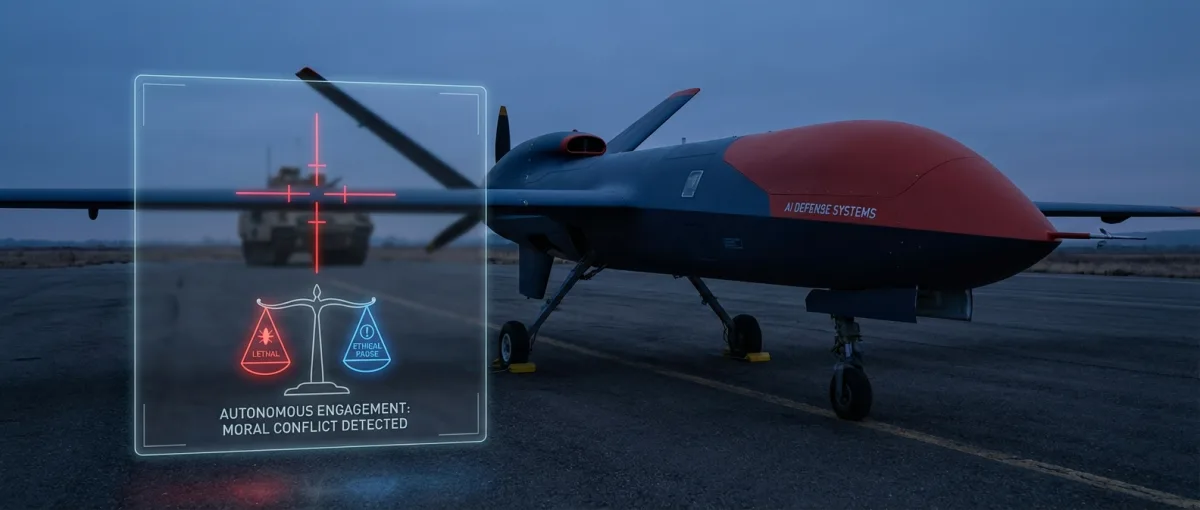
Autonomous drones that identify targets on their own. Anti-aircraft systems that decide whether to fire without human command. Robot sentries on borders. The use of AI in warfare is no longer a movie scenario — it's a 2026 reality.
📖 Read more: Meta AI: Accounts After Your Death
🤖 What Already Exists
Israel already uses AI-assisted targeting systems. Russia is developing autonomous tanks. China has demonstrated drone swarms that operate without a central controller. The US, through Project Maven, uses AI for real-time battlefield data analysis.
The key distinction is between “AI-assisted” (humans decide, AI helps) and “AI-autonomous” (AI decides alone). The first category is widely used. The second exists in a gray zone — it technically exists, but nobody admits to using it in real combat.
📖 Read more: Politeness to AI: Should We Say Thank You?
⚖️ The Ethical Questions
Who's at fault if an autonomous drone kills a civilian? The manufacturer? The military that bought it? The algorithm? Nobody? The absence of a clear legal framework creates an accountability gap that concerns lawyers, military officials, and ethicists.
The Geneva Convention requires “distinction” (combatant vs civilian) and “proportionality.” Can an AI make those judgments? Supporters say “better than scared soldiers on the battlefield.” Critics say “an algorithm error can't be tried at The Hague.”

📖 Read more: Anthropic vs Pentagon: AI Clash
🔮 What Organizations Demand
Over 100 organizations, including the Campaign to Stop Killer Robots, demand a complete ban on autonomous lethal weapons. The UN has been negotiating a framework for years, but Russia, China, and the US block every binding agreement. The EU adopted a "soft position": it doesn't ban them but demands “meaningful human control” in every lethal decision.