

For decades, thousands of Greeks on islands and mountainous areas lived in digital isolation. The internet — if it existed at all — was slow, expensive, and unreliable. In 2026, the next-generation satellite internet revolution is bringing speeds that once seemed impossible: up to 300 Mbps in the heart of the Aegean, in mountain villages of Epirus, in isolated rural areas. What does this mean for daily life, the economy, and the future of the Greek periphery?
📖 Read more: Voucher 65+: Digital Education for the Elderly
🏝️ The digital divide in Greece's periphery
Greece is a country with a unique geography: more than 6,000 islands, of which 227 are inhabited, and a vast mountainous terrain covering 80% of the territory. This uniqueness, which makes the country a one-of-a-kind tourist destination, creates enormous challenges in telecommunications.
Undersea fiber optic cables cost millions of euros and take years to install. The result? Only the large islands — Crete, Rhodes, Corfu — have decent internet. The rest rely on old copper infrastructure or weak 4G, with speeds often below 10 Mbps.
227
Inhabited islands
<10 Mbps
Average speed on small islands
€50+
Average cost/month for slow internet
The consequences are manifold: businesses that cannot operate digitally, young people leaving for urban centers, remote work that remains a dream, telemedicine that is never implemented. Even in tourism — the backbone of the Greek economy — hotels struggle to offer reliable Wi-Fi to their guests.
🛰️ LEO Satellites: The technology that changes everything
The big difference from old satellite internet? The distance. Traditional geostationary satellites orbit at 36,000 kilometers — the signal needs almost half a second to travel there and back. This “lag” made video calls, online games, and even simple browsing impossible.
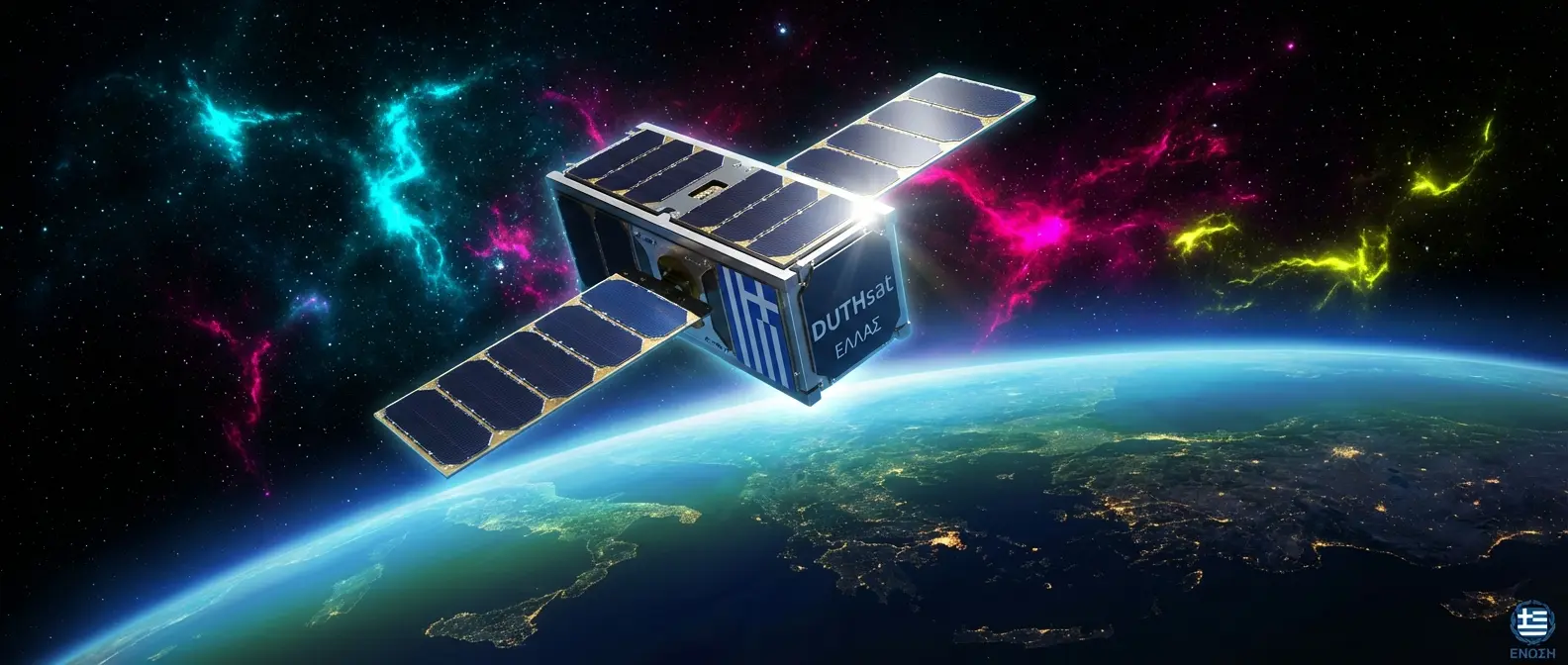
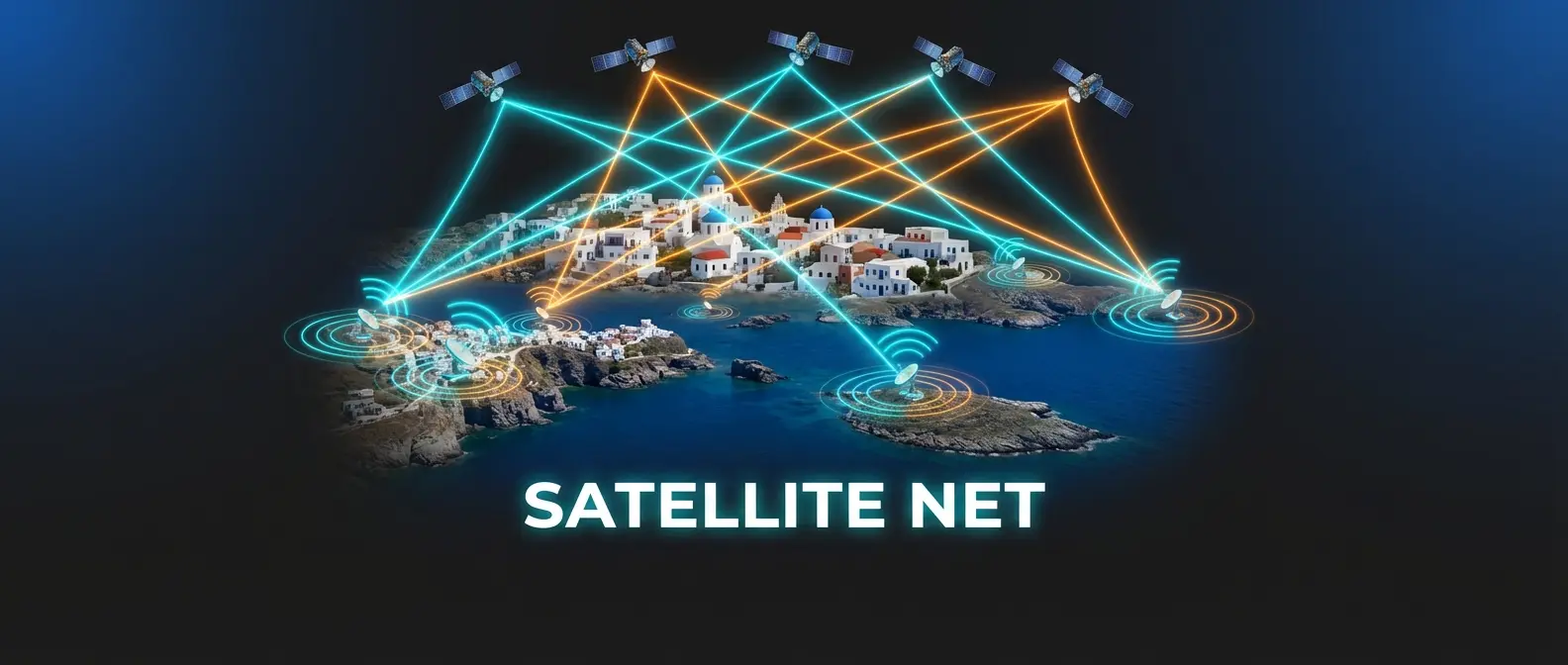
The new Low Earth Orbit (LEO) satellites orbit at just 550 kilometers. The result? Latency of 20-40 milliseconds — almost like wired internet! But because they orbit so low, thousands of satellites are needed to cover the Earth. Starlink already has over 5,500 in orbit, with a target of 12,000.
🔬 How it works
You install a small antenna (Starlink's “Dishy” is pizza-sized) that automatically detects and tracks satellites as they move across the sky. The antenna connects to a router, and you have internet. No cable from a provider needed, no mobile coverage required. You just need a clear view of the sky.

🚀 Starlink: From Silicon Valley to the Aegean
SpaceX's Starlink officially arrived in Greece in 2022 and has since transformed the lives of thousands. Giorgos Papadopoulos, a hotel owner on Symi, recalls: "Before Starlink, I had guests leaving because they couldn't work. Now I have digital nomads staying for months."
The installation is simple — any worries about technical difficulties prove unfounded. The kit includes the “Dishy McFlatface” antenna (its official nickname), a router, cables, and a mounting base. The antenna auto-aligns via motors, finding the optimal angle for the satellites. In 15 minutes, you have internet.
🚀 Starlink Standard
The basic package for homes. Speeds of 100-200 Mbps with 20-40ms latency. Ideal for families with streaming, gaming, and remote work. The equipment cost dropped to €450 (from €600) and the subscription is €65/month.
📦 Starlink Business
For businesses with higher requirements. Speeds up to 350 Mbps, priority network traffic, and static IP address. Ideal for hotels, health centers, and businesses. Cost €250/month.
⛵ Starlink Maritime
A revolution for boats and cruise ships. Internet at sea with speeds up to 200 Mbps. The antenna works even in rough seas. Greek mega-yachts have already adopted the technology en masse.
🌐 The competitors: OneWeb and Amazon Kuiper
Starlink is not alone in the sky. OneWeb, now under the Eutelsat umbrella, operates 648 satellites and targets mainly businesses and governments. In Greece, it has agreements with telecom providers for network backhaul in remote areas — meaning connecting 4G/5G towers via satellite instead of cables.
Amazon Kuiper is expected to change the game when it launches full operations in late 2026. With Amazon's financial power behind it, it promises lower prices and integration with AWS services. For Greek consumers, competition means better prices and services.
💡 Practical advice
If you're considering satellite internet, Starlink is the only immediately available option for individuals in 2026. But if you're not in urgent need, wait 6-12 months — Amazon Kuiper is expected to drive prices down across the entire market.

🏥 Telemedicine: When the internet saves lives
On Gavdos, the southernmost point of Europe, there is no hospital — just a small clinic. Before satellite internet, even a simple video call with a doctor was impossible. Today, the local doctor can video-call specialists in Athens and Thessaloniki, send X-rays in real time, and even connect portable sensors that transmit vital signs.
📖 Read more: Agricultural Drones: Smart Farming on Greek Islands
The same applies to dozens of small islands — from Lipsi to Iraklia, from Kastellorizo to Othonoi. Telemedicine doesn't replace a hospital, but it can make the difference in emergencies. A heart attack can be diagnosed in real time, buying time for an air evacuation.
🏨 Tourism: The new selling point
“Good Wi-Fi available” has become a booking criterion for modern travelers. Digital nomads — professionals who work remotely while traveling — are one of the fastest-growing tourism segments. Greece, with its sunshine, sea, and now fast internet, is becoming an ideal destination.
Hotels on islands like Serifos, Sikinos, and Astypalaia — which never had reliable internet — now advertise “Starlink-powered Wi-Fi” as a premium service. Some even offer “workation packages” with a desk, monitor, and guaranteed speed. The result? An extended tourist season into winter, since remote workers don't depend on the beach.
+35%
Increase in bookings on islands with Starlink
4.2 months
Average stay of digital nomads
€2.800
Average monthly spending/visitor
🌾 Smart Farming: Technology in the field
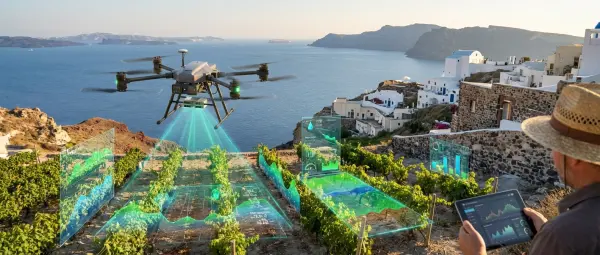
The revolution isn't just about islands. In the mountainous rural areas of mainland Greece — Thessaly, Epirus, Peloponnese — farmers are discovering the power of the Internet of Things (IoT). Moisture sensors, drones for crop inspection, automatic irrigation systems — all require a stable connection.
Kostas, an olive producer in Mani, installed Starlink last year. "Now I have cameras in the olive grove that I can watch from my phone. I have sensors that tell me when fertilizer is needed. Even the spraying drone needs internet for the flight map." Productivity increased by 20%, while water consumption dropped by a third.
🏛️ What is the government doing?
The Greek government has not remained idle. The "Digital Islands" program subsidizes satellite internet installation on small islands with populations under 1,000 residents. The subsidy covers 80% of equipment costs for residents and 50% for businesses.
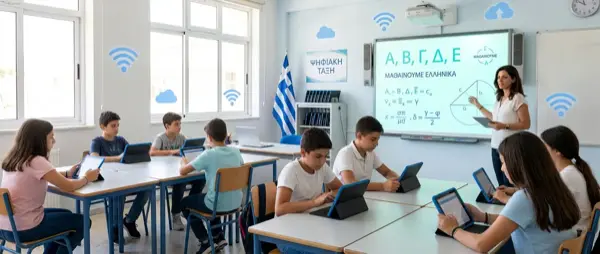
Meanwhile, the Recovery Fund is financing Starlink installations at health centers on 45 remote islands and 120 mountain communities. Schools in areas without VDSL receive free equipment and subscriptions. The goal is for no community to remain offline by 2028.
📋 How to apply for a subsidy
Applications are made through the digitalplan.gov.gr platform. You need: an ID, proof of permanent residence, a social security number, and a bank account. Approval comes within 15-30 days.
⚠️ The challenges that remain
Satellite internet is not perfect. First, there's the cost: €65-250 per month is a lot for many families, especially on low-income islands. The subsidy helps, but doesn't cover everyone.
Second, latency, while much better than old satellites, is not ideal for competitive gaming or ultra-low-latency applications. Third, stability depends on the weather — in heavy rain or snowfall, the connection can be affected.
Finally, there are environmental concerns about space pollution — thousands of satellites creating congestion in orbit and affecting astronomical observation. SpaceX promises solutions, but the issue remains open.
🔮 The future: 2027 and beyond
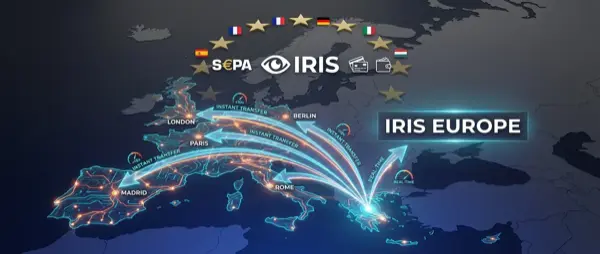
The forecasts for the coming years are encouraging. The second generation of Starlink V2 satellites promises speeds up to 1 Gbps. Amazon Kuiper will bring the competition the market needs. The European Union is planning its own LEO constellation with the IRIS² program.
For Greece, the next five years could mark the end of the digital divide. Every island, every mountain village, every remote community will have access to internet that was once a luxury even in Athens. And this isn't just about streaming — it's about justice, development, and the future.