

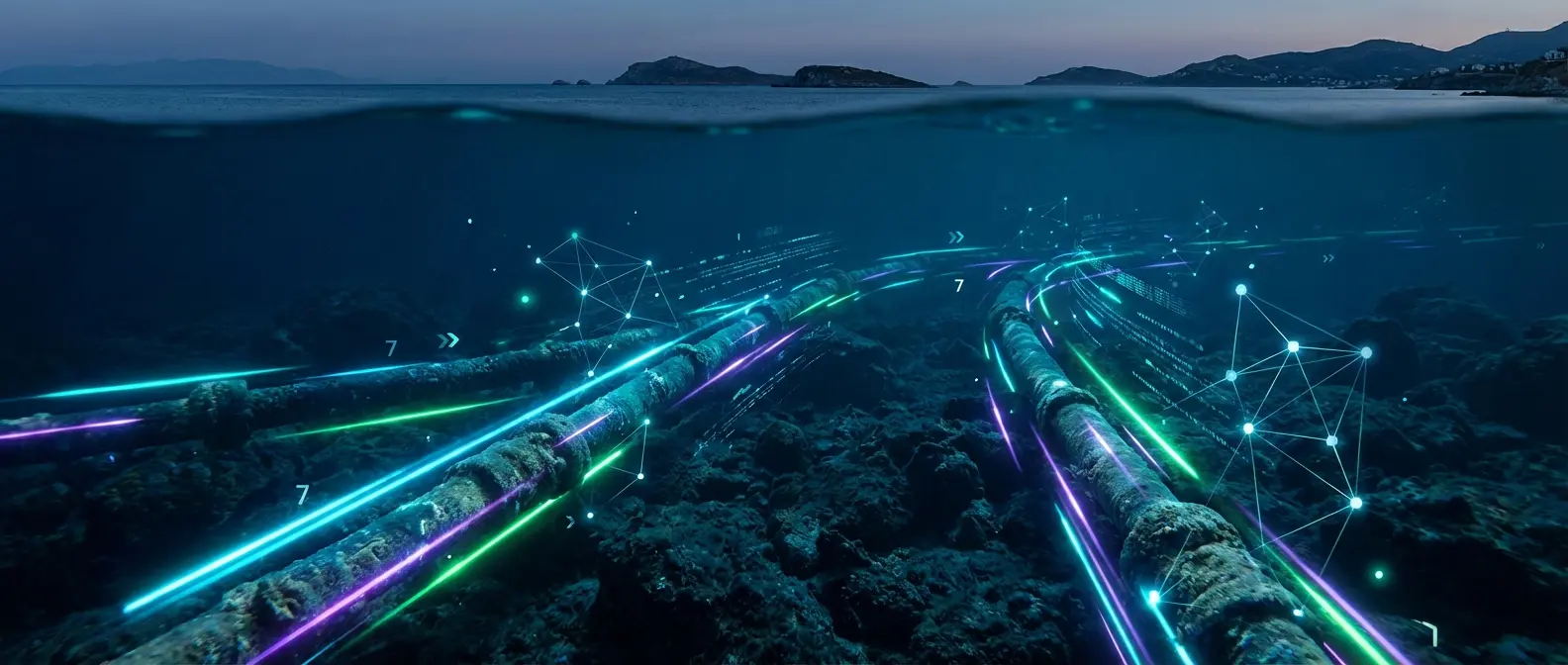
Every time you send an email, watch a video on YouTube, or make a video call, your data travels through subsea fiber optic cables stretched across the ocean floor. These invisible internet “highways” carry 99% of intercontinental communications. And Europe is preparing the next generation: 7 new systems by 2027, with Greece becoming a strategic hub.
📖 Read more: OTE: TERNA Fiber Acquisition and the Fiber Optic Battle
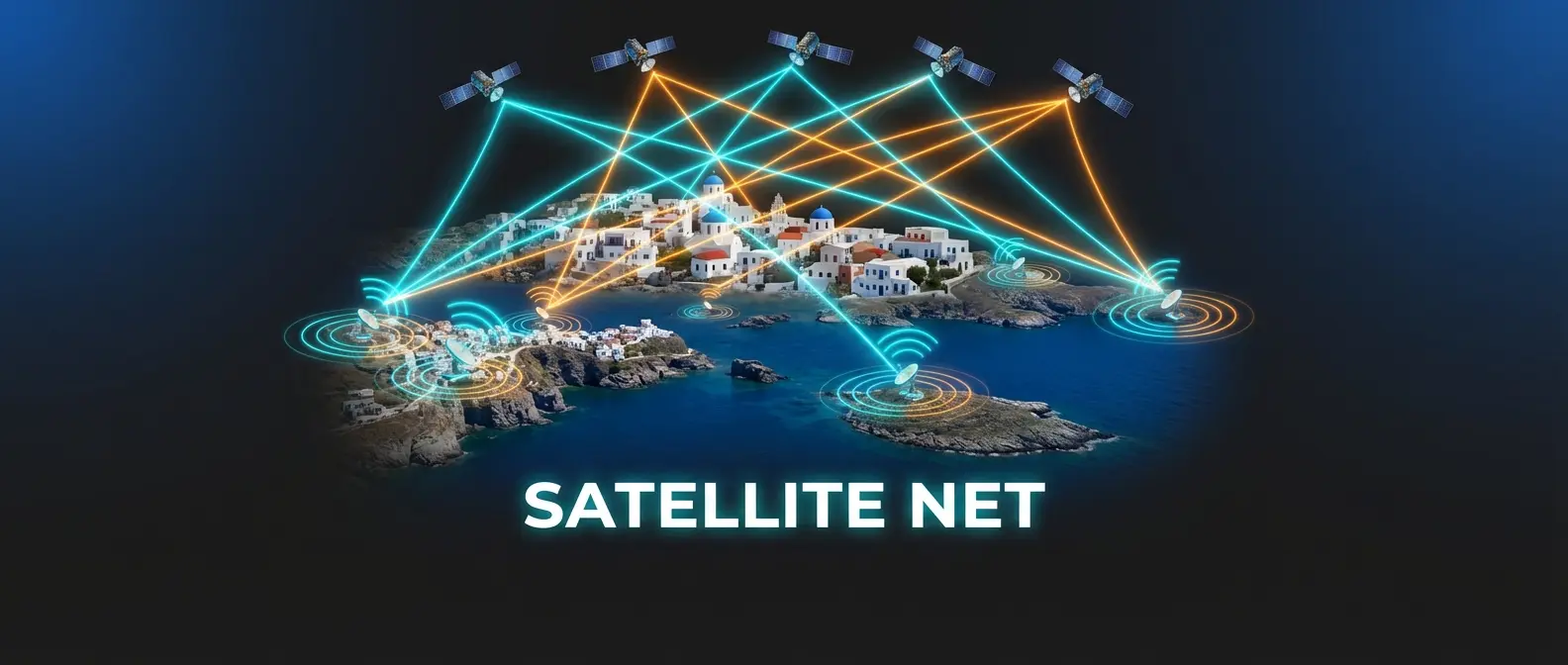
🌊 Why not satellites?
Satellites have one big problem: latency. Even low-Earth orbit (LEO) satellites like Starlink have a 20–40ms delay. Subsea cables? Under 5ms for transatlantic connections. For trading, gaming, video calls, and cloud computing, this difference is enormous.
Additionally, cables offer far greater capacity. A modern subsea cable can carry 200+ Tbps — enough for tens of millions of simultaneous 4K streams. Satellites don't even come close.
99%
Intercontinental communication
500+
Active cables worldwide
\<5ms
Transatlantic latency
📖 Read more: Nokia AI Network: A New Telecom Era
🔌 The 7 new European systems
The European Union, following geopolitical tensions and sabotage incidents on Baltic cables, is investing heavily in new infrastructure. The EU Global Gateway is funding 7 new systems that will strengthen connectivity and reduce dependence on third countries.
🇬🇷 Greece-Italy Express
New Patras–Brindisi cable, 200 Tbps. Activation Q2 2026. Greece becomes a data hub for Asia.
🇫🇷 Atlantic Loop
France–USA–Ireland. 320 Tbps capacity. Redundancy for Euro-American communication.
🇵🇹 Medusa
Portugal–Morocco–Egypt–Cyprus. Connecting Europe with Africa and the Middle East.
The remaining 4 systems include the Nordic Ring (Scandinavia–UK), Baltic Secure (with enhanced protection), Black Sea Connect (Bulgaria–Georgia), and Med-East which will link Cyprus with Israel and Saudi Arabia.

📖 Read more: SES Launches Revolutionary mPOWER Satellites in 2026
🇬🇷 Greece as a digital hub
Greece's geographic location — at the crossroads of Europe, Asia, and Africa — makes it an ideal landing point for subsea cables. Three major cables already pass through Greek waters: SEA-ME-WE 6, Meta's 2Africa, and Blue Med.
📍 Landing points
Crete (Chania): Central hub for cables from Egypt and Israel. New data center under construction.
Syros: Historic telecommunications site. Being upgraded for new cables.
Alexandroupoli: Strategic location for connections to the Black Sea and Turkey.
Patras: New landing point for Greece-Italy Express.
Microsoft, Google, and Meta have already invested in Greek infrastructure. Microsoft is building data centers in Attica, while Google uses Greece as a hub for its cables to Asia. This means jobs, investment, and strategic importance for the country.
🔒 The security question
Subsea cables are vulnerable. In October 2023, cables in the Baltic were cut under unclear circumstances. The EU responded with the Cable Protection Initiative: monitoring with drones and submarines, reinforced shielding at critical points, and route duplication (redundancy).
🛡️ Physical protection
Armored cables in shallow waters, buried 1–2 meters into the seabed
📡 Monitoring
Vibration and temperature detection sensors along the entire length
📖 Read more: AST SpaceMobile: Satellite Direct to Phone
🔄 Redundancy
Multiple routes for each connection — if one is cut, others keep working
🔮 The future: Space Fiber
The next generation of cables will use Space Division Multiplexing (SDM) — multiple cores per fiber instead of one. This multiplies capacity without increasing cable size. The first SDM cables are expected in 2028.
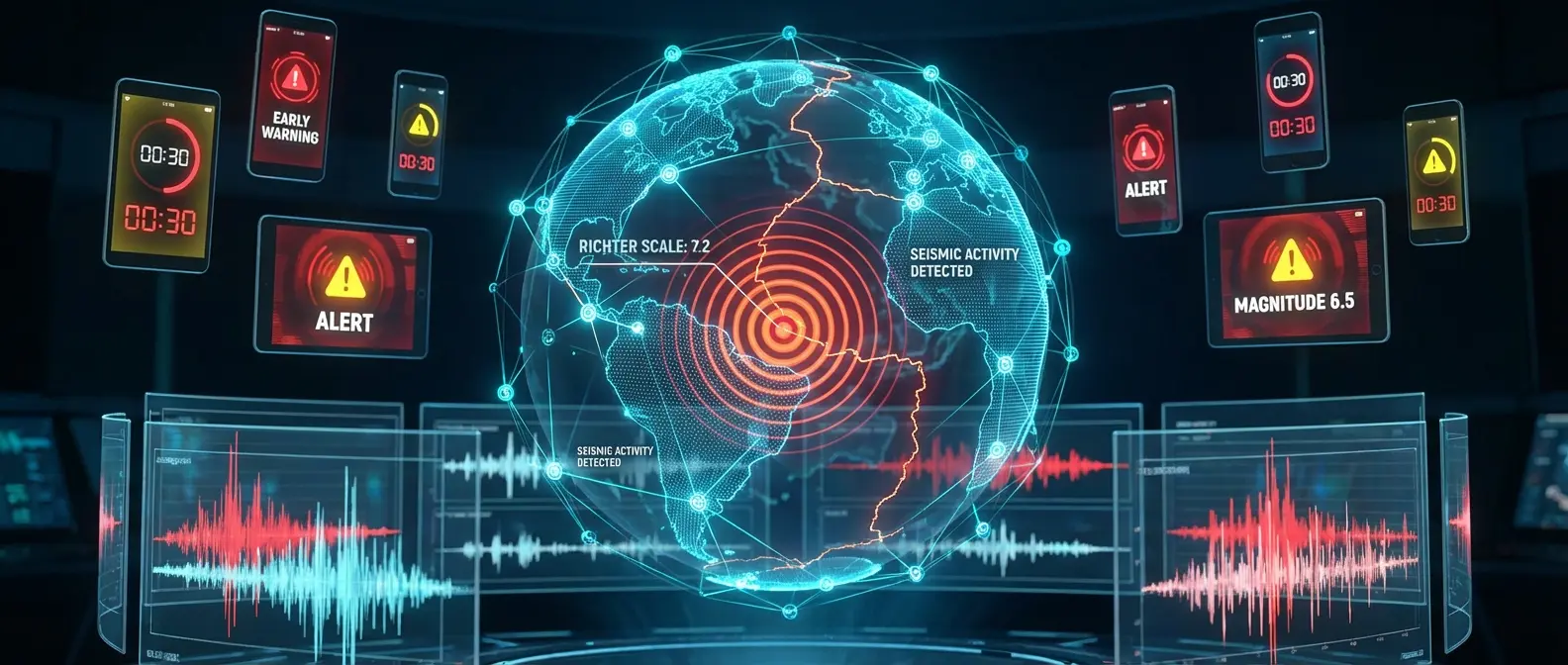
Additionally, cables are gaining a dual role: beyond data, they function as earthquake and tsunami sensors. The new SMART cable systems will provide real-time data on the ocean floor — something particularly useful for the seismically active Aegean region.