

Every year, Greece loses 40% of its drinking water before it even reaches the taps. Leaks in aging networks, broken pipes, meters that don't measure correctly — the problem is enormous. In 2026, smart water meters are changing everything: real-time monitoring, automatic leak detection, and savings of millions of cubic meters.
📖 Read more: Earthquake Detection: Sensor Networks & Early Alerts
💧 The Problem with Greece's Water Networks
Greece's water supply networks are among the oldest in Europe. In many municipalities, the pipes are 50-60 years old, built with materials now considered unsuitable (asbestos, iron). Leaks are a daily occurrence: some visible on the surface, most hidden underground.
The problem isn't just environmental — it's economic. Municipalities pay for water that never reaches residents. Residents pay for leaks in their own homes they don't even know exist. And in a country with dry summers and limited water resources, every drop counts.
40%
Water losses in the network
€320M
Annual cost of losses
50+ years
Average network age
📲 What Is a Smart Water Meter?
A traditional water meter does one thing: it measures total consumption. Someone has to physically go and read the display. A smart water meter is much more than that: a small computer that continuously measures, analyzes, and communicates.
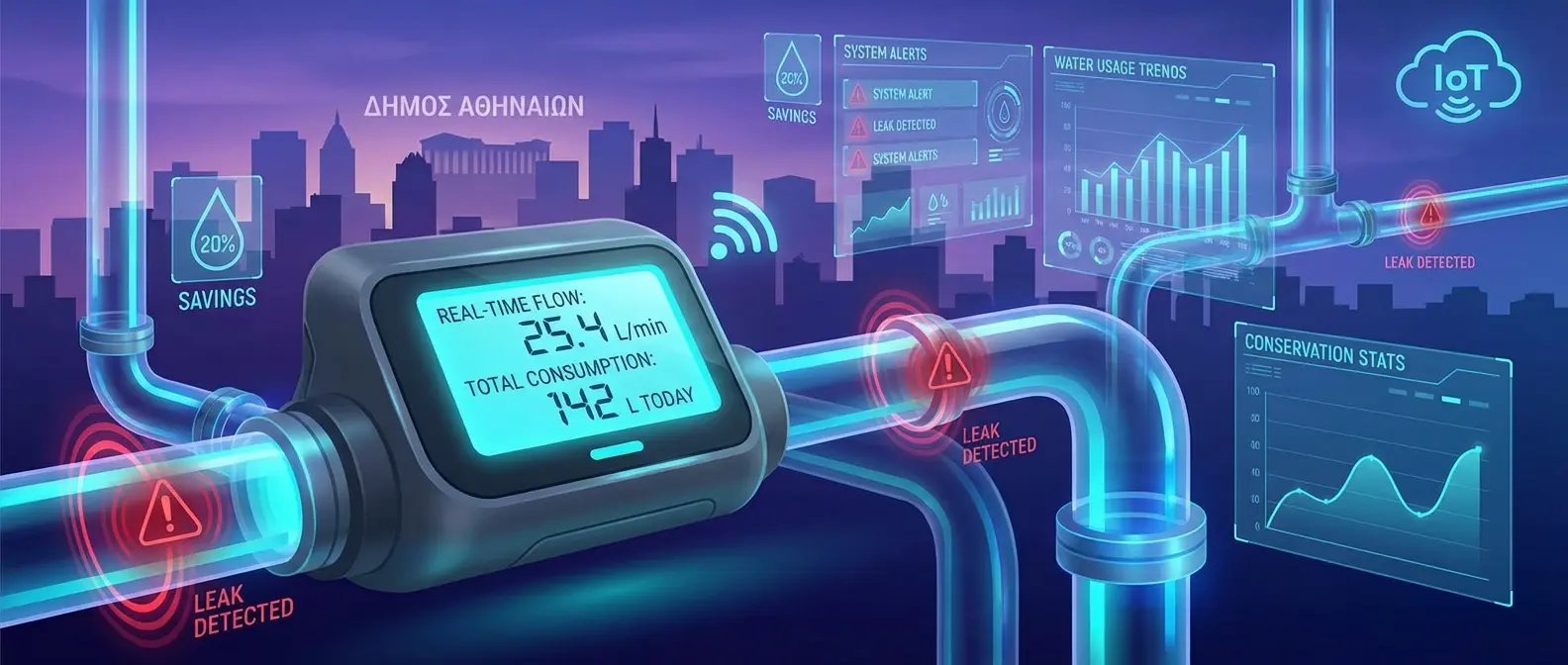
Modern smart meters use IoT (Internet of Things) technology to send data in real time. Through LoRaWAN, NB-IoT, or even 4G networks, they communicate with the municipality's central system every 15-60 minutes. This means a leak can be detected in minutes, not months.
🔬 How It Detects Leaks
The meter analyzes consumption patterns. If it detects continuous flow 24/7, even at 3 AM, something is wrong. Small but steady flow = a running toilet or a leak. Large sudden flow = a broken pipe. The AI learns your habits and alerts you when something deviates.
📖 Read more: Greek Microsatellite in Orbit: Where It Will Be Used

🏛️ Pioneering Municipalities
In 2026, more than 45 municipalities across Greece have launched smart water meter installation programs. Most are funded by the Recovery Fund and NSRF, aiming for full coverage by 2028.
🏙️ Municipality of Athens
Pilot program with 25,000 meters in the city center. 28% reduction in water losses in the first year. Expansion to the entire municipality by 2027.
🏖️ Municipality of Chania
Full coverage with 42,000 meters. 1,200 leaks detected in 8 months. Savings of €1.8M annually.
🏝️ Municipality of Kos
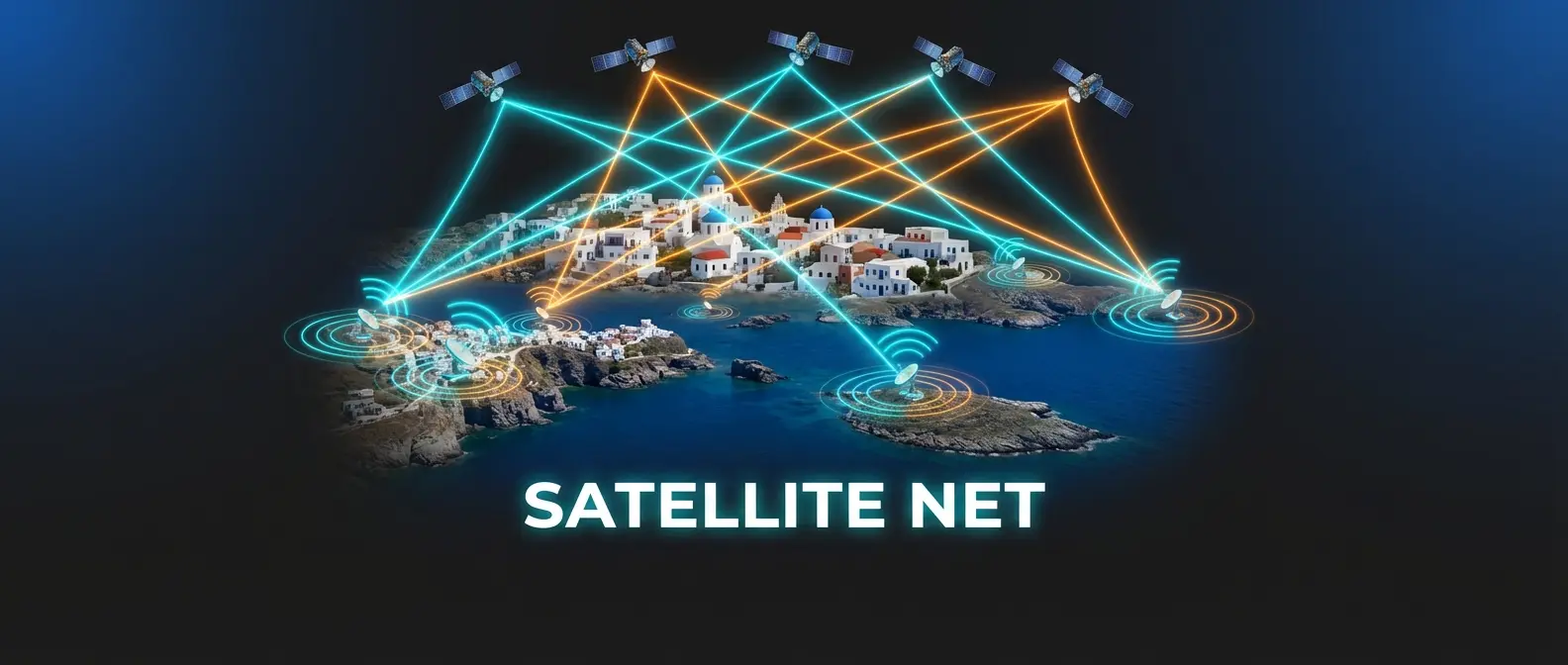
An island municipality with unique challenges. 18,000 meters with satellite communication for remote areas.
The Region of Thessaly, after the devastating floods of 2023, has become the country's pioneer. The damage to water supply networks forced a complete replacement — and this time with smart technology. 95,000 meters are being installed in Volos, Larissa, Trikala, and Karditsa.
👥 What You Stand to Gain
For the average citizen, the smart meter brings immediate benefits. First, accurate bills. No more estimates and “catch-up” charges that arrived every 6 months. You pay exactly what you consume, every month.
Second, leak alerts. Have a running toilet that drips at night? A leak in the garden you can't see? The meter notifies you via SMS or email within hours, not months when the massive bill arrives.
💰 Savings
15-25% reduction in bills through leak detection
📈 Transparency
See your consumption in real time
📖 Read more: EU Digital Identity Wallet: Europe's New Digital ID System
🔔 Alerts
Instant notification for unusual consumption
🌍 Environment
Minimizing drinking water waste
The Papadakis family in Chania shares their experience: "We received an SMS saying our consumption had increased by 300%. It turned out we had a broken pipe in the garden, under the lawn. Without the smart meter, we wouldn't have noticed until we got the bill two months later."
🛠️ The Technology Behind the Meters
Modern smart water meters use ultrasonic sensors for measurement — no moving parts, minimal wear. The battery lasts 10-15 years. Communication is handled through low-power networks like LoRaWAN — a single antenna covers an entire city.
At the municipality's control center, machine learning algorithms analyze data from thousands of meters simultaneously. If a neighborhood shows a sudden pressure drop, the system knows there's a leak in the main pipeline — and can triangulate the exact location within a few meters.
🔮 The Future: Full Digitization
The European Union is pushing for 100% smart metering by 2030. Greece is currently at 15%, but the pace is accelerating. The Recovery Fund is financing €450M for the digitization of water supply networks.
The vision? Digital Water Twins — digital replicas of entire networks that simulate scenarios, predict problems, and optimize operations. Greece, as a country with limited water resources and dry summers, has every reason to lead the way.