

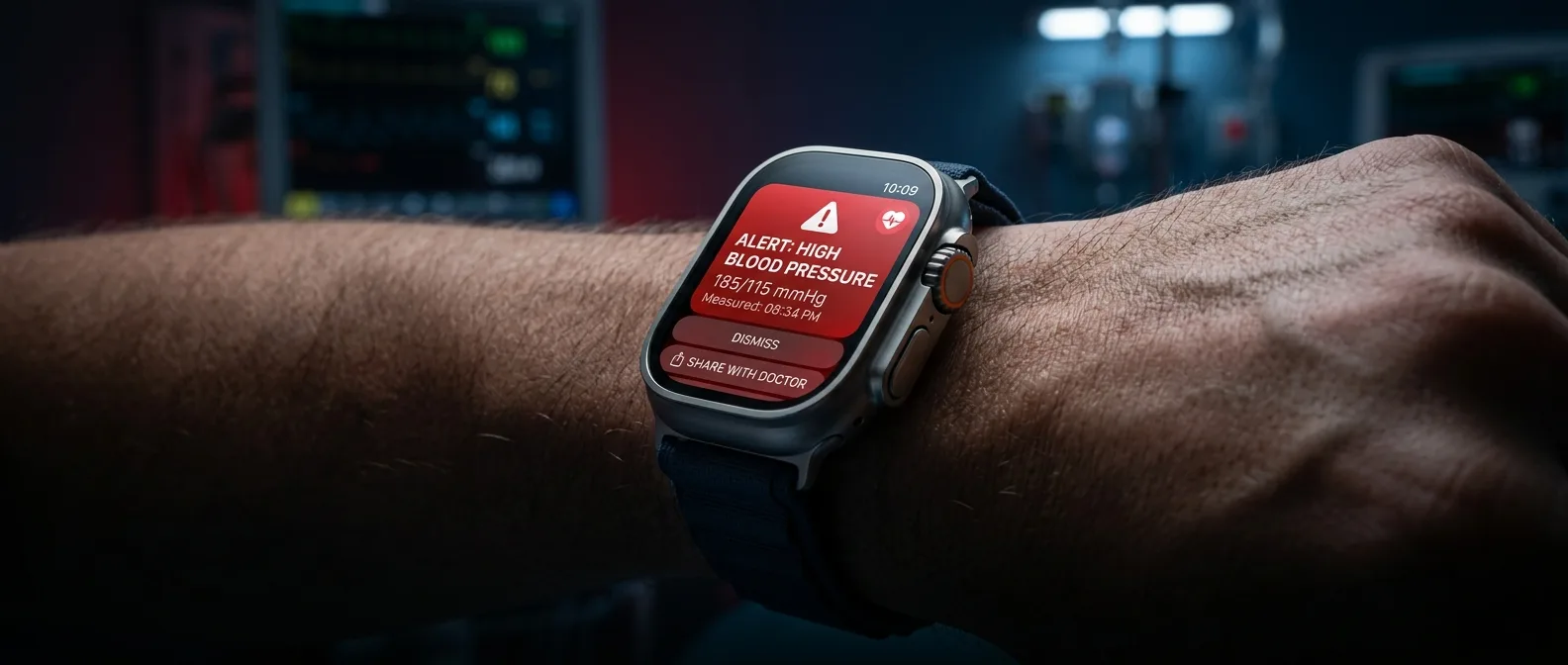
Seven new countries just joined the map. That's Apple's latest move with hypertension notifications on the Apple Watch — a technology spreading across global markets. The expansion brings the total number of supported regions to 170, covering millions more users who might have high blood pressure without knowing it.
Apple announced on January 27, 2026 that hypertension notifications are now available in seven additional countries. Australia, Brazil, Colombia, Indonesia, Malaysia, South Korea, and Turkey joined the list — an expansion targeting both developed and emerging markets.
Why necessary? Because roughly 1.4 billion adults worldwide deal with hypertension. The worst part? 46% don't even know they have it.
🔬 Technology That Spots the "Silent Killer"
Hypertension earns its nickname as the "silent killer" for good reason. Most cases show no visible symptoms, yet it can cause serious damage to the heart, blood vessels, and other organs. That's where Apple Watch technology steps in.
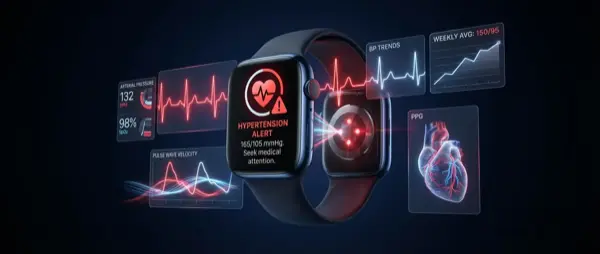
The optical heart rate sensor uses photoplethysmography (PPG) to analyze how blood vessels respond to heartbeats. A machine learning algorithm processes data over 30 days and alerts when it detects consistent signs of hypertension.
The process runs passively. Every two hours or so, the watch collects 60-second segments of PPG data. The accelerometer filters measurements to ensure you're sitting still — essential for accuracy. After 30 days of evaluation, if the algorithm spots patterns, it sends a notification.
It's not magic, though. Apple admits it won't catch every case of hypertension. However, the company estimates it will alert over 1 million people with undiagnosed hypertension within the first year.
📊 Requirements and Limitations for Apple Watch Hypertension
No, it's not for everyone. The feature requires Apple Watch Series 9 or newer and Apple Watch Ultra 2 or newer with the latest watchOS. The Apple Watch SE stays out — a choice likely tied to sensor limitations.
Who Can Use Hypertension Notifications
The list is specific. Users 22 years and older who aren't pregnant and haven't been diagnosed with hypertension. If you have an active pregnancy logged in the Health app, the feature automatically disables.
Wrist Detection must also be enabled — logical, since the watch needs to "know" you're wearing it to take reliable measurements.
⚡ What Happens When You Get a Hypertension Alert?
Got a hypertension notification? Don't panic — but don't ignore it. The Apple Watch doesn't diagnose. It simply tells you "something unusual happened over the past 30 days, worth checking out."
Apple recommends specific steps. First, start a Blood Pressure Log and measure your pressure with a third-party cuff for seven days. Second, discuss the results with a doctor.
Important: Hypertension notifications aren't intended for diagnosing, treating, or managing hypertension. They can't detect heart attacks, murmurs, atrial fibrillation, or other heart conditions.
Why Not Direct Blood Pressure Measurement?
Good question. The Apple Watch doesn't measure blood pressure like a traditional cuff. Optical sensors aren't as precise as a cuff that can measure the force of blood as it constricts and relaxes around your arm. A smartwatch would also need calibration to create a baseline.
Instead of direct measurement, the Apple Watch looks for patterns — signs that suggest hypertension. It's a smarter approach than trying to mimic a blood pressure cuff.
🧬 Scientific Foundation and FDA Approval
Development wasn't rushed. Apple used data from multiple studies with over 100,000 participants and advanced machine learning. The technology was then validated in a clinical study with over 2,000 participants.
On September 11, the feature received FDA clearance — showing that US authorities consider the technology reliable enough for public use.
Different from Other Health Features
Unlike other Apple Watch health features — like heart rate monitoring or EKG — hypertension notifications work entirely in the background. You don't need to open an app or do anything special. Just wear the watch and it "observes."
This passive monitoring is both strength and weakness. Strength because it requires no action from the user. Weakness because it might create a false sense of security — "since I haven't received a notification, I'm fine."
🌍 Global Expansion: Strategy or Necessity?
Adding seven new countries isn't random. The list includes markets with high smartphone and wearable penetration — Australia, South Korea — but also emerging markets with massive populations like Brazil, Indonesia, and Colombia.
In December 2025, Apple expanded the feature to the United Arab Emirates. The gradual rollout looks like careful strategy — testing technology in smaller markets before introducing it to larger ones.
New Countries
Australia, Brazil, Colombia, Indonesia, Malaysia, South Korea, Turkey
Potential Impact
Millions of new users who might have undiagnosed hypertension
But there's also a regulatory component. Each country has different requirements for health technology approvals. Apple must navigate regulatory hurdles in each region — a process that can take months or years.
Greece's Absence
Greece isn't among the 170 countries — something that might disappoint Greek Apple Watch users. Apple's health features often reach Europe with delays, mainly due to stricter GDPR regulations and different medical device requirements.
🔍 Limitations Worth Knowing
No tech product is perfect — and hypertension notifications are no exception. Several limitations are worth keeping in mind.
First, the technology doesn't work if you have irregular heart rhythm. If the Apple Watch detects atrial fibrillation or other arrhythmias, hypertension measurements might be inaccurate.
Second, you must wear the watch correctly. Too loose or too tight can affect sensor accuracy. The watch should touch your skin but not strangle it.
"The feature isn't intended for managing or treating hypertension. If you feel chest pain, pressure, or what you think might be a heart attack, call emergency services immediately."
Apple Support Documentation
Third, effectiveness varies depending on skin tone and other factors. Optical sensors might struggle with darker skin tones — a known issue with PPG technology.
💡 Future: What's Coming Next?
Expanding to seven new countries is just the beginning. Apple has stated a goal to eventually cover over 150 countries — but at the current pace, it looks like they'll exceed that target.
The next logical step? Improving accuracy and expanding to other cardiovascular conditions. Hypertension represents one cardiovascular risk factor among many — cholesterol, diabetes, and other conditions that could eventually be monitored non-invasively.
Competition and Innovation
Apple isn't alone in this field. Samsung, Fitbit, and other wearable manufacturers are exploring similar technologies. The difference? Apple has the power to navigate regulatory approvals faster and expand globally.
The technology is still in its infancy. In a few years, we might see wearables that monitor glucose levels, cholesterol, even inflammation markers. Hypertension is the first step toward a future where your smartwatch functions as a personal cardiologist.
🎯 Frequently Asked Questions
Can I use the feature if I'm already diagnosed with hypertension?
No, the feature is only for people who haven't been diagnosed with hypertension. If you're already receiving treatment or monitoring your pressure, the Apple Watch won't offer additional value for managing your condition.
How reliable are the notifications?
The notifications are based on clinical data from thousands of participants and have received FDA clearance. However, they won't catch every case of hypertension and might give false positives. Always consult a doctor for any notification.
Does the service work in Greece?
Not yet. Greece isn't included in the 170 regions where the service is available. There's no official timeline for when it might come to the country.
The expansion of hypertension notifications to seven new countries shows Apple is taking the health technology space seriously. It's not perfect technology — no tech is. But for millions of people who might have hypertension without knowing it, an early notification could make the difference. The coming years will show whether this technology can save lives — or remain just an expensive gadget with health features.
Sources: