

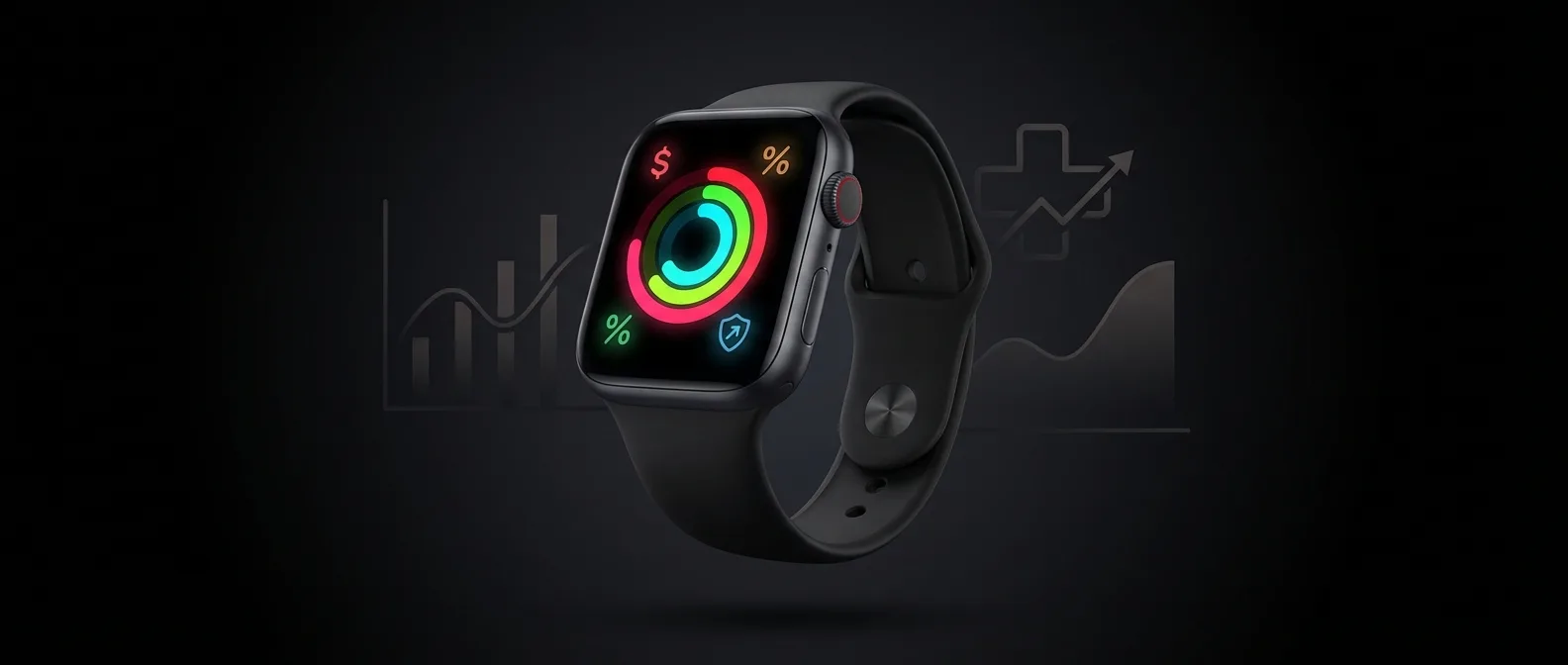
💰 Did you know that exercise can reduce your life insurance premiums by up to 25%? Major insurance companies worldwide now partner with wearables like the Apple Watch, rewarding policyholders who stay active, exercise, and take care of their health. In this article, we explore how this model works, which companies are implementing it, and what it means for you as an Apple Watch owner.
The insurance industry is undergoing a quiet revolution. Instead of relying solely on medical exams and questionnaires, new behavioral insurance models use data from smartwatches to assess risk in real time. And the Apple Watch is at the center of this shift.
How Health Data-Based Insurance Works
The idea is simple: if you can prove you live a healthy lifestyle, you pay lower premiums. Wellness-based insurance programs use data from wearables to track:
- Daily steps and physical activity
- Exercise minutes per week
- Heart rate at rest and during exercise
- Sleep quality and duration
- Closing Activity Rings
Instead of paying a fixed premium regardless of lifestyle, these programs reward you with discounts, gift cards, and bonuses the more active you are. It's a win-win: you save money, and the insurer reduces its claims risk.
John Hancock Vitality: The Most Well-Known Program
John Hancock, one of the largest insurance companies in the U.S., pioneered the Vitality program in 2015, in partnership with South African group Discovery Limited — the inventor of the behavioral insurance model.
📊 The numbers speak for themselves: According to official John Hancock Vitality data, 89% of members achieved a reduction in their premiums, while 79% reported that their health remained stable or improved within the program. The maximum premium discount reaches 25%.
How It Works in Practice
John Hancock's Vitality program operates on a points-based system:
- Sign up: The policyholder enrolls in the Vitality program and completes an initial health assessment (Vitality Health Review).
- Connect your Apple Watch: Link your Apple Watch or another fitness tracker to the Vitality platform. John Hancock even offers Apple Watch at a reduced price or even free through the program.
- Earn points: Every activity — steps, workouts, medical check-ups — is converted into Vitality points.
- Level up: Based on your points, you advance through tiers (Bronze, Silver, Gold, Platinum). Each tier unlocks bigger discounts.
- Enjoy the rewards: Up to 25% discount on annual premiums, Amazon and Walmart gift cards, and access to the HealthyFood program (discounts on healthy groceries).
🍎 HealthyFood Savings: Through HealthyFood, Vitality PLUS members saved over $1.4 million on healthy groceries. The program offers up to 25% off healthy foods at select stores.
Discovery Vitality: The Global Pioneer
Behind the Vitality model is Discovery Limited, a South African financial services giant founded in 1992 by Adrian Gore. Discovery invented the Shared-Value Insurance model — a system where the insurer and the policyholder share the benefits of healthy living.
Today, the Vitality model operates in 42 markets worldwide through partnerships with local insurers:
Why Apple Watch Is Ideal for Insurance Wellness
It's no coincidence that most wellness insurance programs partner primarily with Apple Watch. The reasons are numerous:
1. Comprehensive Health Monitoring
The Apple Watch Series 10 and Ultra 2 offer a complete suite of health sensors: ECG, SpO2, wrist temperature, atrial fibrillation detection, and of course the three Activity Rings (Move, Exercise, Stand). This data provides a holistic picture of the user's health.
2. Motivation Through Gamification
The Activity Rings, badges, challenges, and streaks on Apple Watch create a gamification system that keeps users active. According to studies, Apple Watch users exercise an average of 4.5 days per week — well above the general population average.
3. Data Security
Apple maintains one of the strictest privacy frameworks in the industry. Health data is end-to-end encrypted and shared only with the user's explicit consent through HealthKit. This means the insurer only sees the data you choose to share.
The Situation in Greece and Europe
In Europe, the insurance wellness trend is on an upward trajectory, albeit at a slower pace compared to the U.S., mainly due to stricter data protection regulations (GDPR).
Generali Vitality in Germany
Generali, one of the largest insurance groups in Europe, already operates a Vitality program in Germany. Policyholders can connect their Apple Watch, earn points, and receive discounts on premiums as well as gift cards for stores and services.
The Greek Market
In Greece, there is no insurance program yet that directly integrates Apple Watch data into premium calculations. However, several insurance companies have begun offering wellness programs and discounts for policyholders who demonstrate a healthy lifestyle — a first step in this direction.
🇬🇷 Forecast: With the rapid growth of wearables in Greece and competitive pressure, we expect to see the first Greek insurance wellness programs with Apple Watch integration within the next 2–3 years. Companies like Generali Hellas, NN Hellas, and Eurolife FFH are closely monitoring developments.
Ethical Concerns and Considerations
Connecting wearables to insurance raises important questions:
Data Privacy
What data are you sharing? How secure is it? Can the insurer use it against you? The GDPR regulation in Europe provides strong protection, requiring explicit consent and the right to deletion. In the U.S., protections are more relaxed, but companies like John Hancock commit that data is used only for premium reductions — never for increases.
Social Equity
There is a risk of creating a two-tier insurance system: those who can afford an Apple Watch and exercise regularly, and those who cannot. Critics argue that this penalizes people with chronic conditions or disabilities who may not be able to exercise in the same way. The most modern programs address this by customizing goals for each individual.
Psychological Pressure
Linking financial incentives to exercise can create an unhealthy obsession with the numbers. Some users report feeling “guilty” when they don't close their rings, which can lead to overtraining or burnout.
How to Maximize Your Benefits
If you have access to a wellness insurance program, follow these tips:
✅ Practical Tips:
- Wear your watch consistently — the more data, the better your assessment
- Close all 3 rings daily — even a light walk counts
- Log your workouts — use the Workout app for official tracking
- Complete your annual medical check-ups — many programs award bonus points
- Use ECG and SpO2 — they show that you're actively monitoring your health
- Share only what's necessary — control what data you share through HealthKit
The Science Behind the Model
The link between physical activity and longevity is well-documented. Studies show that:
- 150 minutes of moderate exercise per week reduces the risk of premature death by 31% (WHO)
- 10,000 steps per day reduces the risk of cardiovascular disease by 51%
- Wearable users exercise on average 40% more than non-users
- Regular exercise reduces the risk of type 2 diabetes by 58%
These findings explain why insurance companies see wearables as a risk reduction tool — and not just a marketing gimmick. A healthier policyholder means fewer claims.
The Future: Apple Watch as an 'Insurance Tool'
Apple has publicly expressed its ambition: its greatest contribution to humanity will be in health. And the signs are everywhere:
- FDA clearance for ECG and atrial fibrillation (AFib) detection
- Fall detection and automatic emergency calls
- Crash Detection — car accident detection
- Future sensors for blood glucose and blood pressure
- Potential integration with electronic health records (EHR)
John Hancock even offered access to Galleri cancer screening — a blood test that detects over 50 types of cancer — for Vitality PLUS members over age 50. This shows where the insurance industry is headed: holistic prevention through technology.
Frequently Asked Questions (FAQ)
Can my insurer raise my premiums if I don't exercise?
In current programs, no. Data is used only to grant discounts, not penalties. If you stop exercising, you simply lose the discounts — you don't pay more than the base premium.
Do I absolutely need an Apple Watch?
Most programs also accept other wearables (Fitbit, Garmin, Samsung Galaxy Watch). However, Apple Watch has the most comprehensive integration with the relevant apps and the most accurate health data.
Is my data safe?
It depends on the country and provider. In Europe, the GDPR provides strong protection. You can withdraw your consent at any time and request data deletion. Always read the terms of service carefully before sharing data.
Is it worth it?
If you already exercise regularly and wear an Apple Watch, it's essentially free money. A 15–25% discount on an annual life insurance premium can mean savings of hundreds of dollars per year — without changing anything in your routine.
Conclusion
The connection between Apple Watch and life insurance is no longer science fiction — it's a reality in dozens of countries. With pioneers like John Hancock and Discovery, the behavioral insurance model proves that technology can make insurance fairer, more transparent, and more affordable for those who take care of their health.
For Apple Watch owners in Greece, our advice is simple: keep closing your rings. Soon, that might not only mean better health — but lower premiums too.